Educational information, not medical advice. This article is written to help you understand common ear and hearing issues. It is not a substitute for professional diagnosis or treatment. If your symptoms are severe, sudden, or persistent, please consult a qualified doctor or audiologist. For urgent symptoms (sudden hearing loss, bleeding from the ear, severe pain with dizziness, or a head injury), seek medical care the same day.
A practical checklist to choose an audiologist in India: verify RCI registration, ask about real-ear measurement, brand-neutral fitting, trials and after-sales.
Quick answer
A good audiologist in India is registered with the Rehabilitation Council of India (RCI) and holds a MASLP or BASLP qualification. Before buying anything, confirm this registration, ask for a full hearing test with the audiogram shown to you, insist on real-ear measurement, and choose a clinic that offers a trial and fits multiple brands rather than pushing one.
Key takeaways
- Verify RCI registration first: it is the legal marker of a qualified audiologist in India, and the number can be checked.
- A proper visit includes a hearing test, the audiogram explained to you, and a fitting matched to your results, not a straight sales pitch.
- Real-ear measurement (REM) helps confirm a hearing aid is actually delivering the right sound in your ear.
- Prefer a brand-neutral clinic that offers a genuine trial and clear after-sales servicing.
- Red flags: only one brand on offer, no audiogram shown, pressure to buy the same day.
A good audiologist in India is registered with the Rehabilitation Council of India (RCI) and holds a MASLP or BASLP qualification. Before buying anything, confirm this registration, ask for a full hearing test with the audiogram shown to you, insist on real-ear measurement, and choose a clinic that offers a trial and fits multiple brands rather than pushing one.
Why does choosing the right audiologist matter?
Hearing aids are the main way most people manage hearing loss, but the device is only half the story. As the NIDCD notes, hearing aids must be fitted and adjusted to your specific hearing loss, and it can take time to get used to them. The person doing that fitting matters as much as the brand on the box.
A skilled audiologist tests your hearing accurately, explains what the results mean, and programmes the device to your audiogram. A poor fit is a common reason people give up on hearing aids and leave them in a drawer.
How do I check if an audiologist is RCI-registered?
In India, audiologists and speech-language pathologists are regulated by the Rehabilitation Council of India (RCI). Registration is the baseline you should not skip.
Look for these qualifications:
- BASLP: Bachelor of Audiology and Speech-Language Pathology.
- MASLP: Master of Audiology and Speech-Language Pathology.
Ask directly: "Are you RCI-registered, and what is your registration number?" A genuine professional will answer without hesitation. You can then verify the credential through the RCI. Be aware that in many shops the person selling hearing aids is a salesperson or technician, not a registered audiologist: the two are not the same.
What should a good first appointment include?
A thorough first visit usually covers:
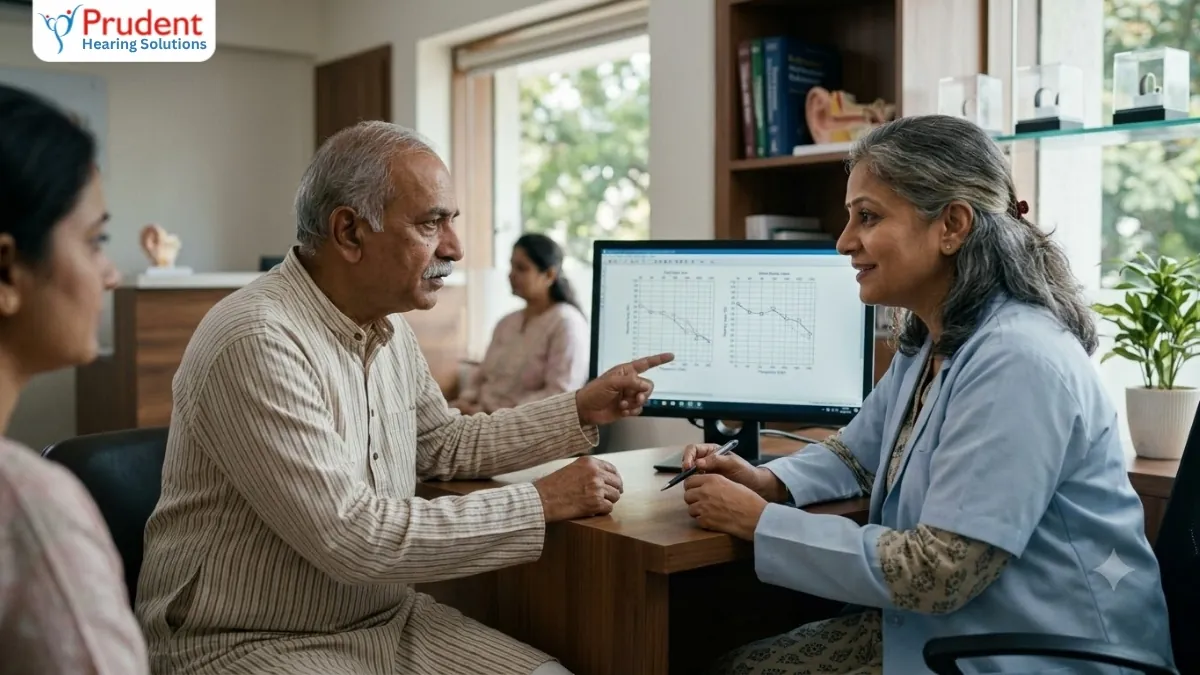
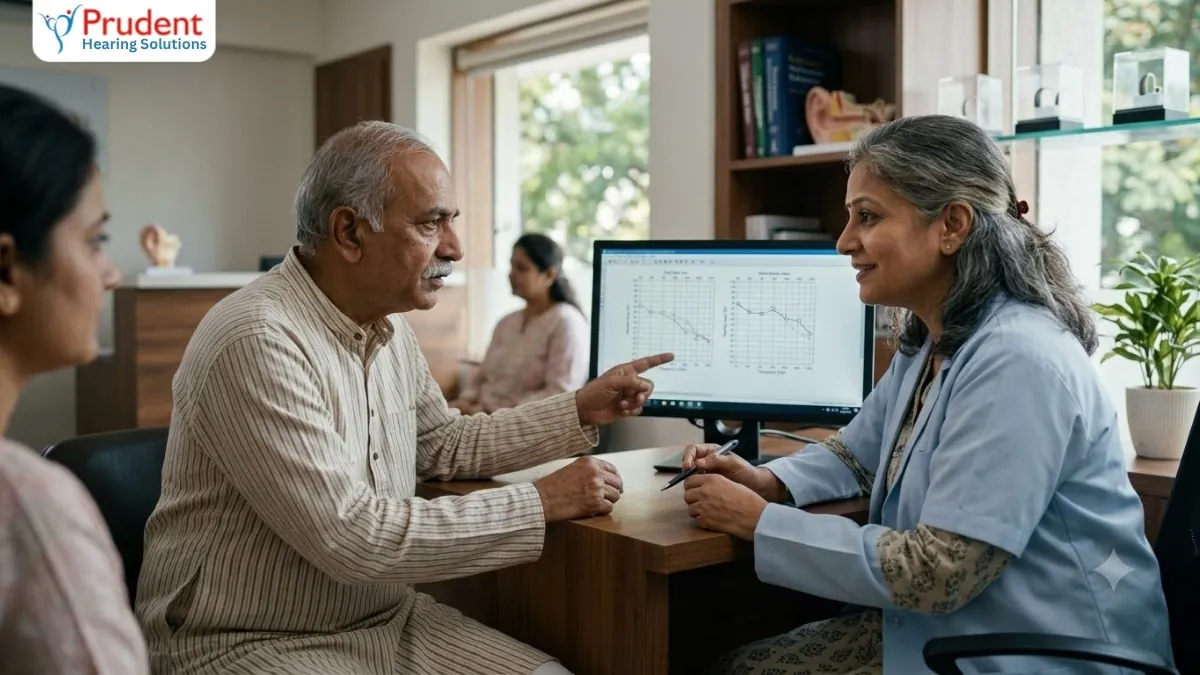
1. History taking: your symptoms, noise exposure, ear infections, medications and family history. 2. Ear examination: a look inside your ear for wax or other issues. 3. A hearing test: pure-tone audiometry, often with speech testing, in a quiet or sound-treated room. 4. The audiogram, explained: you should see your own graph and be told what it means in plain language. 5. Honest options, whether you need aids at all, and if so, which styles suit your loss and lifestyle.
If someone recommends a specific hearing aid before testing your hearing, treat that as a warning sign.
What questions should I ask before buying?
Use this shortlist at the clinic:
- Are you RCI-registered (MASLP/BASLP)? What is your number?
- Can I see and keep a copy of my audiogram?
- Which brands do you fit, and why this one for me?
- Do you do real-ear measurement to verify the fitting?
- Is there a trial period, and what is the return or exchange policy?
- What does servicing, repair and follow-up cost after purchase?
- Who adjusts the aid if it does not feel right in a few weeks?
You can book a full hearing test and ask these questions in person through our hearing test service, or reach the team via contact.
What is real-ear measurement and why does it matter?
Real-ear measurement (REM) uses a thin probe microphone in your ear canal to measure the sound the hearing aid is actually delivering, and compares it to a target based on your audiogram. Every ear canal is shaped differently, so the same settings can sound different from person to person.
REM is widely regarded as best practice for verifying a fitting objectively rather than relying only on how you feel it sounds on the day. Not every clinic offers it, so it is worth asking.
Why brand-neutral fitting and a trial matter
The NIDCD points out that there are different styles and technology levels of hearing aids, and the right choice depends on your loss, dexterity and lifestyle. A clinic tied to a single brand can only offer you what it sells.
A brand-neutral audiologist can match you across manufacturers. A trial period then lets you wear the aid in real settings (home, market, family gatherings) before you commit. If you have a busy or noisy household, ask whether a home visit fitting is possible so the device is tuned to where you actually use it.
Red flags to watch for
- One brand only, presented as "the best" for everyone.
- No audiogram shown, or a refusal to give you a copy.
- No RCI-registered audiologist on site.
- Same-day pressure to buy, with a "today only" discount.
- No real-ear measurement and no verification of the fit.
- Vague after-sales: no clear answer on repairs, servicing or follow-up visits.
You can compare device options separately in our guide to the Best Hearing Aids in India, then bring your shortlist to a registered audiologist for a proper fitting. Explore fitting and device support through our hearing aids service.
When to seek prompt medical care: if you have sudden hearing loss in one or both ears, ear pain, discharge, or dizziness, do not wait for a routine appointment. See an ENT doctor or audiologist urgently.
Continue reading
Frequently asked questions
Is an audiologist the same as the person selling hearing aids at a shop?
Not always. An audiologist is a healthcare professional with a BASLP or MASLP qualification and RCI registration. Many hearing-aid outlets are staffed by salespeople or dispensers. Always confirm that a registered audiologist is doing your testing and fitting.
How can I verify an audiologist's RCI registration?
Ask for their name and registration number, then check it through the Rehabilitation Council of India. A qualified professional will share these details willingly.
Do I really need real-ear measurement?
It is not legally required, but it is a strong sign of a quality-focused clinic. REM verifies that the aid delivers the right sound in your ear rather than relying on estimates alone, which often leads to a better and faster adjustment.
Should I buy a hearing aid on my first visit?
There is no need to rush. A good audiologist will test your hearing, explain your audiogram and offer a trial. Take time to try the device in your daily life before deciding.
Can I choose the brand myself?
You can express a preference, but the final choice should be guided by your audiogram, ear anatomy, dexterity and lifestyle. A brand-neutral audiologist can compare options across manufacturers to suit you.
Sources & further reading
We cross-checked this article against the following authoritative sources. Guidance and figures reflect the most recent public guidance available at the time of last review (September 2026). Clinical review by the Prudent Hearing clinical team.
- NIDCD (NIH) (Hearing Aids)
- Rehabilitation Council of India (RCI) (rehabcouncil.nic.in)
Free consultation
Ready to hear the difference?
Book a free 45-minute hearing test at any Prudent Hearing clinic: no obligation, honest advice, expert audiologists.