Educational information, not medical advice. This article is written to help you understand common ear and hearing issues. It is not a substitute for professional diagnosis or treatment. If your symptoms are severe, sudden, or persistent, please consult a qualified doctor or audiologist. For urgent symptoms (sudden hearing loss, bleeding from the ear, severe pain with dizziness, or a head injury), seek medical care the same day.
An online hearing test can flag a possible problem, but it can't replace a clinic PTA: no calibration, room noise, no bone conduction. When each one is useful.
The short answer
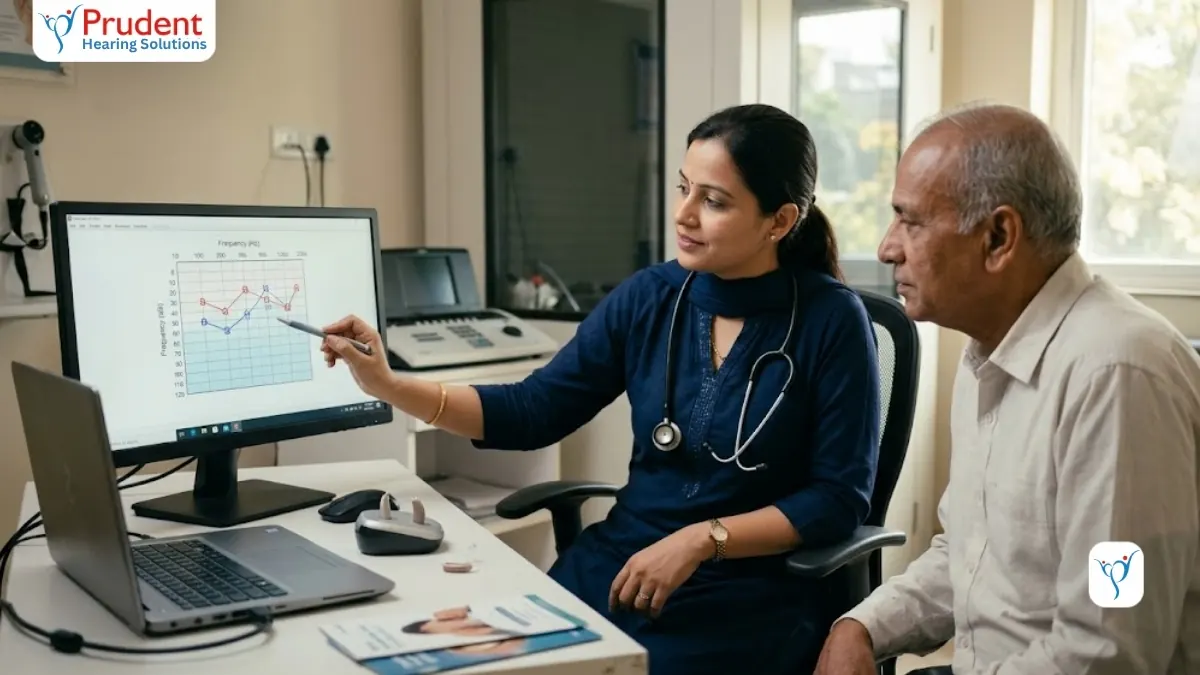
An online hearing test is a screening tool; a clinic pure tone audiometry (PTA) test is a diagnosis. An online test, or an app on your phone, can usefully tell you that something might be wrong and that you should get checked. It cannot reliably measure how much hearing you have lost, tell what type of loss it is, or be used to programme a hearing aid. For that you need a proper PTA in a quiet room with calibrated equipment.
Here is why the two differ, when an online test is genuinely useful, and when you should skip it and book a clinic test. Our PTA test guide explains the clinic test in full.
Screening versus diagnosis
A screening test asks one question: is there a reason to look more closely? A diagnostic test asks several: how much hearing is there in each ear, at each pitch, what kind of loss is it, and how well do you understand speech? Online hearing tests are built for the first job. They are quick, free and convenient, which makes them a reasonable nudge to get checked. They were never designed to replace the second.
Online hearing test vs clinic PTA at a glance
| Online or app test | Clinic PTA | |
|---|---|---|
| Purpose | Screening: is a full test needed? | Diagnosis: degree and type of loss |
| Equipment | Your own earphones, uncalibrated | Calibrated audiometer and headphones |
| Room | Wherever you are, with background noise | Quiet, sound-treated room |
| Bone conduction | Not possible | Yes, to tell conductive from sensorineural loss |
| Masking (testing one ear fairly) | Not possible | Yes, when needed |
| Speech testing | Rarely, and limited | Yes, by an audiologist |
| Ear examination | None | Otoscopy before testing |
| Can be used to programme a hearing aid | No | Yes |
Why an online test can't match a clinic PTA
1. Calibration
A hearing test measures the quietest sound you can hear, in decibels. To do that accurately, the equipment must produce known sound levels at each pitch. Your phone, laptop and earphones were not calibrated for this, and different earphones produce very different levels, so the numbers an online test reports are approximate at best.
2. Background noise
A fan, traffic, a television in the next room or a pressure cooker whistle can mask the faintest tones and make your hearing look worse than it is. Clinic tests are done in a quiet, sound-treated room for exactly this reason.
3. No bone conduction
This is the most important difference clinically. A clinic PTA tests hearing twice: through headphones (air conduction) and through a small vibrator behind the ear (bone conduction). Comparing the two shows whether a problem lies in the outer or middle ear, such as wax, fluid or an eardrum problem, or in the inner ear and nerve. That difference decides whether you need a doctor or a hearing aid; our guide to air versus bone conduction explains it. An online test cannot do this at all.
When an online hearing test is useful
- As a first nudge, if you or a parent are unsure whether a full test is worth it.
- To spot a rough trend over time, using the same earphones in the same quiet room.
- For family members far from a clinic, to decide whether to arrange a proper test.
A home visit is a different thing from an online test: an audiologist brings a calibrated audiometer to you and runs the test properly. See is a home hearing test accurate for how that compares with a clinic.
If an online test suggests a problem, treat it as a reason to book a clinic test, not as a result. If it says your hearing is fine but you still struggle, trust your experience and get tested anyway. The same applies to hearing checks built into phones and earbuds; we looked at one closely in how accurate is the AirPods hearing test.
If you do take an online hearing test
If you want to try one before booking, a few simple steps make the result a slightly better guide:
- Use a quiet room, with the fan, air conditioner and television switched off.
- Use wired headphones rather than speakers, and don't change the volume during the test.
- Test both ears, and repeat it on another day to see whether the result is consistent.
- Save or screenshot the result, so you can show it to the audiologist.
- Treat a 'pass' with caution if you still struggle with conversations in daily life.
None of this turns it into a diagnostic test. It simply makes it a more honest nudge about whether to book one.
When to skip the online test and book a clinic PTA
- Your hearing changed suddenly, in one or both ears. This is urgent.
- One ear is worse than the other, or you have ringing in one ear.
- You have ear pain, discharge, dizziness or a blocked feeling.
- You are considering hearing aids, which must be programmed from a proper audiogram.
- You need a result for work, a medical, or a disability assessment.
Sudden hearing loss in particular should never be checked with an app and left alone; read why sudden hearing loss is an emergency. And if an employer has asked for a test, see our guide to a hearing test for a job.
"An online test can tell you to get checked. Only a proper test can tell you what to do next."
Why hearing aids need a proper audiogram
A hearing aid is programmed to your audiogram, pitch by pitch. If the thresholds are wrong because of uncalibrated earphones or background noise, the hearing aid will be set wrongly too: too loud at some pitches, too soft at others, or simply uncomfortable. That is one reason reputable clinics test before they fit, and why an online result cannot be used to set up a hearing aid.
Book a proper hearing test
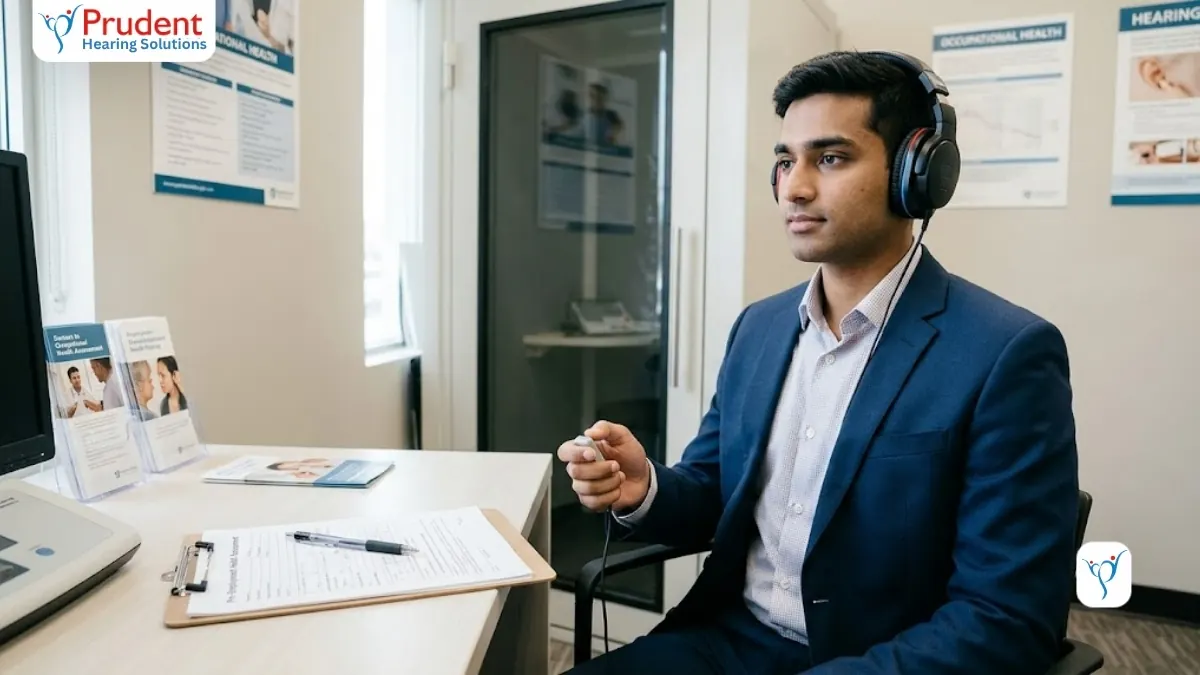
A clinic test is not a big commitment. At Prudent, the hearing test is free and takes about 45 minutes, including an ear check, PTA and a plain explanation of your result; how to prepare for a hearing test covers the day, and after your hearing test explains what happens next. Book a free hearing test at any clinic in Pune, Mumbai, Navi Mumbai, Delhi or Bengaluru, or ask about a home visit in other cities. Call +91 94296 90093. Prudent Hearing Solutions.
Free consultation
Ready to hear the difference?
Book a free 45-minute hearing test at any Prudent Hearing clinic: no obligation, honest advice, expert audiologists.