Educational information, not medical advice. This article is written to help you understand common ear and hearing issues. It is not a substitute for professional diagnosis or treatment. If your symptoms are severe, sudden, or persistent, please consult a qualified doctor or audiologist. For urgent symptoms (sudden hearing loss, bleeding from the ear, severe pain with dizziness, or a head injury), seek medical care the same day.
Vestibular migraine is a common cause of recurring vertigo, often with ringing, ear fullness and sensitivity to sound, in people with a history of migraine. Hearing is usually normal or only mildly affected. It is diagnosed by ruling out ear causes and treated through migraine management.
The direct answer
Vestibular migraine is a form of migraine in which dizziness or vertigo is the main symptom, with or without a headache. It is one of the most common causes of recurring vertigo, and it can bring ringing in the ears, a blocked feeling and sensitivity to sound. Because it is a brain-based condition, hearing is usually normal or only mildly affected, and treatment focuses on managing migraine.
Symptoms
- Episodes of vertigo, unsteadiness or a rocking feeling lasting minutes to days.
- Sensitivity to light, sound (phonophobia) and motion.
- A history of migraine headaches, though the headache may be absent during dizzy spells.
- Ringing, ear fullness or slight muffling that comes and goes.
- Nausea, and difficulty in busy visual environments such as crowds or moving traffic.
How it differs from ear causes of vertigo
- BPPV: brief spinning triggered by head position. See Epley manoeuvre for BPPV.
- Meniere's disease: vertigo with fluctuating hearing loss, tinnitus and fullness, with a measurable loss on an audiogram. See Meniere's disease.
- Labyrinthitis and vestibular neuritis: a single severe bout after a virus. See labyrinthitis vs vestibular neuritis.
- Vestibular migraine: repeated episodes with migraine features and usually normal hearing tests.
How it is diagnosed
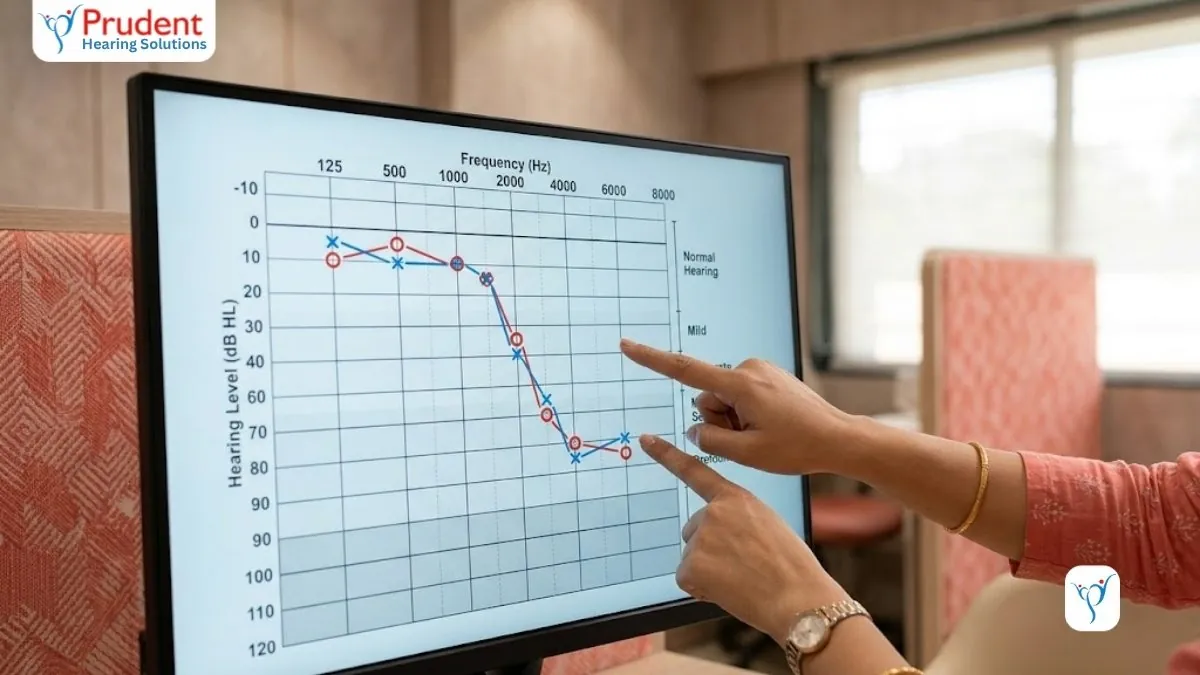
There is no single test. Doctors take a careful history, examine eye movements and balance, and use hearing and balance tests to rule out ear disease. An audiogram that is normal or near normal in a person with recurrent vertigo and migraine features points toward vestibular migraine. A neurologist or ENT usually makes the diagnosis. See vertigo and your ears and how vertigo is diagnosed.
Managing it
- Identify triggers: irregular sleep, skipped meals, stress, dehydration, bright light, strong smells and some foods.
- Keep regular habits: consistent sleep, meals, hydration and exercise.
- Medicines: preventive and acute treatments prescribed by a doctor.
- Vestibular rehabilitation: exercises to improve balance and reduce motion sensitivity.
- Keep a symptom diary to link episodes to triggers.
When to seek urgent help
Sudden severe vertigo with double vision, slurred speech, weakness, facial droop or a sudden very severe headache is an emergency. Sudden hearing loss also needs same-day care. See sudden hearing loss.
A hearing test helps separate ear causes from migraine. Book a free hearing test, and we will refer you to an ENT or neurologist if the pattern suggests it. This article is general information and does not replace medical advice.
Frequently asked questions
What is vestibular migraine?
A form of migraine in which dizziness or vertigo is the main symptom, with or without a headache. It is one of the most common causes of recurring vertigo and can bring ringing, ear fullness and sensitivity to sound.
Does vestibular migraine cause hearing loss?
Usually not much. Because it is a brain-based condition, hearing is normally normal or only mildly affected, which helps tell it apart from ear causes such as Meniere's disease.
How is vestibular migraine diagnosed?
There is no single test. A neurologist or ENT takes a careful history, examines eye movements and balance, and uses hearing and balance tests to rule out ear disease. A normal audiogram with recurring vertigo and migraine features points toward it.
How is vestibular migraine managed?
By identifying triggers such as irregular sleep, skipped meals, stress and bright light, keeping regular habits, taking medicines prescribed by a doctor, doing vestibular rehabilitation and keeping a symptom diary.
When is vertigo with migraine an emergency?
Sudden severe vertigo with double vision, slurred speech, weakness, facial droop or a sudden very severe headache is an emergency. Sudden hearing loss also needs same-day care.
Free consultation
Ready to hear the difference?
Book a free 45-minute hearing test at any Prudent Hearing clinic: no obligation, honest advice, expert audiologists.