Educational information, not medical advice. This article is written to help you understand common ear and hearing issues. It is not a substitute for professional diagnosis or treatment. If your symptoms are severe, sudden, or persistent, please consult a qualified doctor or audiologist. For urgent symptoms (sudden hearing loss, bleeding from the ear, severe pain with dizziness, or a head injury), seek medical care the same day.
Ear pain at night often feels worse because lying down raises pressure and nothing distracts you. Common causes, safe relief, and when to see a doctor.
The short answer
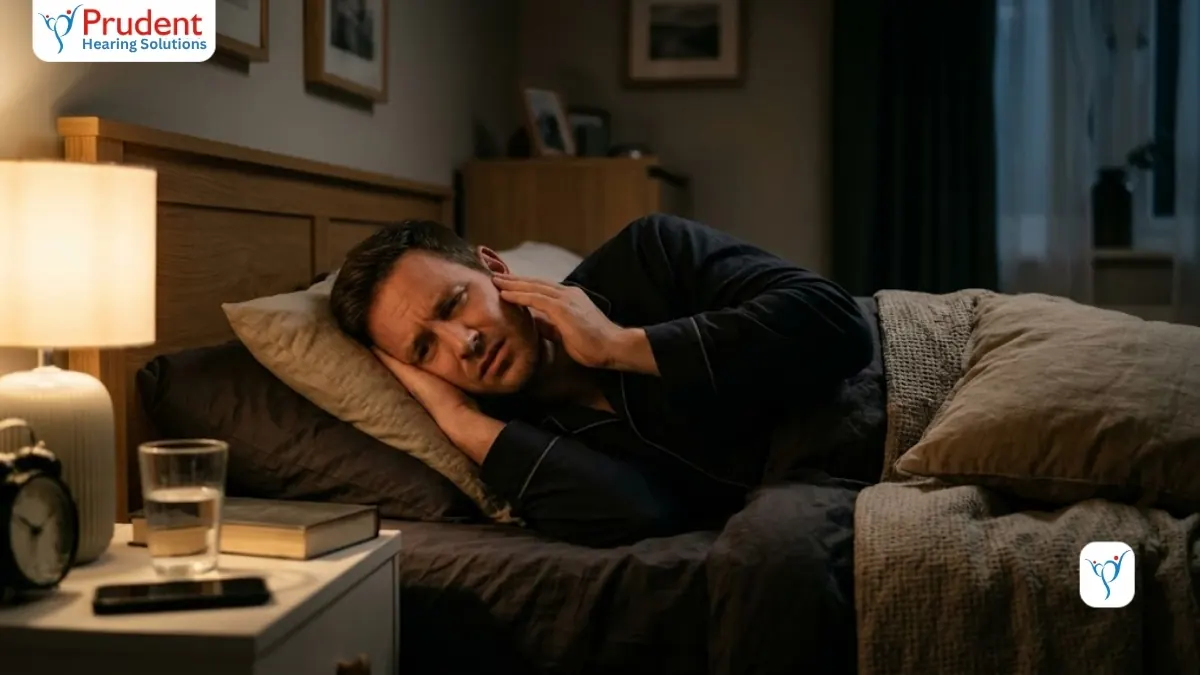
Ear pain at night usually feels worse for two simple reasons: lying flat changes pressure and drainage in the ear and the Eustachian tube, and in a quiet, dark room there is nothing to distract you from the ache. The cause is most often a middle or outer ear infection, a jaw problem, wax, or pain referred from a tooth or the throat. Most of it can be eased at home until you see a doctor, but some signs need prompt medical attention.
Why ear pain gets worse when you lie down
When you are upright, the Eustachian tube, the small channel linking the middle ear to the back of the nose, drains and ventilates the middle ear more easily. Lying down can let congestion settle, so pressure behind an inflamed eardrum builds. If you lie on the painful side, the pillow also presses on a tender outer ear. Add the lack of distraction at night, and the same ache can feel much stronger at 2 am than at 2 pm.
Common causes of ear pain at night
| Likely cause | Clues |
|---|---|
| Middle ear infection (otitis media) | Often after a cold; deep ache, blocked feeling, sometimes fever |
| Outer ear infection (swimmer's ear) | Pain on touching or pulling the ear; itching; after swimming or water |
| Jaw joint (TMJ) problem or teeth grinding | Ache in front of the ear, stiff jaw in the morning, clicking |
| Ear wax build-up | Blocked, full feeling; muffled hearing; ache if the wax is impacted |
| Tooth or throat problem | Ear pain together with toothache, or a sore throat |
| Blocked Eustachian tube from a cold | Pressure, popping, muffled hearing, worse when lying down |
A middle ear infection is the classic cause in children and common in adults after a cold. Swimmer's ear, an infection of the ear canal, hurts more when you touch or tug the outer ear. Jaw problems, teeth grinding at night and dental infections can all send pain into the ear; our guide to one-sided ear, throat and jaw pain covers these. If your ear also pops or feels pressured after a cold, see blocked ears and the Eustachian tube.
How to ease ear pain at night
These steps are for comfort while the cause settles, or until you can see a doctor. They do not treat an infection on their own.
- Raise your head with an extra pillow, so the ear can drain and the pressure eases.
- Sleep on the other side, keeping weight off the painful ear.
- Hold a warm (not hot) compress against the ear for a few minutes at a time.
- Take a standard dose of paracetamol or ibuprofen if it is safe for you, following the pack.
- Swallow, yawn or chew gently before bed to help a blocked tube open, if a cold is the problem.
- If your jaw is the cause, avoid chewing gum during the day and mention night-time grinding to your dentist.
Ear drops help in some situations and are wrong in others, so think about the cause first. Pain-relief drops may ease an outer ear ache, but they should not go into an ear that might have a burst eardrum or discharge. Our guide to the best ear drops for ear pain in adults explains which drops suit which situation, and how to put ear drops in correctly shows the technique step by step.
Ear pain at night after a cold or swimming
Two situations account for a lot of night-time ear pain. After a cold, the Eustachian tube often stays swollen for a while, so pressure and fluid build up behind the eardrum and the ear aches when you lie down. This usually eases as the cold clears, but persistent pain, fever or muffled hearing needs a check.
After swimming or a head bath, water left in the canal can soften the skin and let an infection start, which makes the outer ear sore and tender to touch, especially when you lie on it. Our guide to water trapped in the ear explains how to dry the ear safely.
What not to do
- Don't push cotton buds, hairpins or keys into the ear to relieve an itch or ache.
- Don't pour oil, garlic preparations or other home remedies into an ear that might be infected or perforated.
- Don't use ear drops left over from someone else's prescription.
- Don't ignore pain that keeps returning night after night.
When ear pain at night needs a doctor
See a doctor promptly, rather than waiting it out, if you notice any of the following:
- High fever, or you feel generally very unwell.
- Pus, blood or fluid coming from the ear.
- Swelling, redness or tenderness behind the ear, or the ear starting to stick out.
- Severe pain, or pain that keeps getting worse despite painkillers.
- Sudden hearing loss, dizziness, or weakness on one side of the face.
- Ear pain in a young child who is very irritable, feverish or pulling at the ear.
Swelling and pain behind the ear with a fever can mean an infection is spreading and should be seen urgently. A sudden drop in hearing should be treated as an emergency; read why sudden hearing loss can't wait.
"A night or two of mild ache after a cold is common. Pain with fever, discharge or swelling behind the ear is not something to sleep on."
Ear pain at night in children
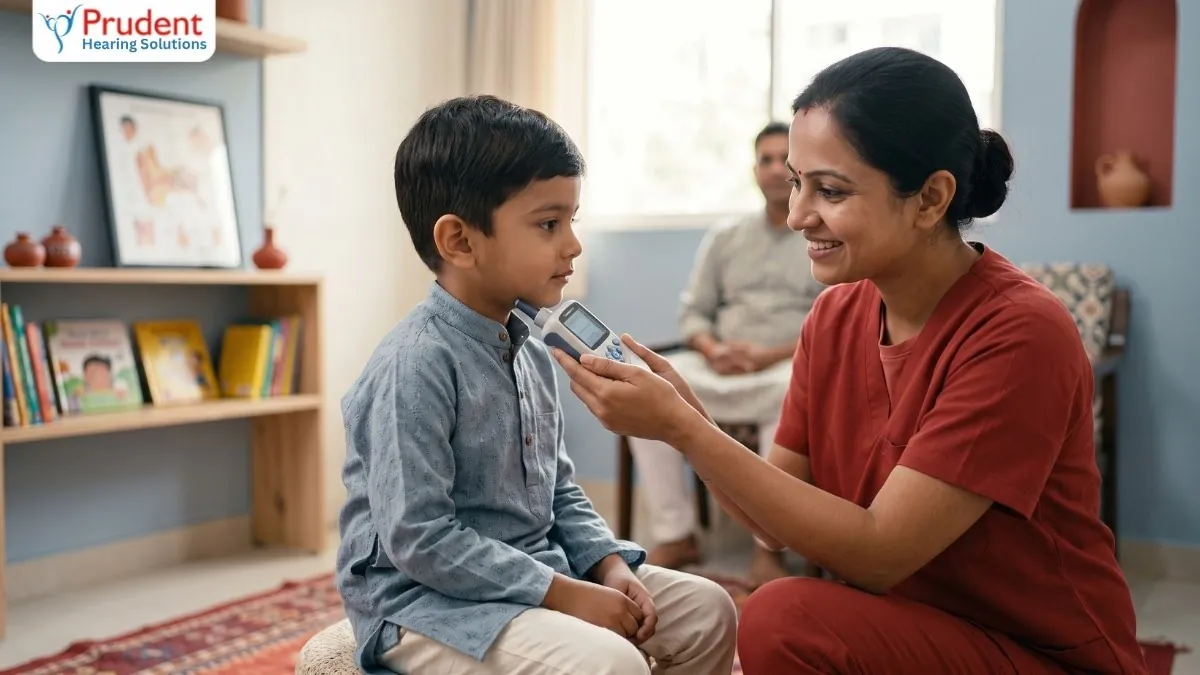
Children often wake at night with ear pain, because middle ear infections are common at that age and lying down makes the pressure worse. Comfort, pain relief at the correct dose for their age and weight, and a doctor's check if it does not settle, or if there is fever or discharge, are the usual steps. Repeated infections can affect hearing and speech, so a hearing check is worthwhile; see ear infections and your child's hearing.
After the pain: check your hearing
If ear pain came with muffled hearing that has not fully come back once the infection settled, a hearing test is worth doing. Fluid can linger behind the eardrum for a while, and occasionally an infection leaves a lasting change. Book a free hearing test at any Prudent clinic in Pune, Mumbai, Navi Mumbai, Delhi or Bengaluru, or ask about a home visit. Our RCI-registered audiologists check your ears first and will tell you honestly if you need a doctor instead. Call +91 94296 90093. Prudent Hearing Solutions.
Free consultation
Ready to hear the difference?
Book a free 45-minute hearing test at any Prudent Hearing clinic: no obligation, honest advice, expert audiologists.