Educational information, not medical advice. This article is written to help you understand common ear and hearing issues. It is not a substitute for professional diagnosis or treatment. If your symptoms are severe, sudden, or persistent, please consult a qualified doctor or audiologist. For urgent symptoms (sudden hearing loss, bleeding from the ear, severe pain with dizziness, or a head injury), seek medical care the same day.
Poor circulation, high BP and kidney disease are linked to hearing changes. Learn the real evidence, and why sudden hearing loss is a 72-hour emergency.
Quick answer
The inner ear runs on blood flow. Your cochlea is fed by one of the most vascular, most delicate blood supplies in the body, so problems with circulation, blood pressure or kidney function can show up as changes in how you hear. Some of these links are firmly established; others are still emerging. And one hearing symptom, sudden loss in one ear, is a genuine medical emergency. Here is what the evidence actually supports, and what to do about it.
Key takeaways
- The cochlea's blood supply (the stria vascularis) is unusually dense, which is why circulation, blood pressure and kidney health can all affect hearing.
- Chronic kidney disease (CKD) is clearly associated with more hearing loss, roughly 1.5 times the risk in pooled research, and with higher rates of sudden hearing loss.
- Low-frequency hearing loss as an early marker of heart or blood-vessel disease is emerging evidence: interesting, but not a diagnostic test. Your ear cannot screen your heart.
- High blood pressure is a shared vascular risk factor for both hearing and brain health; managing it is good for your ears.
- Sudden hearing loss is an emergency. Aim to be seen within 72 hours.
The inner ear runs on blood flow. Your cochlea is fed by one of the most vascular, most delicate blood supplies in the body, so problems with circulation, blood pressure or kidney function can show up as changes in how you hear. Some of these links are firmly established; others are still emerging. And one hearing symptom, sudden loss in one ear, is a genuine medical emergency. Here is what the evidence actually supports, and what to do about it.
Sudden hearing loss? Treat it as an emergency today
If you have lost hearing suddenly in one (or both) ears (over minutes, hours, or overnight) do not wait for a routine appointment. Sudden sensorineural hearing loss (SSNHL) is a recognised medical emergency. Treatment, usually corticosteroids, works best when it starts as early as possible, ideally within the first 72 hours. The NIDCD notes that treatment delayed for more than two to four weeks is much less likely to reverse the loss (NIDCD: Sudden Deafness). Every day of delay lowers the chance of recovering that hearing.
See an ENT doctor or audiologist the same day, or go to a hospital emergency department, if you notice: a sudden drop or blocked/muffled feeling in one ear, a loud "pop" followed by loss, new one-sided ringing, or hearing loss with dizziness. Call us on +91 9429690093 and say it is a sudden hearing change so we can prioritise you. Do not try to wait it out or treat it at home.
Is there a link between heart disease and hearing loss?
Yes, an associational one. The cochlea depends on a rich, tiny network of blood vessels called the stria vascularis to keep its hair cells alive and working. When circulation to this region is impaired, hearing can suffer. Research reports that people with cardiovascular disease tend to have poorer hearing, and some studies treat low-frequency hearing loss as a possible early signal of heart and blood-vessel problems (Scientific Reports, 2025).
This is an association, not a diagnostic screen: a hearing test cannot diagnose heart disease. The sensible response is to do both: follow up cardiac concerns with your physician, and get a baseline hearing test so any change is caught early.
Can poor circulation cause hearing loss?
Reduced blood flow can affect hearing because the cochlea is so vascular and has almost no reserve supply: it cannot easily compensate when circulation drops. Some research notes that low-frequency hearing loss in particular may be one of the earlier signs, since the stria vascularis that supports low-pitch hearing is highly sensitive to blood flow (NIDCD; Scientific Reports, 2025).
The evidence here is associational rather than proof of cause. Practically, the same habits that protect your heart (controlling blood pressure and cholesterol, staying active, not smoking) support your hearing too (WHO: Deafness and hearing loss). If your hearing has changed, book a hearing test and review your circulation with your doctor.
What causes low-frequency hearing loss?
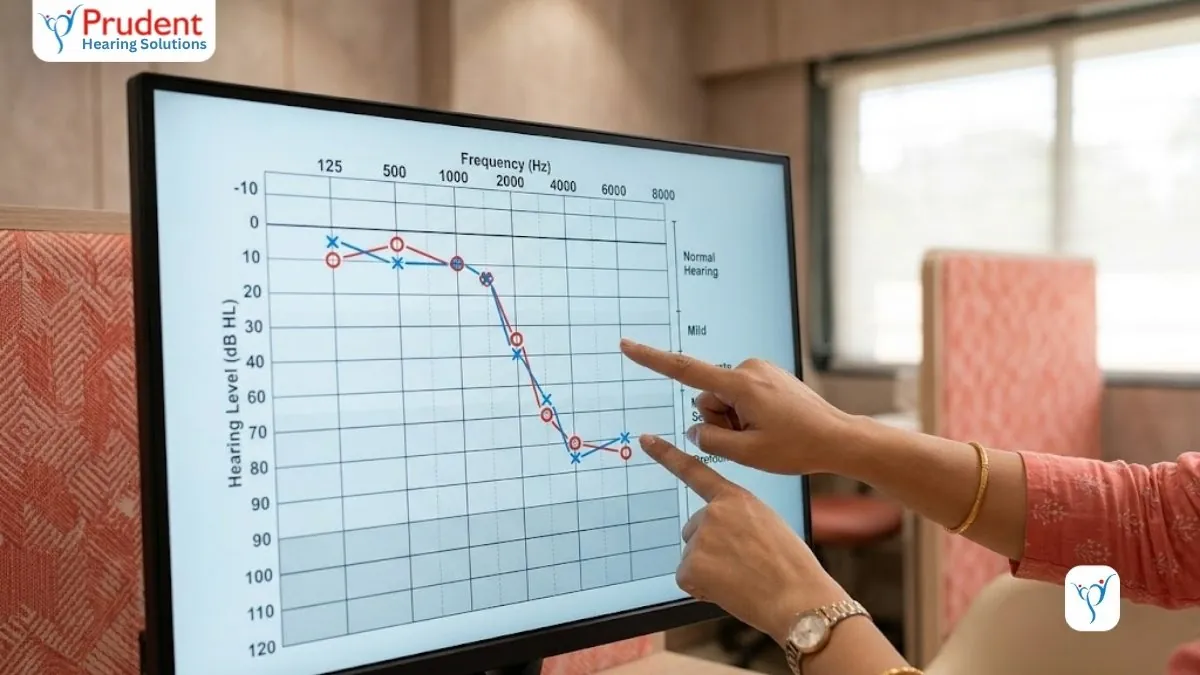
Low-frequency hearing loss means you struggle more with deep, low-pitched sounds: a change some people describe as speech sounding thin or a phone call feeling "hollow". Common causes include Meniere's disease, sudden sensorineural hearing loss, and vascular factors affecting blood flow to the cochlea.
Because the stria vascularis feeding low-frequency hearing is so blood-flow dependent, some research explores low-frequency loss as a possible early marker of cardiovascular or cerebrovascular disease: this is emerging evidence, not an established diagnostic tool (Scientific Reports, 2025; NIDCD: Sudden Deafness). Important: a sudden low-frequency drop, especially in one ear, is urgent. Treat it as a possible SSNHL emergency and seek same-day care.
How does the type of hearing change relate to the cause?
The pattern of a hearing change offers clues, but only a proper evaluation confirms anything. This table is for orientation, not self-diagnosis.
- Sudden loss in one ear (hours) (Often linked to: Viral, vascular, autoimmune causes; Evidence strength: Emergency) established; What to do: Same-day ENT/audiology care (within 72 hrs)
- Gradual low-frequency loss. Often linked to: Meniere's, vascular factors, circulation; Evidence strength: Mixed / emerging; What to do: Book a hearing test; review with doctor
- Slow high-frequency loss. Often linked to: Age, noise exposure; Evidence strength: Established; What to do: Baseline hearing test
- Hearing change with dizziness/vertigo. Often linked to: Inner-ear/balance involvement; Evidence strength: Established need to assess; What to do: Balance & VEMP diagnostics
- Hearing change alongside CKD/dialysis. Often linked to: Shared microvascular damage, ototoxic drugs; Evidence strength: Established association; What to do: Monitor hearing; coordinate with nephrology
Is kidney disease linked to hearing loss?
Yes, and this link is well established. Chronic kidney disease is associated with roughly 1.5 times the risk of hearing loss in pooled research, and national cohort data show higher rates of sudden sensorineural hearing loss in people with CKD (meta-analysis, PubMed; national cohort, PMC). The reason is structural: the filtering tissue of the kidney and the fine tissues of the inner ear share a similar delicate microvascular architecture, so a disease that damages one can affect the other.
Some treatments used in kidney disease, including certain diuretics and antibiotics, can also be ototoxic (harmful to hearing). In our clinics we often recommend that people with CKD, and especially those on dialysis, have their hearing monitored and keep their nephrology team informed of any change. A hearing test gives you a baseline to track against.
What causes sudden hearing loss?
Sudden sensorineural hearing loss usually strikes in one ear, quickly, and is a medical emergency: see the callout above and seek care within 72 hours. In most cases no single cause is ever pinned down, but recognised triggers include viral infections (a common association, especially after a cold or respiratory illness), vascular events affecting blood flow to the cochlea, autoimmune conditions, and, less often, tumours or neurological causes (NIDCD: Sudden Deafness; review, PMC).
Because circulation matters, SSNHL is sometimes linked to underlying vascular and kidney conditions. Whatever the suspected cause, the response is the same: do not wait it out. Early corticosteroid treatment gives the best chance of recovery.
Does high blood pressure affect hearing?
High blood pressure (hypertension) is a vascular risk factor, and the inner ear depends on healthy small blood vessels, so uncontrolled hypertension can, over time, affect the cochlea's blood supply and is associated with poorer hearing (Scientific Reports, 2025; NIDCD). Blood pressure is also relevant to brain health: it is one of the modifiable risk factors for dementia that overlaps with hearing.
This is association, not proof that high BP directly causes hearing loss. Managing blood pressure with your doctor is worthwhile for your heart, brain and ears alike, and a baseline hearing test lets you monitor. Remember: any sudden hearing change is urgent, regardless of your blood pressure.
What should I actually do about all this?
Keep it simple. Manage your heart, blood pressure and kidney health with your physician: that is where the real cardiovascular and renal decisions belong. Treat your ears as part of the same system: get a baseline hearing test, especially if you live with diabetes, high blood pressure, heart disease or CKD, and repeat it if anything changes.
If a change is sudden, act within 72 hours. Do not use hearing as a substitute for a heart or kidney check-up: use it as one more reason to look after your circulation, and to catch problems early.
Book a hearing test
If you live with heart disease, high blood pressure, diabetes or kidney disease, or you have simply noticed a change in your hearing, a baseline hearing test is a sensible, low-cost step. Our RCI-registered audiologists (MASLP/BASLP) will explain your results plainly and tell you honestly whether anything needs follow-up. Book a free hearing test, or contact us on +91 9429690093. If your hearing loss came on suddenly, please call today and tell us: that changes everything about how fast we see you.
Continue reading
Frequently asked questions
Can an audiologist detect heart disease from a hearing test?
No. A hearing test measures hearing, not heart function. Research links certain hearing patterns to cardiovascular risk, but that is an emerging association, not a diagnostic tool. See your doctor for cardiac assessment.
Is hearing loss from poor circulation reversible?
It depends on the cause and how quickly it is addressed. Sudden loss treated within days has a better chance of recovery. Gradual loss is often permanent but very manageable with hearing aids. Get assessed early.
Should people on dialysis have their hearing checked?
Yes. CKD and dialysis are associated with higher hearing-loss risk, and some medications used are ototoxic. Ask for baseline and periodic hearing monitoring, and keep your nephrology team informed of any change.
Why does sudden hearing loss need treatment within 72 hours?
Because the inner ear has little reserve. Corticosteroid treatment works best when started early, ideally within 72 hours, and the chance of recovery falls the longer treatment is delayed. The NIDCD notes that once treatment is delayed beyond two to four weeks, the loss is much less likely to reverse.
Can high blood pressure cause tinnitus?
Vascular factors, including high blood pressure, are among the many things associated with tinnitus (ringing in the ears). Tinnitus has many causes, so it should be evaluated rather than assumed. Our tinnitus help service can assess it.
I feel dizzy along with a hearing change: what does that mean?
Hearing and balance share the inner ear, so the two can be affected together. Persistent dizziness with hearing change deserves proper assessment, including balance and VEMP diagnostics, and sudden onset needs urgent care.
Sources & further reading
We cross-checked this article against the following authoritative sources. Guidance and figures reflect the most recent public guidance available at the time of last review (September 2026). Clinical review by the Prudent Hearing clinical team.
- Hearing, Ear Infections, and Deafness (NIDCD)
- Sudden Deafness (NIDCD)
- Quick Statistics About Hearing (NIDCD)
- hearing and cardiovascular association (Scientific Reports (2025))
- Chronic kidney disease and hearing loss meta-analysis (PubMed) (pubmed.ncbi.nlm.nih.gov)
- CKD and sudden sensorineural hearing loss, national cohort (PMC) (ncbi.nlm.nih.gov)
- Sudden sensorineural hearing loss review (PMC) (ncbi.nlm.nih.gov)
- Deafness and hearing loss (WHO)
Free consultation
Ready to hear the difference?
Book a free 45-minute hearing test at any Prudent Hearing clinic: no obligation, honest advice, expert audiologists.