AI in hearing aids is real, but it mainly improves speech understanding in noisy places. It does not restore normal hearing, and the label 'AI' is used loosely. Here is what the technology does, where it helps, and how to judge a claim.
The direct answer
Yes, AI hearing aids can work better, mainly in noisy places. The strongest evidence is for improved speech understanding when there is background noise. AI does not repair damaged hearing, and it does not make every situation better. The word 'AI' is also used loosely: some aids have a real neural network on a dedicated chip, and others use ordinary automatic settings with an AI label.
What AI actually does in a hearing aid
- Sound scene recognition: the aid classifies where you are, such as a quiet room, a busy street or a restaurant, and adjusts.
- Speech and noise separation: a neural network trained on large sets of real-world sound separates voices from background noise more precisely than older rules-based methods.
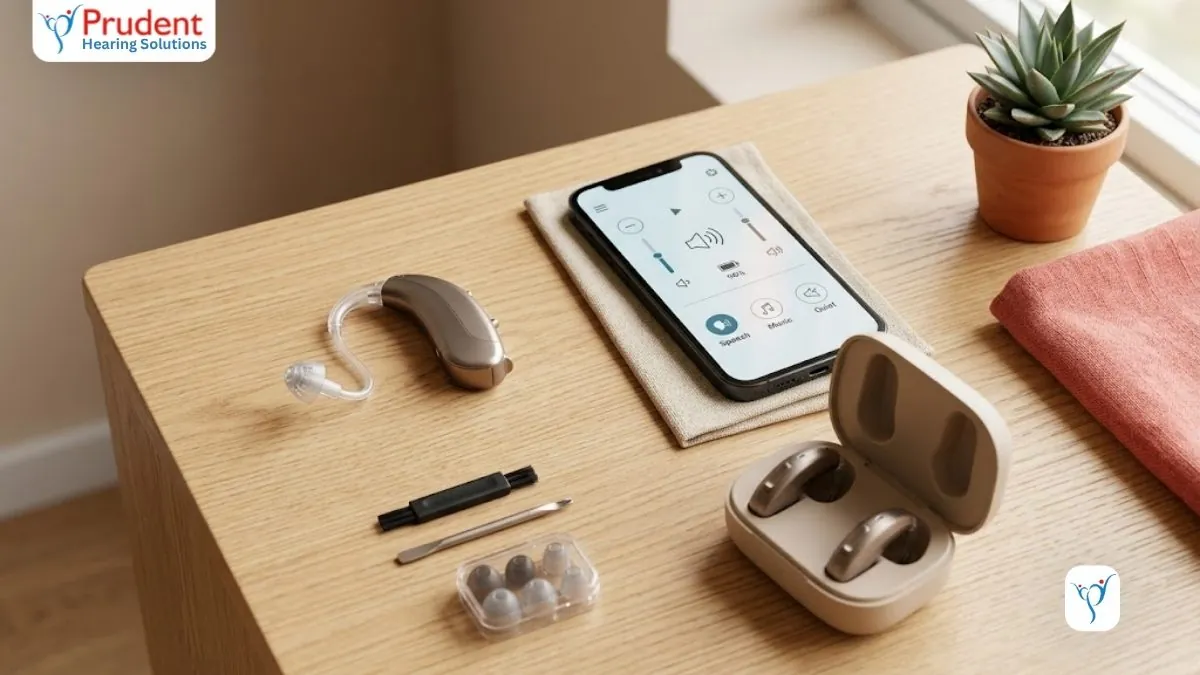
- Personalisation: some systems learn your preferred settings over time, and some apps let you request a change in plain language.
- Support features: some aids also use AI for fall detection, health tracking and language translation through the phone.
Where AI genuinely helps
Noise is the hardest listening job for a damaged ear and the main complaint we hear from patients. This is where deep neural network processing has made the clearest gains, especially in restaurants, gatherings and busy offices. Reduced listening effort is also a real benefit: many wearers report feeling less tired at the end of the day.
Where the claims run ahead of reality
- It does not restore normal hearing. The cochlea remains damaged. See can hearing aids restore normal hearing.
- Not all 'AI' is equal. Ask whether the aid has a dedicated neural-network processor, or just automatic programs.
- Gains vary by person. Someone with mild loss in quiet surroundings may notice little difference from a mid-range aid.
- Battery cost. The heaviest AI processing uses more power, so battery life can be shorter when it is fully engaged.
- Fitting still matters most. A well-fitted mid-range aid can beat a poorly fitted flagship.
How to judge an AI claim
- Ask which parts of the aid use AI, and what problem each solves.
- Ask to trial it in a noisy setting, not just in a quiet clinic room.
- Compare against a non-AI aid at a lower price during the same trial.
- Ask about battery life with the AI features on.
- Check the warranty, service and trial terms before you pay.
Do you need AI?
If you mostly talk one-to-one in quiet places, you may not. If you regularly struggle in restaurants, family gatherings or meetings, the extra cost can be well spent. Read our benefits of AI hearing aids for more, and our Phonak Audéo Sphere Infinio review and Oticon BrainHearing explainer for two examples.
"The right hearing aid is the one that lets you follow the conversations you care about, at a price you are comfortable with."
Book a free hearing test and try different technology levels side by side before you decide.
Frequently asked questions
Do AI hearing aids actually work better?
Yes, mainly in noisy places. The strongest evidence is for better speech understanding against background noise. AI does not repair damaged hearing or improve every situation, and the label is used loosely across brands.
What does AI do inside a hearing aid?
It recognises the sound scene you are in, separates speech from noise using a neural network trained on real-world sound, and in some aids learns your preferred settings. Some aids also use AI for fall detection, health tracking or translation.
Do AI hearing aids restore normal hearing?
No. The cochlea remains damaged, so AI improves how sound is processed but cannot make hearing normal again.
How can I tell if a hearing aid's AI claim is real?
Ask which parts use AI and what problem each solves, whether there is a dedicated neural-network processor, and what the battery life is with AI features on. Trial it in a noisy setting and compare it with a cheaper non-AI aid during the same trial.
Do I need an AI hearing aid?
If you mostly talk one-to-one in quiet places, you may not. If you regularly struggle in restaurants, family gatherings or meetings, the extra cost can be money well spent.
Free consultation
Ready to hear the difference?
Book a free 45-minute hearing test at any Prudent Hearing clinic: no obligation, honest advice, expert audiologists.