Educational information, not medical advice. This article is written to help you understand common ear and hearing issues. It is not a substitute for professional diagnosis or treatment. If your symptoms are severe, sudden, or persistent, please consult a qualified doctor or audiologist. For urgent symptoms (sudden hearing loss, bleeding from the ear, severe pain with dizziness, or a head injury), seek medical care the same day.
What a workplace hearing conservation program requires: noise monitoring, controls, hearing protectors, annual audiograms and training when noise hits 85 dBA.
Quick answer
A workplace hearing conservation programme is triggered when noise reaches about 85 dBA averaged over an 8-hour shift. At that level it must include four things: noise monitoring, engineering and administrative controls, hearing protectors, and annual hearing tests plus training. The reason is simple: sustained exposure at or above 85 dBA can cause permanent noise-induced hearing loss.
Key takeaways
- The action level is roughly 85 dBA over an 8-hour shift; above it, a formal programme is expected.
- Four pillars: monitoring, controls, hearing protectors, and annual audiometry with training.
- Follow the hierarchy of controls: reduce the noise at source first; earplugs and earmuffs come last.
- Noise-induced hearing loss is permanent but preventable.
- Annual audiograms catch early damage before you notice it in daily life.
Part of our pillar guide: Is Your Job Damaging Your Hearing? Safe Noise Levels at Work (NIOSH Guide).
A workplace hearing conservation programme is triggered when noise reaches about 85 dBA averaged over an 8-hour shift. At that level it must include four things: noise monitoring, engineering and administrative controls, hearing protectors, and annual hearing tests plus training. The reason is simple: sustained exposure at or above 85 dBA can cause permanent noise-induced hearing loss.
What noise level triggers a hearing conservation programme?
The widely referenced threshold is an 8-hour time-weighted average of 85 dBA. NIOSH sets its recommended exposure limit at 85 dBA for 8 hours, and halves the safe duration for every 3 dB increase, so 88 dBA is safe for only about 4 hours.
In the United States, OSHA requires employers to run a hearing conservation programme once workers are exposed at or above this action level. The same four-pillar approach is sensible good practice for any noisy workplace (shop floors, construction sites and manufacturing plants) because the goal everywhere is the same: preventing permanent noise-induced hearing loss.
If you have to raise your voice to be heard by someone an arm's length away, the noise is likely high enough to matter.
What are the four requirements of a hearing conservation programme?
1. Noise monitoring. The employer measures workplace noise to identify who is over-exposed. A calibrated sound level meter or dosimeter is used; NIOSH even offers a validated Sound Level Meter app for spot checks.
2. Controls. Reduce exposure using the hierarchy of controls, described below.
3. Hearing protectors. Where noise cannot be lowered enough, workers get earplugs or earmuffs suited to the exposure. NIDCD notes that protectors reduce sound reaching the ear and must fit correctly to work.
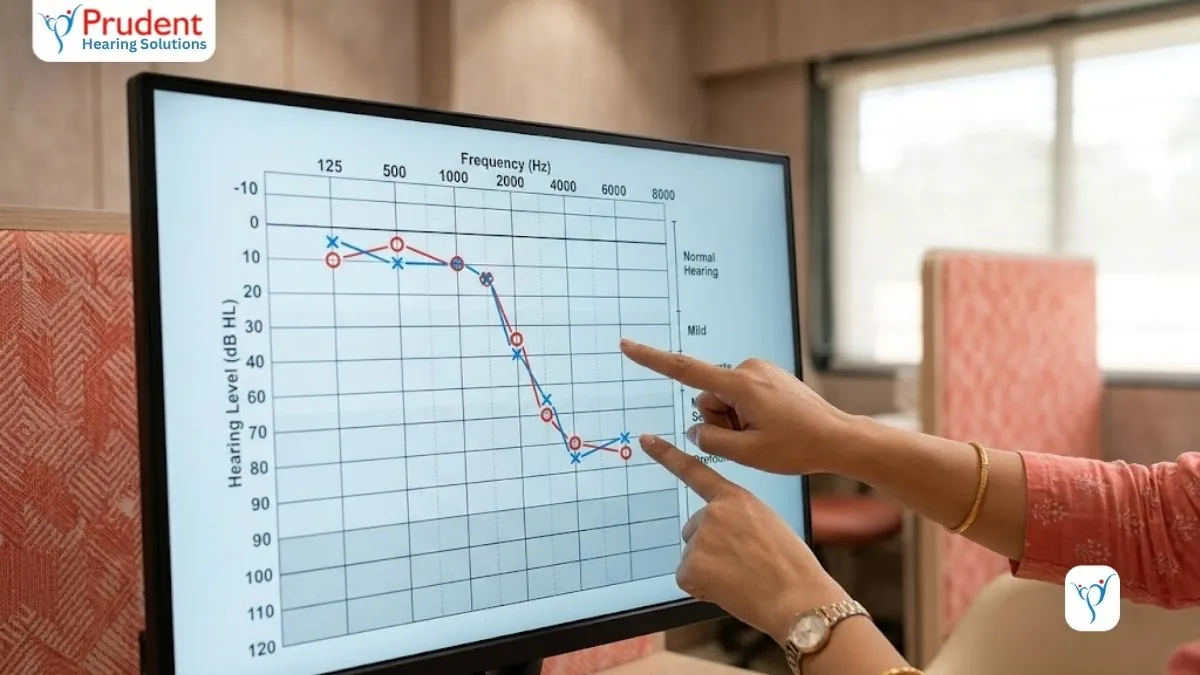
4. Audiometry and training. Workers get a baseline hearing test and then annual audiograms, plus training on the risks and correct use of protectors.
Why is reducing noise better than handing out earplugs?
Because earplugs depend on the wearer. They only protect if they are worn correctly, for the whole shift, every shift. The hierarchy of controls puts engineering fixes first:
- Eliminate or substitute: replace a loud machine or process with a quieter one.
- Engineering controls: enclose the source, add barriers or dampening, maintain equipment.
- Administrative controls: rotate staff, schedule loud jobs when fewer people are nearby, add quiet breaks.
- Personal protective equipment (PPE): earplugs and earmuffs, as the last line.
NIOSH stresses buying quieter equipment and controlling noise at the source rather than relying on PPE alone. To understand the exposure limits behind these controls, read our pillar guide, Is Your Job Damaging Your Hearing? Safe Noise Levels at Work (NIOSH Guide).
Why do annual audiograms matter?
Noise-induced hearing loss usually creeps in without pain or obvious warning. It typically starts in the high frequencies (around 4,000 Hz) long before speech sounds muffled. An annual audiogram compares your hearing to your baseline and flags a "standard threshold shift" early, while you can still act. ASHA explains that noise damage is cumulative and permanent, so catching a small shift is the point of yearly testing.
A tinnitus (ringing) after a shift, or trouble following conversation in a noisy canteen, are early signals worth a check even before your annual test.
When should a worker seek care urgently?
Sudden hearing loss in one or both ears, a noticeable drop over hours or a few days, should be treated as urgent, not routine wear. See an ENT or audiologist as soon as possible rather than waiting, because prompt medical assessment gives the best chance of recovery. This is separate from the gradual loss a conservation programme guards against.
For routine screening, Prudent Hearing Solutions offers workplace and clinic-based hearing tests for teams and individuals. Employers can arrange baseline and annual audiometry through our contact page, and we also offer a home visit for staff who cannot reach the clinic. If a test shows a shift, we discuss protection and, where appropriate, hearing aids.
Continue reading
Frequently asked questions
At what noise level is hearing protection legally required?
The common trigger is an 8-hour average of 85 dBA. At or above this action level, a hearing conservation programme with monitoring, controls, protectors and testing is expected.
Do earplugs alone satisfy the requirement?
No. Protectors are one of four pillars and sit last in the hierarchy of controls. Employers are expected to reduce noise at source first, then add PPE, plus run monitoring, audiometry and training.
How often should workplace hearing tests be done?
A baseline test when a worker enters a noisy job, then an audiogram every year to compare against that baseline and catch early damage.
Can noise-induced hearing loss be cured once it starts?
No. Damage from chronic noise is permanent, which is why prevention and early detection matter. Sudden hearing loss, however, needs urgent care and may be treatable if seen promptly.
Is 85 dBA loud?
It is roughly the noise of heavy city traffic or a busy workshop. If you must shout to be heard an arm's length away, exposure is likely in the range that needs protection.
Sources & further reading
We cross-checked this article against the following authoritative sources. Guidance and figures reflect the most recent public guidance available at the time of last review (September 2026). Clinical review by the Prudent Hearing clinical team.
- CDC / NIOSH (Occupational Noise Exposure)
- CDC / NIOSH (Noise and dBA levels)
- CDC / NIOSH (Preventing hearing loss (controls, SLM app))
- OSHA (Occupational Noise Exposure)
- NIDCD (Noise-Induced Hearing Loss)
- NIDCD (Hearing Protectors)
- ASHA (Noise and Hearing)
Free consultation
Ready to hear the difference?
Book a free 45-minute hearing test at any Prudent Hearing clinic: no obligation, honest advice, expert audiologists.