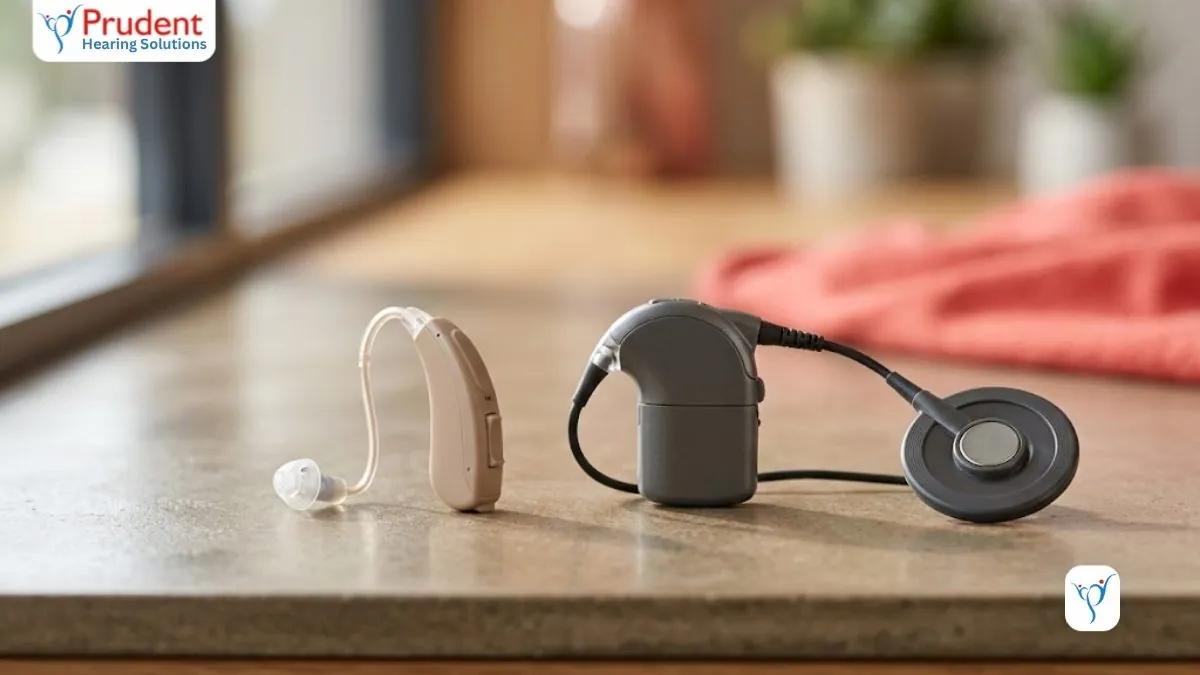
A telecoil is a tiny coil inside some hearing aids that picks up sound directly from a hearing loop system or a compatible phone or neckloop, cutting out background noise. It is very useful where loops are installed, but loops are not common everywhere in India and not all aids have a telecoil.
The direct answer
A telecoil, or T-coil, is a small copper coil inside some hearing aids that picks up a magnetic signal instead of sound from the air. When a hearing loop system, a compatible telephone or a neckloop sends audio as a magnetic signal, the aid delivers it straight to your ear, with little background noise or echo. It can make speech far clearer in the right setting.
How it works
- A hearing loop is a wire around a room that carries the speaker's voice as a magnetic signal.
- You switch your hearing aid to its telecoil program (often a 'T' setting, or an automatic program).
- The aid receives the signal directly, so the sound is clean, without room echo or noise.
Where it can help
- Auditoriums, places of worship, theatres, cinemas and lecture halls that have a loop installed. Look for the ear-and-T symbol.
- Ticket counters, banks and help desks with loops.
- Telephones: some phones and landlines are hearing aid compatible and work with the telecoil.
- Neckloops worn with a TV, phone or audio player, sending sound to the telecoil. See assistive listening devices in India.
- Classrooms, through loop or FM systems, useful for children.
The limits, especially in India
- Loops are not widespread in Indian public venues, so you may rarely find one. Check before relying on it.
- Not every hearing aid has a telecoil. Very small in-the-ear and some receiver-in-canal models may not include one.
- Bluetooth is taking over for many uses, with streaming from phones and TV accessories. See Bluetooth hearing aids.
- Interference: telecoils can pick up electrical hum from some lights and equipment.
Should you ask for one?
- Ask if the model you are considering has a telecoil, and if it is an automatic or manual program.
- Consider it if you attend places with loops, have a strong need for phone clarity, or are choosing aids for a child or student. See BTE hearing aids, which more often include one.
- If you mainly use a smartphone and TV, Bluetooth streaming may matter more.
Tell your audiologist how and where you listen, so they can choose features that suit you. Book a free hearing test to start, or see how to choose the right hearing aid.
Frequently asked questions
What is a telecoil in a hearing aid?
A telecoil, or T-coil, is a small copper coil inside some hearing aids that picks up a magnetic signal instead of sound from the air. Audio from a hearing loop, a compatible phone or a neckloop reaches your ear with little background noise or echo.
How does a hearing loop work with a telecoil?
A loop is a wire around a room that carries the speaker's voice as a magnetic signal. You switch your hearing aid to its telecoil program, often marked T, and the aid receives the signal directly without room echo or noise.
Where can a telecoil help?
In auditoriums, places of worship, theatres, cinemas and lecture halls with a loop installed, at counters with loops, with hearing aid compatible phones, with neckloops for TV or phone, and in classrooms using loop or FM systems.
Is a telecoil useful in India?
It can be, but loops are not widespread in Indian public venues, so you may rarely find one. Not every hearing aid has a telecoil, and Bluetooth streaming now covers many of the same uses.
Should I ask for a hearing aid with a telecoil?
Consider it if you attend places with loops or need extra phone clarity, and ask whether the model has one and whether it switches automatically. If you mainly use a smartphone and TV, Bluetooth streaming may matter more.
Free consultation
Ready to hear the difference?
Book a free 45-minute hearing test at any Prudent Hearing clinic: no obligation, honest advice, expert audiologists.