Educational information, not medical advice. This article is written to help you understand common ear and hearing issues. It is not a substitute for professional diagnosis or treatment. If your symptoms are severe, sudden, or persistent, please consult a qualified doctor or audiologist. For urgent symptoms (sudden hearing loss, bleeding from the ear, severe pain with dizziness, or a head injury), seek medical care the same day.
Wash and dry your hands, hold the aid by its body, place it behind the ear, then gently guide the speaker or earmould into the canal and check the fit. Remove by lifting from behind the ear, not by pulling the wire or tube. Steps differ slightly for RIC, BTE and in-the-ear styles.
The short answer
Start with clean, dry hands. For behind-the-ear styles, hook the aid over the top of your ear, then guide the tip or earmould into the canal. For in-the-ear styles, align the shell with your canal and gently rotate it in. To remove, lift the aid from behind the ear or use the removal handle, and never pull on the thin wire or tube.
Before you start
- Wash and dry your hands.
- Check that the aid is switched on or the battery door is closed, and the dome or earmould is clean.
- Know which is left and which is right. Most are colour-coded, blue for left and red for right.
- Put aids in before using hair products, and keep them away from water.
Receiver-in-canal (RIC) aids
- Hold the aid by the body where it joins the wire, not by the thin wire.
- Place the body over the top of your ear so it rests behind it.
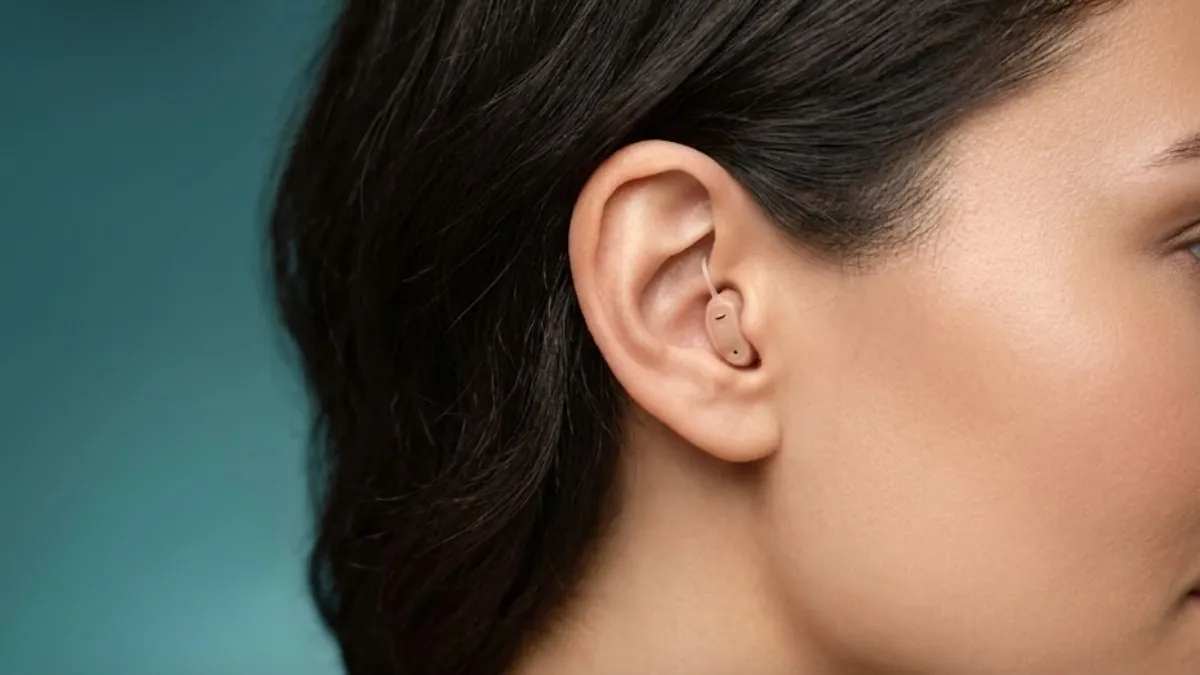
- Hold the dome or the small speaker end and guide it into the ear canal, pointing slightly toward your nose.
- If there is a small retention wire (a canal lock), tuck it into the fold of your ear so it holds the fit.
- Check that the aid sits snugly behind the ear and the speaker feels secure but not painful.
See our RIC hearing aids guide.
Behind-the-ear (BTE) with earmould
- Hold the earmould by its curved edge, with the tube facing up.
- Insert the canal part of the mould first, then rotate the top of the mould into the outer ear.
- Hook the aid over your ear so it rests behind it.
- Gently pull the outer ear up and back if the fit needs help, and press the mould to seat it.
See our BTE hearing aids guide.
In-the-ear (ITE, ITC, CIC) aids
- Hold the aid with the canal tip toward your ear canal and the faceplate up.
- Insert the tip and gently rotate the aid so it seats in the bowl of the ear.
- Press the faceplate lightly until it sits flush. Use the removal handle if fitted.
How to remove them safely
- RIC and BTE: lift the body from behind your ear, then ease the tip or mould out. Never yank the thin wire or tube.
- In-the-ear: use the removal handle, or gently pull the aid at a slight angle while pulling your ear back.
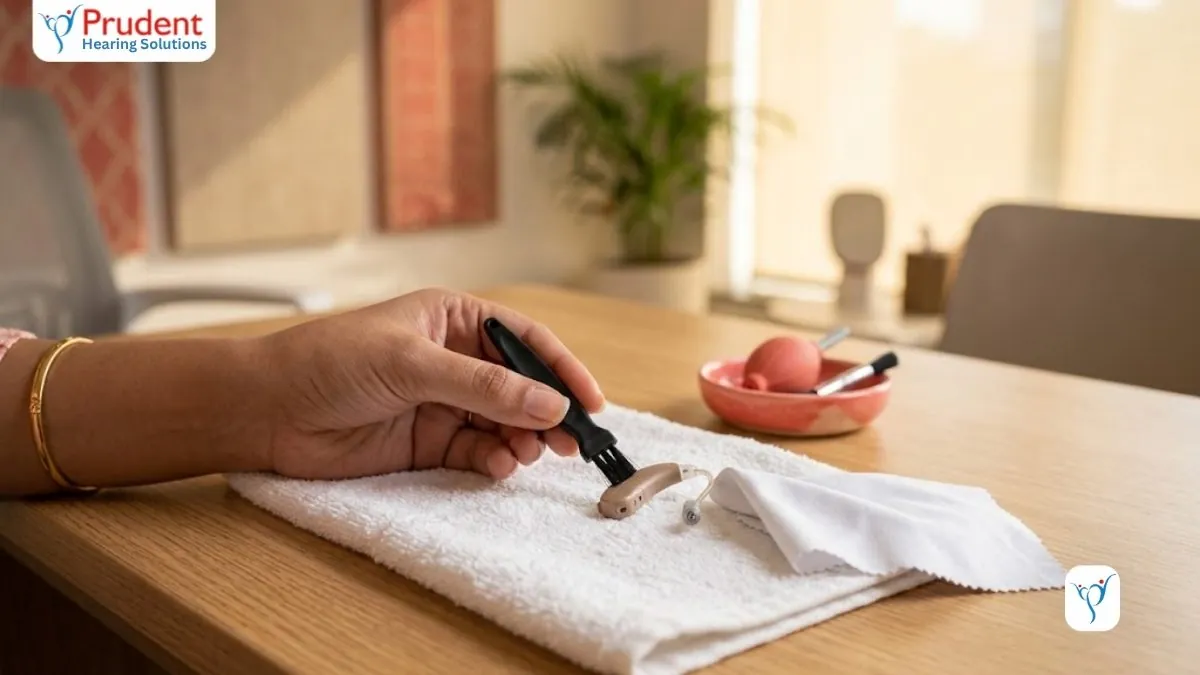
- Wipe the aid, open the battery door or place it in the charger, and store it dry.
Signs the fit is wrong
- Whistling or feedback after you insert it. See hearing aid whistling and feedback.
- Soreness or a rubbing spot.
- The aid keeps falling out or moving.
- Sound seems muffled or different from one day to the next.
Most insertion problems are solved with a quick fitting adjustment or a different dome size. Our tips for new hearing aid users help in the first weeks, and we can show you in person at any clinic or during a home visit.
Continue reading
Frequently asked questions
How do I put on a receiver-in-canal hearing aid?
Hold the aid by its body, not the thin wire, place the body over the top of your ear so it rests behind it, then guide the dome or speaker into the ear canal. Tuck any small retention wire into the fold of your ear.
How do I put in a BTE hearing aid with an earmould?
Hold the earmould by its curved edge with the tube facing up, insert the canal part first, rotate the top into place, then hook the aid over your ear. Pulling the outer ear gently up and back can help it seat.
How do I insert an in-the-ear hearing aid?
Hold it with the canal tip toward your ear and the faceplate facing out, insert the tip, gently rotate it so it settles in the bowl of the ear, and press the faceplate lightly until it sits flush.
How do I remove a hearing aid safely?
For RIC and BTE aids, lift the body from behind your ear and then ease the tip or mould out. For in-the-ear aids, use the removal handle. Never pull on the thin wire or tube.
How do I know my hearing aid is not fitted properly?
Whistling after you put it in, soreness or a rubbing spot, an aid that keeps falling out or moving, or sound that seems muffled or changes from day to day are all signs to have the fit checked.
Free consultation
Ready to hear the difference?
Book a free 45-minute hearing test at any Prudent Hearing clinic: no obligation, honest advice, expert audiologists.