Educational information, not medical advice. This article is written to help you understand common ear and hearing issues. It is not a substitute for professional diagnosis or treatment. If your symptoms are severe, sudden, or persistent, please consult a qualified doctor or audiologist. For urgent symptoms (sudden hearing loss, bleeding from the ear, severe pain with dizziness, or a head injury), seek medical care the same day.
A single loud firecracker can cause permanent hearing damage or lasting tinnitus in an instant, especially at close range. Keep well away, use proper ear protection, keep children far back, and get a hearing test if ringing or muffled hearing lasts beyond a day.
The direct answer
Yes, firecrackers can permanently damage hearing. Some crackers produce sudden peak sound levels above 140 decibels at close range, and impulse noise at that level can injure the inner ear instantly, with no build-up. The damage can be permanent hearing loss, lasting tinnitus, or both. The safest protection is distance, and ear protection when you cannot avoid the noise.
Why firecrackers are so risky
- Sudden, extreme peak level: unlike steady traffic noise, a blast arrives all at once and can exceed the ear's tolerance in a fraction of a second.
- Close range: the risk rises sharply the nearer you are. Holding or lighting a cracker, or standing beside one, is the worst case.
- Repeated exposure: a night of continuous bursts adds up.
- Children: their ears are just as vulnerable, and they tend to stand closer.
India's noise rules set a limit for firecrackers when measured at a distance of 4 metres, but many products sold do not respect it, and being closer than 4 metres removes that margin entirely.
Signs your ears have been hurt
- Ringing or buzzing that starts after a blast (tinnitus).
- Muffled hearing or a feeling of fullness.
- Ear pain or, rarely, bleeding or discharge from a burst eardrum.
- Sounds seeming distorted or too loud.
Ringing that fades within a day or two is a warning sign that the ear was stressed. Ringing or muffled hearing that lasts longer, or any sudden drop in hearing, needs prompt attention. See sudden hearing loss: a medical emergency and what to do about ringing after a loud event.
How to protect your ears this Diwali
- Keep your distance: stay as far as you can from bursting crackers, and never hold or lean over one.
- Choose lower-noise options: low-noise or green crackers, diyas, lights and sparklers held at arm's length.
- Use ear protection: well-fitted earplugs or earmuffs when you cannot avoid the noise. Foam earplugs are inexpensive; custom plugs fit better. See our guide to custom ear plugs.
- Protect children: keep them well back from the noise, and give them proper ear protection rather than cotton wool, which does little.
- Look after pets and elders: move them to a quiet room away from the noise.
- Take listening breaks: give your ears a quiet stretch between bursts.
What to do if your ears are affected
- Move away from the noise and rest your ears in a quiet place.
- Do not put anything in the ear, and do not use ear drops unless a doctor advises.
- If hearing is clearly reduced, or ringing is still there after a day, or there is pain or discharge, see an ENT. For a sudden drop, go the same day.
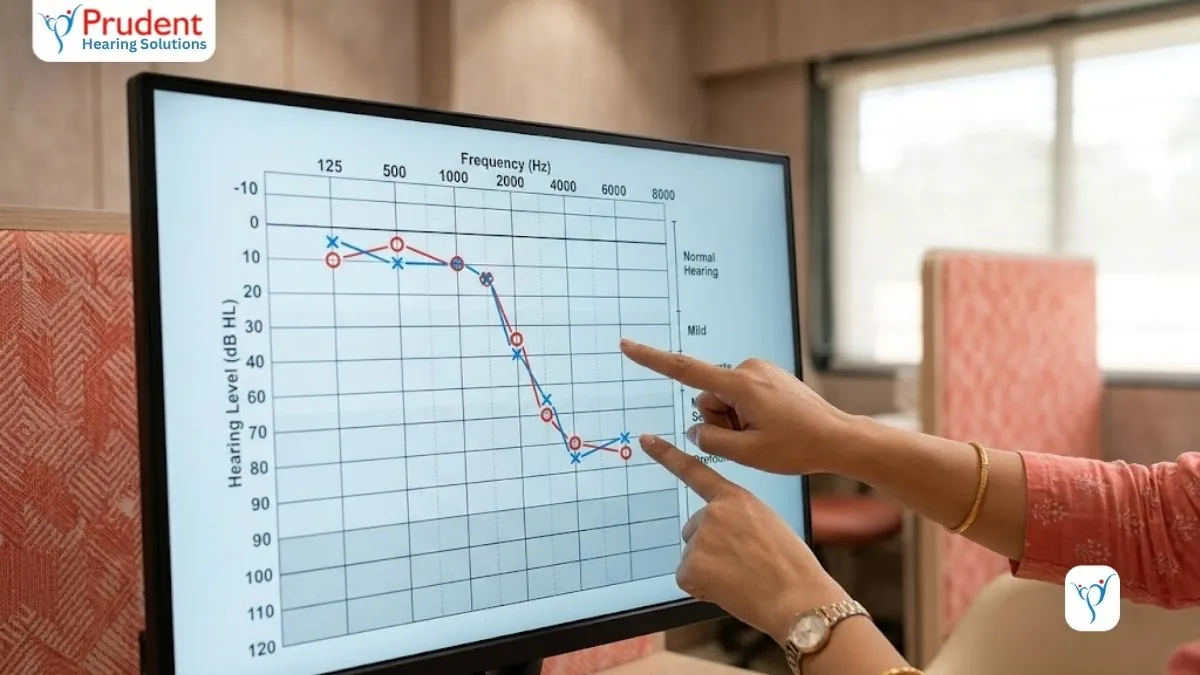
- Once any medical issue is ruled out, get a hearing test to measure whether there has been any lasting change.
A free hearing test at Prudent will show whether the festival has left any mark on your hearing, and we can advise on ear protection for the future. Read more on safe noise levels and noise-induced hearing loss. Wishing you a bright and quiet Diwali.
Frequently asked questions
Can Diwali firecrackers damage your hearing?
Yes, permanently. Some crackers produce peak levels above 140 decibels at close range, and impulse noise at that level can injure the inner ear instantly, causing lasting hearing loss, tinnitus or both.
How can I protect my ears from firecrackers?
Keep your distance and never hold or light loud crackers close to your head, choose low-noise or green options, and wear well-fitted earplugs or earmuffs when you cannot avoid the noise.
Are children's ears at more risk from firecrackers?
Their ears are just as vulnerable, and children tend to stand closer to the bursts. Keep them well back from the noise and give them proper ear protection.
What are the signs firecrackers have hurt my ears?
Ringing or buzzing after a blast, muffled hearing or a feeling of fullness, sounds that seem distorted or too loud, and ear pain or, rarely, bleeding or discharge from a burst eardrum.
What should I do if my ears are ringing after Diwali?
Move to a quiet place and rest your ears, and do not put anything in them. If hearing is clearly reduced, ringing is still there after a day, or there is pain or discharge, see a doctor promptly, then get a hearing test.
Free consultation
Ready to hear the difference?
Book a free 45-minute hearing test at any Prudent Hearing clinic: no obligation, honest advice, expert audiologists.