Educational information, not medical advice. This article is written to help you understand common ear and hearing issues. It is not a substitute for professional diagnosis or treatment. If your symptoms are severe, sudden, or persistent, please consult a qualified doctor or audiologist. For urgent symptoms (sudden hearing loss, bleeding from the ear, severe pain with dizziness, or a head injury), seek medical care the same day.
A plain-language guide to newborn and infant hearing screening in India, covering the OAE quick screen, the BERA/ABR confirmatory test, what pass and refer mean, and what to do if your baby does not pass.
Newborn and infant hearing screening checks whether your baby can hear well enough to learn speech and language. The first months of life are when the brain is wired for sound, so finding a hearing problem early makes a lasting difference. Screening usually starts with OAE, a quick and painless test, and moves to BERA, also called ABR, when a fuller picture is needed. A 'refer' result does not mean your baby is deaf. It simply means the screen needs to be repeated or followed by a detailed test.
Why the first few months matter so much
Babies learn to talk by listening. In the first year, the hearing pathways in the brain develop fastest, and this window shapes how easily a child picks up speech, language, and later, reading. When hearing loss goes unnoticed, a baby misses countless everyday sounds, and speech can fall behind before anyone understands why.
The encouraging part is simple. When hearing loss is identified early, support can begin early, and most children go on to develop language alongside their peers. This is the whole reason screening exists, to find any problem while the brain is most ready to adapt.
You may already know the signs of hearing loss in older children, but a newborn cannot tell you what they can or cannot hear. That is exactly why an objective test in the first weeks matters more than waiting to see if your baby 'responds to sound' at home.
The two tests you will hear about
Newborn hearing screening in India usually involves two tests that work together. One is a fast screen, and the other is a detailed, confirmatory test. They measure different things, so it helps to know what each one does.
OAE, the quick screen
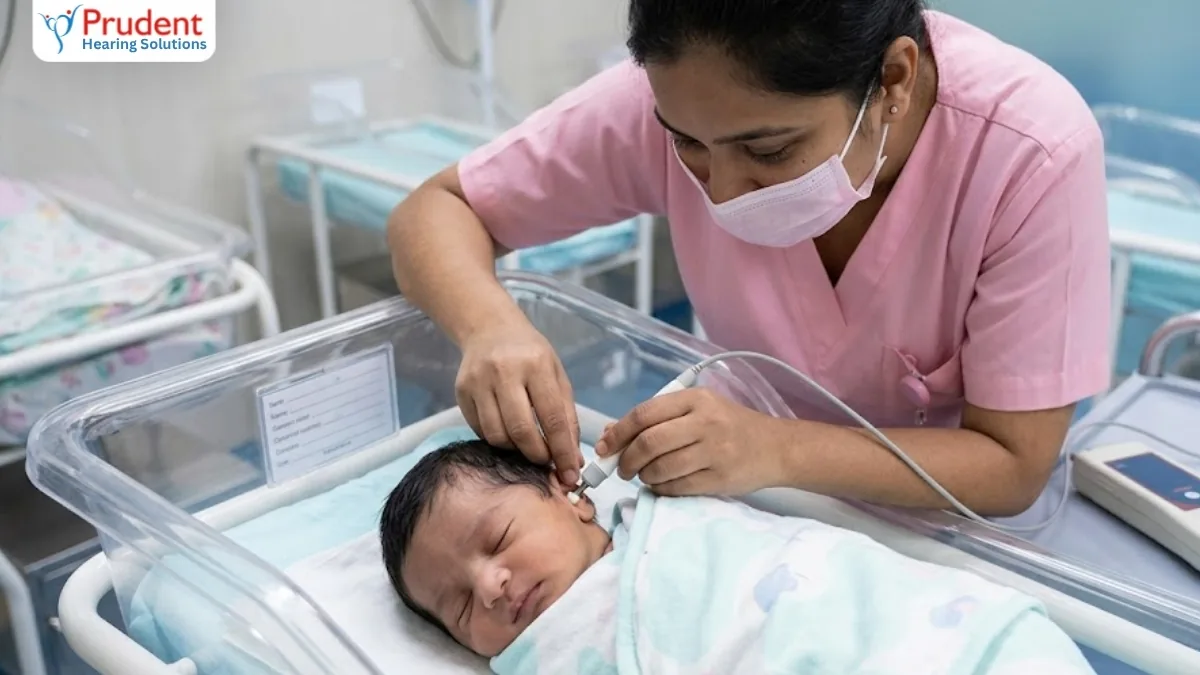
OAE stands for otoacoustic emissions. A soft tip is placed in your baby's ear, a gentle sound is played, and a tiny microphone listens for an echo produced by a healthy inner ear. The test takes only a few minutes, causes no pain, and is often done while the baby is asleep or feeding quietly.
OAE is excellent as a first screen because it is quick and easy, but it checks only the early part of the hearing pathway. Fluid in the ear soon after birth, or a restless baby, can affect the result, which is one reason a single OAE is a screen and not a diagnosis.
BERA or ABR, the detailed test
BERA stands for brainstem evoked response audiometry, and you will also see it written as ABR, auditory brainstem response. Small sensors are placed on your baby's head and sounds are played through soft earphones while the test records how the hearing nerve and brainstem respond. BERA checks the hearing pathway more completely than OAE, which is why it is used to confirm results and to estimate how much a baby can hear.
For an accurate reading the baby needs to be still, so BERA is usually done in natural sleep after a feed, or under light sedation when needed. At Prudent, both OAE and BERA are part of our diagnostic services, so a baby can move from screen to confirmation in one place.
When screening is usually done
Ideally, the first screen happens before your baby leaves the hospital, within the first few days of life. If that did not happen, or if your hospital does not offer it, the screen can still be done in the first weeks at a diagnostic centre.
A common pattern is a screen soon after birth, a repeat screen a few weeks later if the first one refers, and a detailed BERA test by around three months of age if needed. Early diagnosis allows any support to begin in the first months rather than after a child's speech has already been delayed.
What pass and refer really mean
Screening results are usually reported as 'pass' or 'refer', and the words are chosen carefully. A 'pass' means the test found a clear, healthy response on that day. A 'refer' does not mean your baby is deaf, and it is not a diagnosis. It simply means the screen could not confirm a clear response, so your baby needs to be tested again or assessed in more detail.
Plenty of babies who refer on a first OAE turn out to hear perfectly well, often because of fluid or vernix in the ear canal soon after birth. The important thing is not to panic, and not to ignore it either. A refer is a signal to follow up, nothing more and nothing less.
"A refer result is an invitation to look more closely, not a verdict. The goal of screening is to catch every baby who needs help, so a few healthy babies will be called back too."
Many Indian hospitals do not screen routinely, so ask
Universal newborn hearing screening is standard practice in many countries, but in India it is still uneven. Some hospitals screen every baby, some screen only babies who were in intensive care, and many do not screen at all. Because of this, you cannot assume it was done. Ask your paediatrician or the hospital directly whether your baby's hearing was screened, and request a copy of the result.
If it was not done, arrange a screen yourself. It is quick, painless, and one of the most useful checks you can do in your baby's first weeks. Some causes of hearing loss are present from birth, and understanding the types and causes of hearing loss can help you see why early testing is worth the effort even when a pregnancy and delivery went smoothly.
What to do if your baby does not pass
If your baby refers on the first screen, the next step is calm and simple. Book a repeat screen and, if advised, a BERA test at a proper diagnostic centre with audiologists who test infants regularly. It helps to go in with a few clear questions.
- Were both ears involved, or only one?
- Which tests are recommended next, and by when?
- If a loss is confirmed, what type and degree is it?
- What support or follow up will my baby need?
If a hearing loss is confirmed, your audiologist will explain what it means and talk you through the options, which may include further medical review, early listening support, and, where appropriate, hearing devices fitted for infants. Early identification is what makes early intervention possible, and early intervention is what protects speech and language.
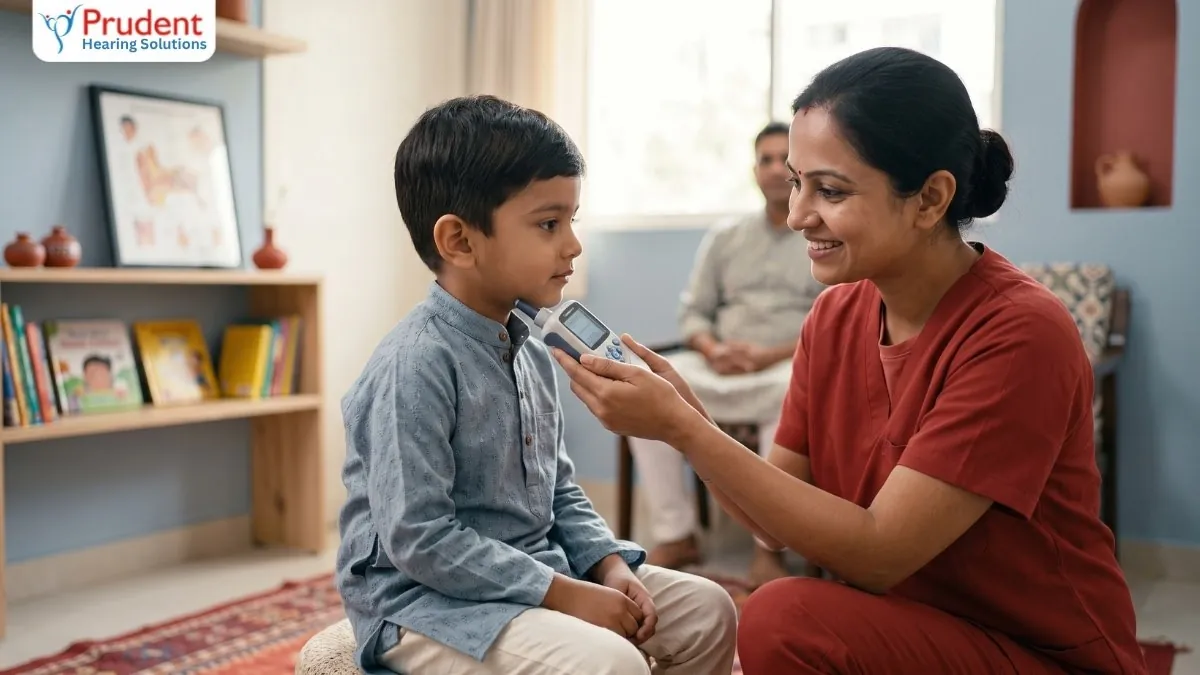
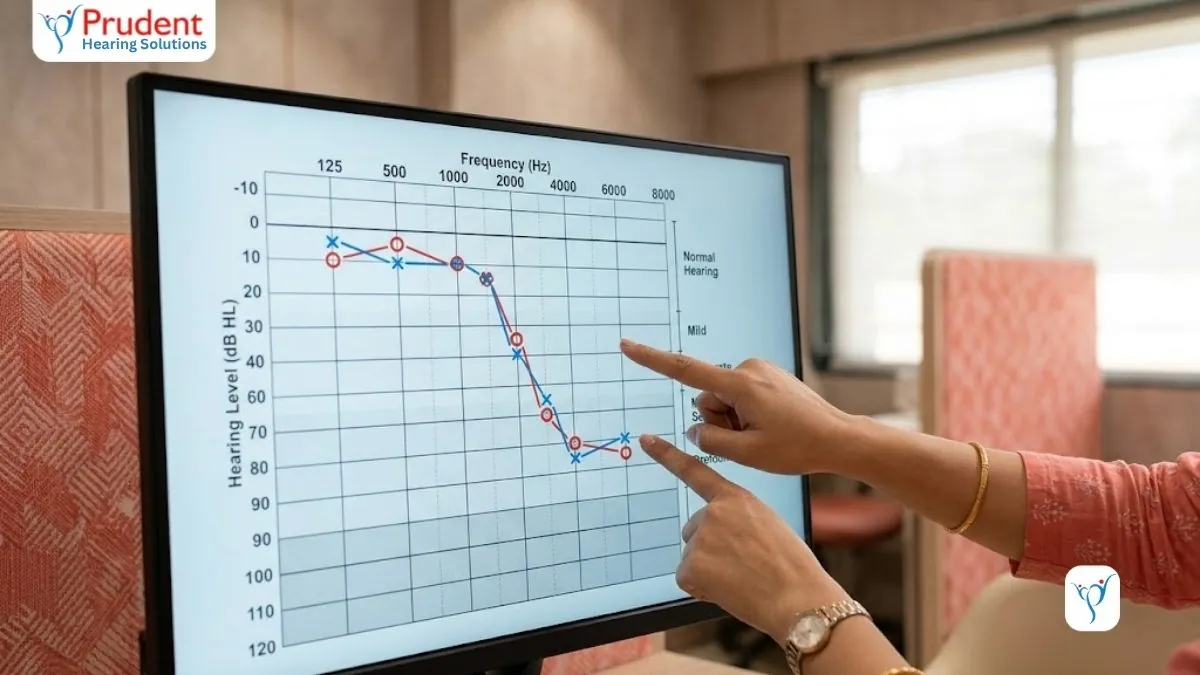
As your child grows, hearing is checked in other ways too. Older toddlers and children can be tested with behavioural methods and, later, with pure tone audiometry, and results are plotted on a chart that your audiologist will help you read. If you would like to understand that chart in advance, our guide to reading an audiogram walks through it in plain language.
What to do next
If your baby has not been screened, or referred on a screen and has not been followed up, do not wait. Call +91 9429690093 to arrange an infant OAE or BERA assessment with RCI registered audiologists who test babies gently and regularly. We have clinics in Pune, Delhi, and Bengaluru, with home visits available, and you can book a free hearing test or reach us with any question first.
Screening is fast, painless, and one of the kindest things you can do for your child's future. If a follow up is needed, we will guide you through every step. The earlier you know, the more you can do, and that is the real value of newborn hearing screening. For any concern about your baby's hearing, you can rely on the team at Prudent Hearing Solutions.
Continue reading
Frequently asked questions
Is newborn hearing screening painful or risky for my baby?
No. Newborn hearing screening is completely painless and safe. The OAE screen places a soft tip in the ear and plays a gentle sound, while BERA uses small sensors on the skin and soft earphones. Nothing enters the body, and there is no radiation or discomfort. Most babies sleep or feed through it, and both tests can be repeated as often as needed without any harm to your child.
What is the difference between OAE and BERA?
OAE is a quick screen that checks whether the inner ear produces a healthy echo in response to sound. It takes a few minutes and is ideal as a first test. BERA, also called ABR, is a detailed, confirmatory test that measures how the hearing nerve and brainstem respond. BERA gives a fuller picture and an estimate of hearing levels, so it is used to confirm a result after a screen refers.
My baby got a refer result. Does that mean deafness?
No. A refer result means the screen could not confirm a clear response that day, so your baby needs to be tested again or assessed in more detail. It is not a diagnosis. Many babies who refer on a first screen hear perfectly well, often because of fluid or vernix in the ear soon after birth. The right next step is a calm follow up, usually a repeat screen and, if advised, a BERA test.
When should my baby's hearing be screened?
Ideally within the first few days of life, before leaving the hospital. If that did not happen, the screen can still be done in the first weeks at a diagnostic centre. A common pattern is an early screen, a repeat if the first one refers, and a detailed BERA test by around three months of age if needed. Earlier is better, because it lets any support begin while the brain is developing language fastest.
Does my hospital screen every newborn automatically?
Not always. In India, newborn hearing screening is still uneven. Some hospitals screen every baby, some screen only babies who were in intensive care, and many do not screen at all. Do not assume it was done. Ask your paediatrician or hospital whether your baby's hearing was checked, and request a copy of the result. If it was not done, you can arrange a quick, painless screen yourself at a diagnostic centre.
Why does my baby need to be asleep for a BERA test?
BERA records very small responses from the hearing nerve and brainstem, so the baby needs to stay still and relaxed for an accurate reading. Movement and crying add interference. For this reason, BERA is usually done in natural sleep after a feed, or under light sedation when natural sleep is not possible. Your audiologist will advise the gentlest approach for your baby, and the test itself remains painless throughout.
What happens if hearing loss is confirmed in my baby?
Your audiologist will explain the type and degree of hearing loss and guide you through the next steps. These may include further medical review, early listening and communication support, and, where suitable, hearing devices fitted for infants. Remember that hearing aids manage hearing loss, they do not cure it. Early identification is what makes early intervention possible, and early support is what protects your child's speech and language development.
Free consultation
Ready to hear the difference?
Book a free 45-minute hearing test at any Prudent Hearing clinic: no obligation, honest advice, expert audiologists.