Educational information, not medical advice. This article is written to help you understand common ear and hearing issues. It is not a substitute for professional diagnosis or treatment. If your symptoms are severe, sudden, or persistent, please consult a qualified doctor or audiologist. For urgent symptoms (sudden hearing loss, bleeding from the ear, severe pain with dizziness, or a head injury), seek medical care the same day.
Ear candling does not remove earwax and is not safe. Studies show it does not create suction, and it can cause burns, ear canal blockage from candle wax and even eardrum injury. Safer ways to deal with wax include softening drops and professional removal.
The direct answer
Ear candling, in which a hollow candle is lit while one end sits in your ear, does not work and is not safe. It does not draw wax out of the ear, and it carries real risks including burns and candle wax dripping into the canal. Medical and audiology bodies advise against it. There are safe, effective ways to clear earwax instead.
What people claim
Promoters say the burning candle creates gentle suction that pulls out wax and toxins, and point to the dark residue left in the candle stub as proof. Neither claim survives testing.
What the evidence shows
- No suction: measurements have found the candle does not create any negative pressure in the ear canal.
- The 'wax' in the stub is candle wax: the residue appears even when a candle is burned without being placed in an ear.
- No benefit for wax or hearing: there is no reliable evidence that it removes wax, improves hearing or treats any condition.
The risks
- Burns to the face, hair, outer ear and inside the canal.
- Hot wax dripping into the canal, which can block the ear and be hard to remove.
- Damage to the eardrum, and temporary or permanent hearing loss.
- Fire hazard, especially if the person moves.
- Delay in treating a real problem such as infection or a wax impaction.
Children are at particular risk because they move suddenly and cannot report pain reliably.
What to do instead about earwax
- Leave it alone if it is not bothering you. Earwax protects the ear and usually clears itself.
- Use softening drops as advised, for a few days, if wax is causing blockage.
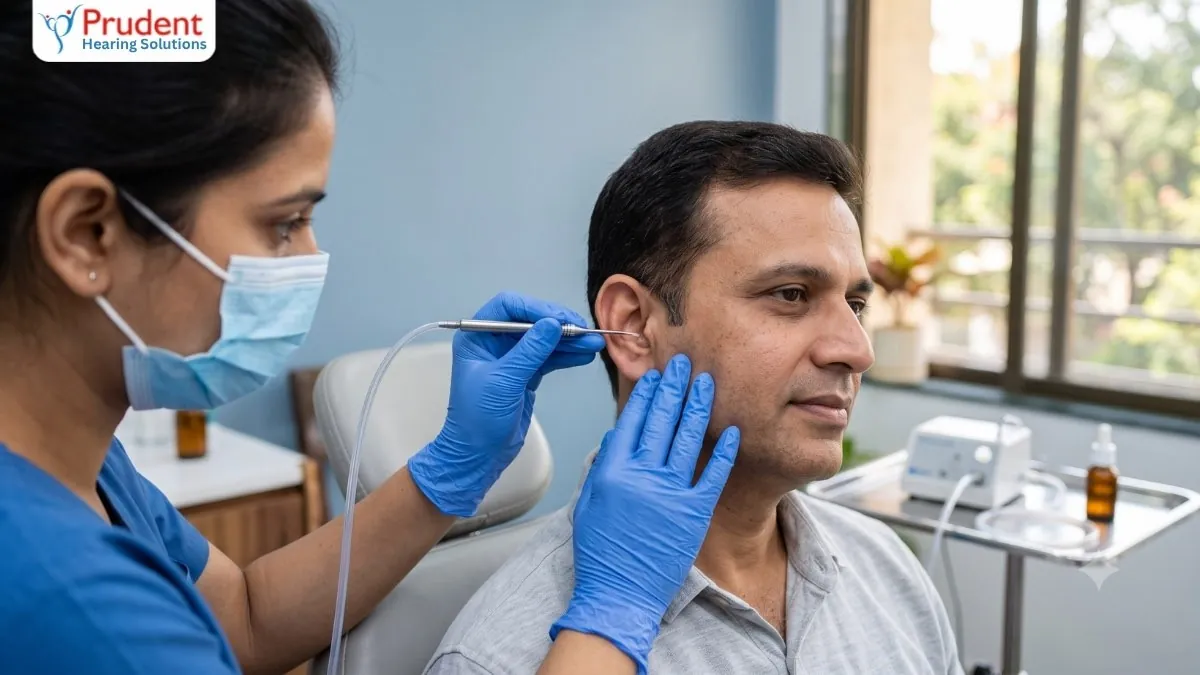
- Have it removed professionally by an ENT or trained clinician, by microsuction or gentle irrigation where suitable. See ear wax removal: microsuction vs syringing.
- Avoid cotton buds and sharp objects, which push wax deeper and can hurt the eardrum. See how to clean your ears safely at home.
When to see a doctor
See an ENT if you have pain, discharge, sudden hearing change, dizziness, or a known hole in the eardrum, and never put anything in the ear if the eardrum may be perforated. See perforated eardrum: symptoms, causes and healing.
If your hearing feels muffled and you are not sure why, a free hearing test can tell you whether wax is the cause or something else.
Frequently asked questions
Does ear candling remove earwax?
No. Measurements show the candle creates no suction in the ear, and there is no reliable evidence that it removes wax, improves hearing or does anything else useful.
What is the residue left in an ear candle?
It is candle wax, not earwax. The same residue appears when a candle is burned without being placed in an ear.
Is ear candling safe?
No. It can burn the face, hair, outer ear and ear canal, drip hot wax into the canal, damage the eardrum, cause temporary or permanent hearing loss and delay treatment of a real problem.
What should I do about earwax instead of candling?
Leave it alone if it is not bothering you, use softening drops for a few days if it causes a blockage, and have it removed professionally by microsuction or gentle irrigation. Avoid cotton buds and sharp objects.
When should I see a doctor about my ears instead of self-treating?
See an ENT for pain, discharge, a sudden change in hearing, dizziness or a known hole in the eardrum, and never put anything in the ear if the eardrum may be perforated.
Free consultation
Ready to hear the difference?
Book a free 45-minute hearing test at any Prudent Hearing clinic: no obligation, honest advice, expert audiologists.