Educational information, not medical advice. This article is written to help you understand common ear and hearing issues. It is not a substitute for professional diagnosis or treatment. If your symptoms are severe, sudden, or persistent, please consult a qualified doctor or audiologist. For urgent symptoms (sudden hearing loss, bleeding from the ear, severe pain with dizziness, or a head injury), seek medical care the same day.
A cholesteatoma is an abnormal collection of skin cells in the middle ear that grows slowly and can destroy the hearing bones and nearby structures. Persistent foul-smelling ear discharge and falling hearing are the usual signs. It does not go away with drops and is treated with surgery.
The direct answer
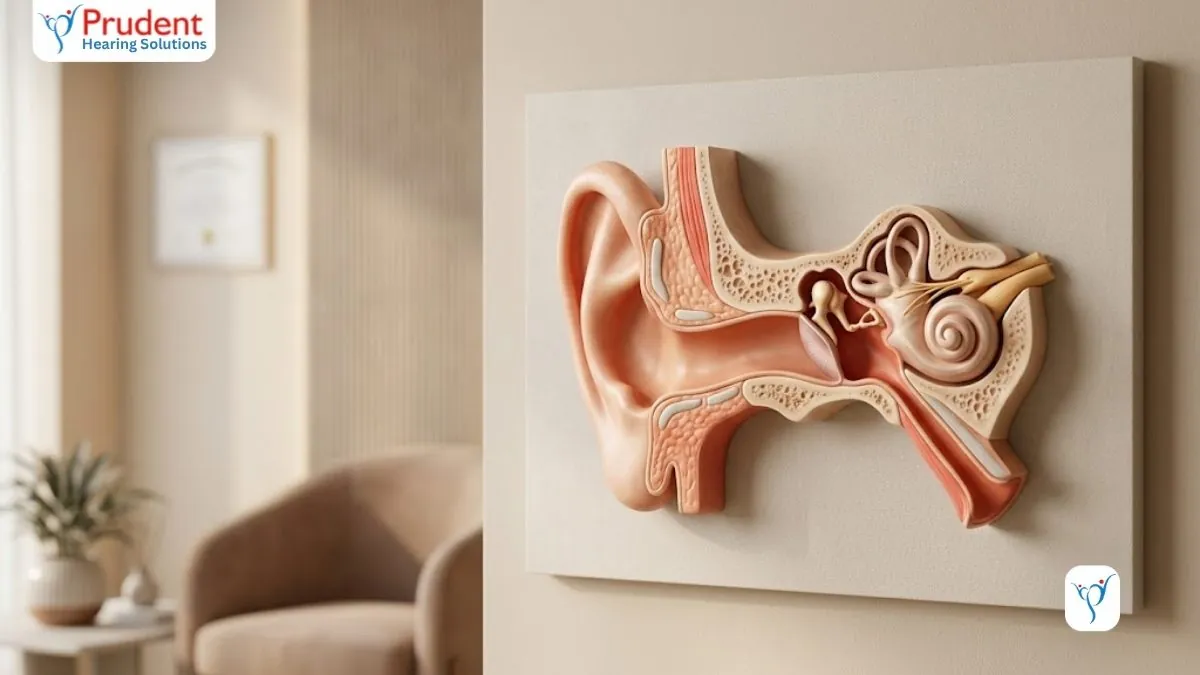
A cholesteatoma is a non-cancerous but destructive growth of skin cells in the middle ear, behind the eardrum. It grows slowly, traps debris and becomes infected, and over time can erode the tiny hearing bones and nearby structures. It cannot be cured with ear drops or antibiotics alone. It needs assessment by an ENT and usually surgery, which is very effective when done in good time.
What causes it
- Poor Eustachian tube function, which pulls part of the eardrum inward into a pocket that collects skin debris. See ear popping and crackling.
- Chronic or repeated middle-ear infection. See chronic ear discharge (CSOM).
- A perforated eardrum that lets skin grow inward.
- Present from birth in a small number of children.
Symptoms to notice
- Ear discharge that is persistent or recurrent and often foul-smelling.
- Gradually reducing hearing on one side.
- A feeling of fullness or pressure in the ear.
- Mild or no pain in the early stage, which is why it is often missed.
- Ringing, dizziness or facial weakness in advanced disease.
Why it matters
As a cholesteatoma expands it can damage the hearing bones, the bone behind the ear, the balance organ and the nerve to the face. Rarely, infection can reach the brain. These are uncommon when the condition is treated early, which is why persistent one-sided discharge should be examined rather than treated with over-the-counter drops.
Go to an ENT the same day if there is severe pain, swelling behind the ear, facial weakness, vertigo, high fever, severe headache or confusion.
How it is diagnosed
- Ear examination with a microscope or endoscope by an ENT.
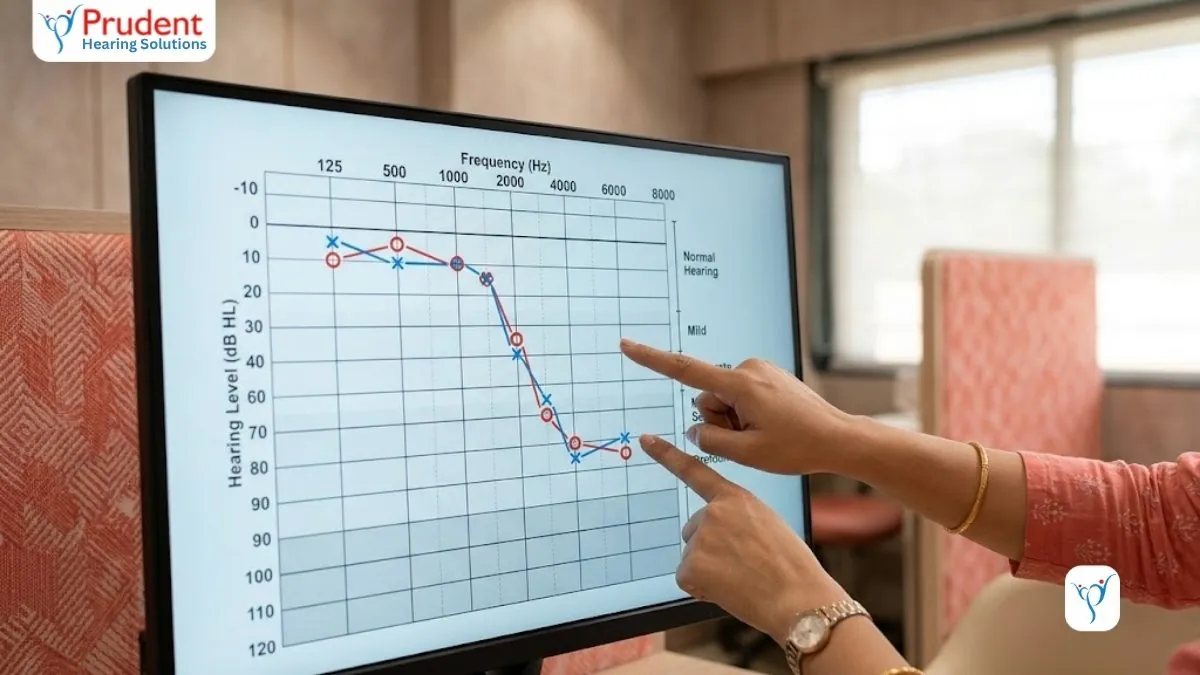
- Hearing test (audiogram) to measure the loss. See understanding your audiogram.
- CT scan of the temporal bone to show how far it extends.
Treatment
- Surgery to remove the cholesteatoma and make the ear safe. This is usually a tympanomastoidectomy, sometimes with rebuilding of the hearing bones.
- Follow-up checks, since it can return, sometimes with repeat scans or a second look.
- Keeping the ear dry and avoiding self-treatment in the meantime.
Hearing afterwards
Surgery aims first to make the ear safe and then to preserve or improve hearing. If hearing remains reduced afterwards, hearing aids can help, and the audiologist will choose a style suitable for a repaired ear. See how to choose the right hearing aid. A free hearing test at Prudent gives you a baseline, and we refer suspected cases to ENT surgeons. This article is general information, not medical advice.
Frequently asked questions
What is a cholesteatoma?
A non-cancerous but destructive growth of skin cells in the middle ear behind the eardrum. It grows slowly, traps debris, gets infected and can erode the tiny hearing bones and nearby structures over time.
What are the symptoms of a cholesteatoma?
Persistent or recurring ear discharge that is often foul-smelling, gradually falling hearing on one side, fullness or pressure in the ear, and little or no pain early on. Ringing, dizziness or facial weakness appear in advanced disease.
Can ear drops cure a cholesteatoma?
No. It cannot be cured with drops or antibiotics alone. It needs an ENT assessment and usually surgery, which is very effective when done in good time.
How is a cholesteatoma diagnosed?
An ENT examines the ear with a microscope or endoscope, a hearing test measures the loss, and a CT scan of the temporal bone shows how far it extends.
Will my hearing come back after cholesteatoma surgery?
Surgery aims first to make the ear safe and then to preserve or improve hearing. If hearing remains reduced, hearing aids can help, with a style chosen to suit a repaired ear. Follow-up checks are needed because it can come back.
Free consultation
Ready to hear the difference?
Book a free 45-minute hearing test at any Prudent Hearing clinic: no obligation, honest advice, expert audiologists.