Educational information, not medical advice. This article is written to help you understand common ear and hearing issues. It is not a substitute for professional diagnosis or treatment. If your symptoms are severe, sudden, or persistent, please consult a qualified doctor or audiologist. For urgent symptoms (sudden hearing loss, bleeding from the ear, severe pain with dizziness, or a head injury), seek medical care the same day.
Which concert earplugs protect your hearing without muffling the music? Compare high-fidelity, foam, and custom-fit options, plus NRR basics.
Quick answer
For most concert-goers, high-fidelity (musician) earplugs are the best choice. They use a filter to lower the volume evenly across pitches, so music stays clear while sound reaches safer levels. Foam plugs protect well but muffle detail. Custom-moulded plugs offer the best fit and comfort for frequent shows.
Key takeaways
- High-fidelity earplugs cut sound evenly, so the mix still sounds natural at a lower, safer volume.
- Foam earplugs give strong protection cheaply but dull high frequencies and vocals.
- Custom-fit earplugs, moulded by an audiologist, suit musicians and regular concert-goers.
- Any properly worn earplug lowers your risk of temporary hearing loss and ringing after a loud show (NIDCD).
- Concert sound often reaches 100-110 dB, well above the level where damage can begin (CDC NIOSH).
For most concert-goers, high-fidelity (musician) earplugs are the best choice. They use a filter to lower the volume evenly across pitches, so music stays clear while sound reaches safer levels. Foam plugs protect well but muffle detail. Custom-moulded plugs offer the best fit and comfort for frequent shows.
Why do concerts need earplugs at all?
Loud sound damages the tiny hair cells in the inner ear that convert vibration into hearing. Once these cells are lost, they do not grow back (NIDCD). Damage depends on both how loud a sound is and how long you are exposed. At around 100 dB, a common concert level, safe listening time drops to minutes rather than hours (CDC NIOSH).
That is why the ringing or muffled feeling after a gig matters. It is a warning sign, not a badge of a good night out (Cleveland Clinic). If you want the full picture on that after-concert ringing, read our pillar guide, Ears Ringing After a Concert? How Long It Lasts and When It's an Emergency. Earplugs are the simplest way to stop the problem before it starts. The World Health Organization lists avoiding loud sound and using protection as core steps to prevent avoidable hearing loss (WHO).
High-fidelity vs foam vs custom: which is best?
High-fidelity (musician) earplugs. These have a small acoustic filter that reduces volume fairly evenly across low, mid, and high pitches. The result is quieter sound that keeps its balance, so vocals and instruments still sound like themselves. This even reduction is the main reason many concert-goers and musicians prefer them over foam. They usually cost more than foam but are reusable and washable.
Foam earplugs. Rolled-down foam plugs expand to seal the ear canal. They are cheap, widely available, and can give strong reduction when inserted correctly. The trade-off is sound quality: foam blocks high frequencies more than low ones, so music sounds muffled and bass-heavy. For a one-off show where clarity does not matter, they are still far better than no protection (ASHA).
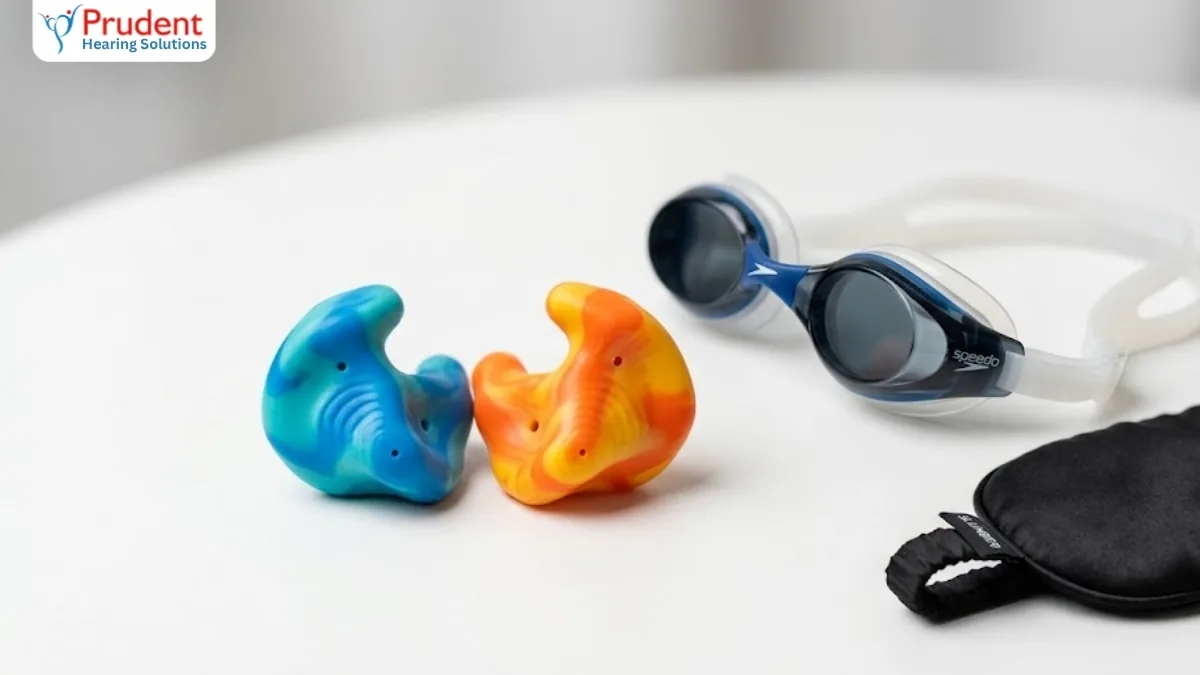
Custom-fit earplugs. An audiologist takes an impression of your ear and has plugs moulded to your exact canal shape, usually with interchangeable filters. They give the most comfortable, secure fit for long or frequent use and are popular with performers and sound engineers. The upfront cost is higher, but they last for years.
What does NRR mean, and how much reduction do I need?
NRR (Noise Reduction Rating) is a number, in decibels, that estimates how much a hearing protector lowers sound under test conditions. A higher NRR means more reduction on paper (NIDCD). Real-world reduction is usually lower than the label, because fit is rarely perfect.
For concerts, you do not need the highest possible NRR. You need enough reduction to bring the sound into a safer range while keeping the music enjoyable. A moderate-reduction high-fidelity plug often does this better than a very high-NRR foam plug that leaves everything muffled. What matters most is a good seal and wearing the plugs the whole time, not just during the loud songs (CDC NIOSH).
Do earplugs really prevent ringing and temporary hearing loss?
Yes, when worn correctly. Health authorities agree that consistently using hearing protection in loud settings lowers the risk of noise-induced hearing loss and tinnitus (NIDCD). Note the honest framing: protection reduces risk, it does not guarantee you will never have symptoms. Earplugs cannot undo damage that has already happened, and they are not a treatment for existing hearing loss or tinnitus.
If you leave a concert with sudden, marked hearing loss in one or both ears, or muffled hearing that does not clear within a day or two, treat it as urgent. Sudden sensorineural hearing loss is a medical emergency, and prompt care improves the chance of recovery (NIDCD). Book a hearing test or contact us quickly rather than waiting to see if it settles.
How can Prudent Hearing Solutions help?
If you attend concerts often, play in a band, or work around loud sound, custom-fit earplugs are worth the investment. Our RCI-registered audiologists can take ear impressions and fit high-fidelity or custom musician's earplugs suited to your needs. If travelling to the clinic is hard, ask about our home visit service. You can also explore our range of hearing aids if a check-up shows existing hearing loss.
Continue reading
Frequently asked questions
Are expensive high-fidelity earplugs worth it over foam?
For anyone who cares about sound quality or attends concerts regularly, yes. High-fidelity plugs lower volume evenly so the music stays clear, and being reusable they often work out cheaper over time. Foam remains a solid budget or one-off choice.
Can I just use cotton wool or tissue in my ears?
No. Cotton wool and tissue give almost no meaningful sound reduction and can create a false sense of safety. Use proper earplugs designed for noise (ASHA).
How loud is a typical concert?
Live music often reaches 100-110 dB. At those levels, damage can begin within minutes without protection (CDC NIOSH).
Do earplugs remove the risk of hearing damage completely?
No. They reduce risk substantially when worn correctly for the whole event, but no plug removes all risk. Combining earplugs with breaks away from the speakers helps (CDC NIOSH).
Should I see an audiologist before buying custom earplugs?
Yes. Custom plugs need an ear impression, and a check-up also confirms your ears are healthy. Book a hearing test to get started.
Sources & further reading
We cross-checked this article against the following authoritative sources. Guidance and figures reflect the most recent public guidance available at the time of last review (September 2026). Clinical review by the Prudent Hearing clinical team.
- NIDCD (Noise-Induced Hearing Loss)
- NIDCD (Hearing Protectors)
- NIDCD (Sudden Deafness (Sudden Sensorineural Hearing Loss))
- Cleveland Clinic (Ears Ringing From a Loud Concert? Why That's Not a Good Sign)
- CDC NIOSH (About Noise)
- CDC NIOSH (Preventing Hearing Loss)
- ASHA (Noise and Hearing Loss)
- WHO (Deafness and Hearing Loss)
Free consultation
Ready to hear the difference?
Book a free 45-minute hearing test at any Prudent Hearing clinic: no obligation, honest advice, expert audiologists.