Educational information, not medical advice. This article is written to help you understand common ear and hearing issues. It is not a substitute for professional diagnosis or treatment. If your symptoms are severe, sudden, or persistent, please consult a qualified doctor or audiologist. For urgent symptoms (sudden hearing loss, bleeding from the ear, severe pain with dizziness, or a head injury), seek medical care the same day.
Aspirin, NSAIDs, loop diuretics and antibiotics like gentamicin can affect hearing. Learn which drugs are ototoxic, which are reversible, and when to test.
Quick answer
Yes, some everyday medicines can harm hearing. This effect is called ototoxicity. High-dose aspirin, NSAIDs and loop diuretics usually cause temporary tinnitus or hearing loss, while aminoglycoside antibiotics (like gentamicin) and platinum chemotherapy can cause permanent damage. Most of the risk is dose-dependent. Never stop a prescribed drug yourself: ask your doctor and get a hearing test.
Key takeaways
- Ototoxicity means a drug can damage the inner ear (cochlea) or balance organs: causing hearing loss, tinnitus, or dizziness.
- Aspirin, NSAIDs and loop diuretics are usually reversible; aminoglycoside antibiotics and platinum chemotherapy can cause permanent sensorineural hearing loss.
- Risk rises with higher doses, longer courses, kidney problems, and drug combinations (for example a loop diuretic plus an aminoglycoside).
- People who carry the mitochondrial m.1555A>G (MT-RNR1) variant can lose hearing after even a single aminoglycoside dose: a family history of antibiotic-related deafness matters.
- Do not stop any prescribed medicine on your own. Talk to your doctor or pharmacist, and book a baseline hearing test.
Yes, some everyday medicines can harm hearing. This effect is called ototoxicity. High-dose aspirin, NSAIDs and loop diuretics usually cause temporary tinnitus or hearing loss, while aminoglycoside antibiotics (like gentamicin) and platinum chemotherapy can cause permanent damage. Most of the risk is dose-dependent. Never stop a prescribed drug yourself: ask your doctor and get a hearing test.
What does "ototoxic" mean?
Ototoxic means "poisonous to the ear." An ototoxic medication is one that can damage the inner ear's hair cells, the hearing (auditory) nerve, or the balance system. Doctors divide the effect into two types: cochleotoxic drugs harm hearing (causing hearing loss and tinnitus), while vestibulotoxic drugs harm balance (causing dizziness and unsteadiness).
Some drugs do both. According to the American Speech-Language-Hearing Association, more than 200 medicines are known to be ototoxic. For most common drugs the effect is dose-dependent and reversible, and serious permanent damage is largely limited to a few specific classes.
Ototoxic medications list: the main drug classes
Several well-defined classes carry the clearest risk. The table below groups the major ototoxic medicines, whether the effect is usually reversible, and what to watch for. This is a general guide: your personal risk depends on your dose, kidney function, other medicines, and overall health, so discuss it with your clinician rather than acting on the table alone (ASHA; Merck Manual).
- Salicylates (Common examples: High-dose aspirin; Typical ear effect: Tinnitus, temporary hearing loss; Usually reversible?: Yes) resolves after stopping
- NSAIDs. Common examples: Ibuprofen, naproxen; Typical ear effect: Tinnitus, hearing changes; Usually reversible?: Usually yes
- Loop diuretics. Common examples: Furosemide, bumetanide; Typical ear effect: Hearing loss, tinnitus (esp. high IV doses); Usually reversible?: Usually yes
- Aminoglycoside antibiotics (Common examples: Gentamicin, streptomycin, tobramycin, amikacin; Typical ear effect: Permanent hearing loss; can affect balance; Usually reversible?: No) often permanent
- Platinum chemotherapy (Common examples: Cisplatin, carboplatin; Typical ear effect: Permanent high-frequency hearing loss; Usually reversible?: No) often permanent
- Antimalarials. Common examples: Quinine, chloroquine; Typical ear effect: Tinnitus, temporary hearing loss; Usually reversible?: Usually yes
In our clinics we often see people who assume any ear ringing means permanent damage. For the reversible classes, that is usually not the case, but persistent symptoms always deserve a proper check.
Does aspirin cause tinnitus?
Yes, but almost always temporarily and at high doses. Salicylates like aspirin can cause tinnitus (ringing in the ears) and a mild, temporary hearing loss, and the effect is clearly dose-dependent: it appears with large or frequent doses, not the low "cardiac" dose many adults take daily for heart protection (MedlinePlus; ASHA).
The ringing typically fades within a day or two after the dose is reduced or stopped (Harvard Health). If ringing persists after you and your prescriber adjust the dose, book a hearing and tinnitus assessment. Do not stop prescribed aspirin on your own: ask the doctor who prescribed it first.
Does ibuprofen cause tinnitus?
NSAIDs such as ibuprofen and naproxen are associated with tinnitus and hearing changes, usually reversible and linked to frequent or high-dose use (Harvard Health). Large cohort studies have linked regular use of NSAIDs and other common pain relievers to a modestly higher long-term risk of hearing loss (Harvard Health). For most people, occasional use for a headache or fever is low risk, and symptoms tend to settle after stopping (MedlinePlus). Persistent ringing warrants a hearing test. Check with a clinician or pharmacist before changing any regular pain medication.
Loop diuretics and hearing loss (furosemide and tinnitus)
Loop diuretics, furosemide and bumetanide, can cause hearing loss and tinnitus, most often when given in high intravenous doses or by rapid infusion, in people with kidney impairment, or when combined with other ototoxic drugs (ASHA; Merck Manual). The effect is usually temporary and reverses once the drug is reduced or stopped (MedlinePlus).
The bigger concern is synergistic ototoxicity: taking a loop diuretic together with an aminoglycoside antibiotic or with cisplatin can amplify inner-ear damage and make it more likely to be permanent. These medicines are often prescribed for serious heart or kidney conditions, never stop them on your own. Report any new hearing change to your care team.
Gentamicin and hearing loss (aminoglycoside ototoxicity)
Aminoglycoside antibiotics (including gentamicin, streptomycin, tobramycin and amikacin) are among the most serious ototoxic drugs because the damage is often permanent sensorineural hearing loss. They can also be vestibulotoxic, harming the balance system and causing dizziness, unsteadiness, or a sense that the world "bounces" when you move your head (ASHA; MedlinePlus).
There is an important genetic angle. People who carry the mitochondrial variant m.1555A>G (in the MT-RNR1 gene) can lose hearing after even a single dose of an aminoglycoside, regardless of the dose being "safe" for others. A family history of deafness after antibiotic treatment is a red flag worth telling your doctor about.
Rapid bedside pharmacogenetic testing for MT-RNR1 (used to steer antibiotic choice before treatment, including in newborns) is an emerging approach in the medical literature rather than routine practice everywhere yet (Frontiers in Pharmacology, 2026). If you or a family member are prescribed one of these antibiotics, report any hearing or balance change immediately, and ask about baseline testing and, where relevant, MT-RNR1 counselling. If you experience balance or dizziness symptoms, our vertigo and balance (VEMP) diagnostics can help assess vestibular function.
What makes ototoxic damage more likely?
The same drug can be harmless for one person and risky for another. Risk tends to rise with:
- Higher doses and longer courses: most ototoxicity is dose-dependent.
- Kidney problems: reduced clearance means the drug stays in the body longer.
- Combining ototoxic drugs: for example a loop diuretic plus an aminoglycoside, or chemotherapy plus an aminoglycoside.
- Genetic susceptibility: the MT-RNR1 variant for aminoglycosides.
- Pre-existing hearing loss or older age.
Because these factors stack, a baseline hearing test before starting a known high-risk medicine, and monitoring during treatment, is the most useful thing an audiologist can offer (ASHA).
How audiologists monitor for ototoxicity
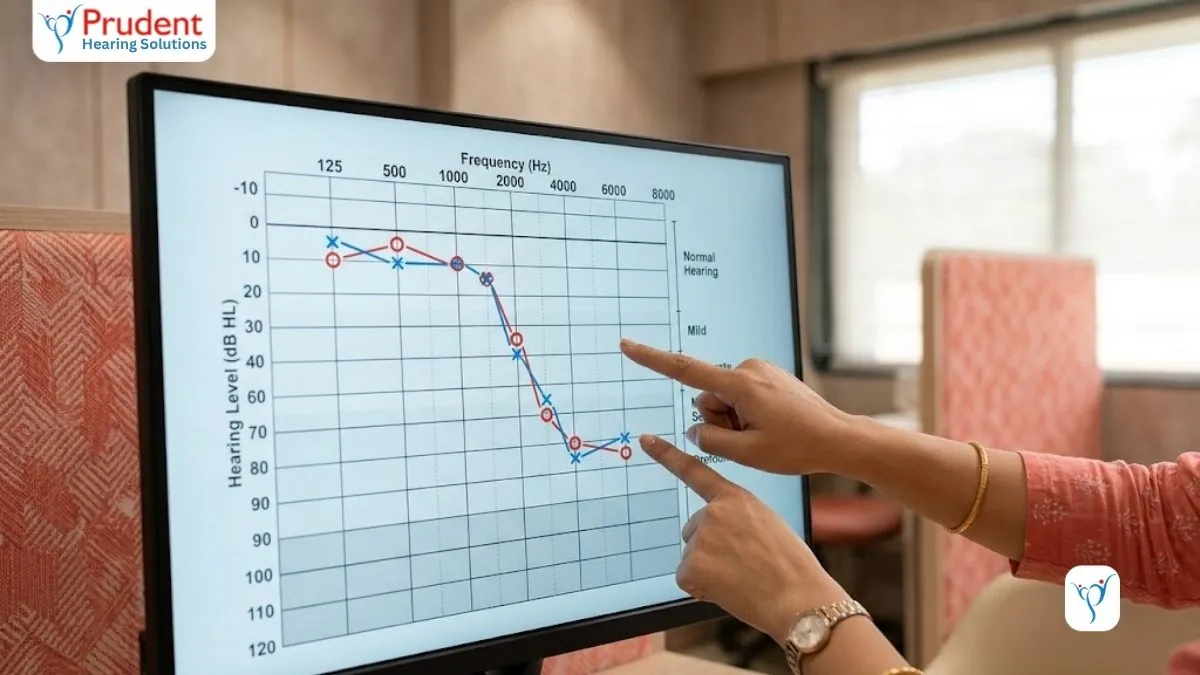
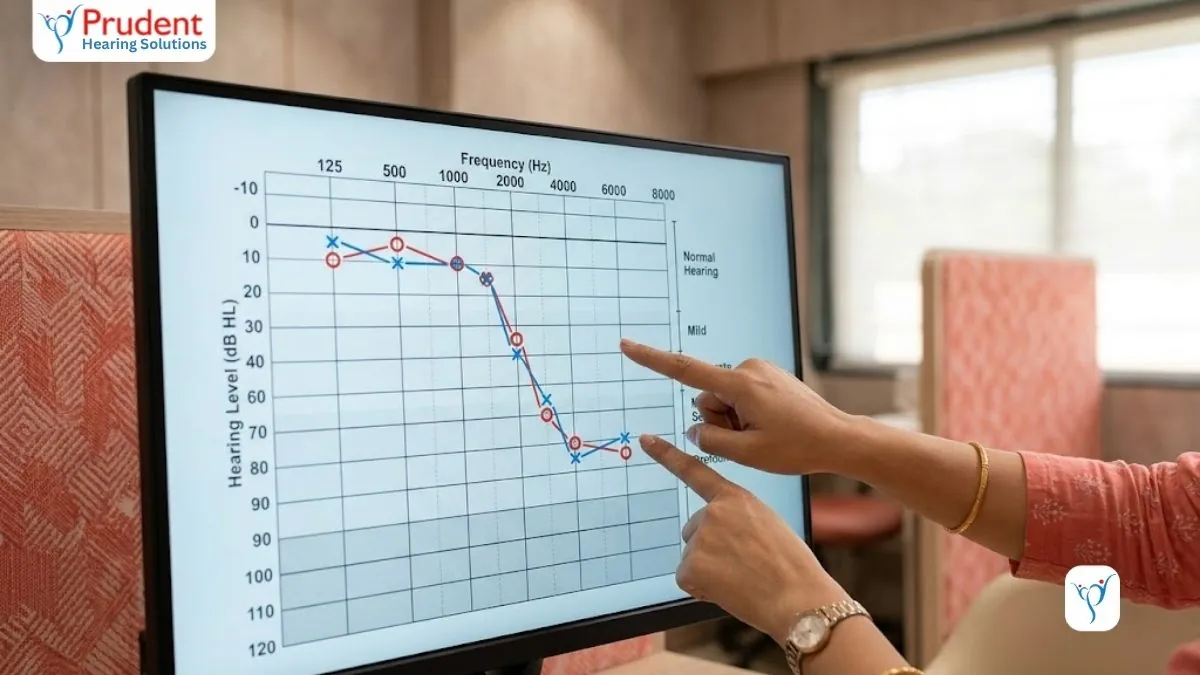
If you are starting a high-risk medicine (chemotherapy or a course of aminoglycosides), ototoxicity monitoring uses a baseline audiogram before treatment and serial tests during and after to catch changes early, usually in the very high frequencies first, before everyday speech is affected.
In our clinics we often see tinnitus appear as an early warning sign before a change shows up on the standard audiogram, which is exactly why baseline and follow-up testing matter. Early detection lets your medical team weigh options and lets us plan support such as hearing aids or tinnitus help if needed. For patients in active treatment who find it hard to travel, we offer a home-visit hearing test.
Book a hearing test with Prudent Hearing Solutions
If you take an ototoxic medicine, have new tinnitus, or have a family history of antibiotic-related deafness, a baseline hearing test gives you and your doctor a clear starting point. Our RCI-registered audiologists at Prudent Hearing Solutions (Pune, Delhi and Bengaluru) offer clinic and home-visit hearing tests, ototoxicity monitoring, tinnitus help and hearing aids. Call +91 9429690093 or contact us to book a free hearing test. Please continue any prescribed medicine unless your doctor advises otherwise.
This article is general information, not medical advice: consult a qualified audiologist or doctor about your situation.
- /hearing-test: baseline audiogram before or during ototoxic treatment
- /hearing-aids: support if hearing loss is permanent
- /hearing-test: assessment and management for medication-related tinnitus
- /contact: VEMP/balance testing for vestibulotoxic aminoglycosides
- /home-visit: home hearing test for patients in active treatment
- /contact: book an appointment or ototoxicity monitoring
Continue reading
Frequently asked questions
Which painkillers are safe for my ears?
Occasional, standard-dose use of paracetamol, aspirin or ibuprofen is low risk for most people. Ototoxicity from these is dose-dependent and usually reversible. If you take pain relievers regularly, discuss it with a clinician and mention any ringing or muffled hearing (Harvard Health).
Will my hearing come back after stopping an ototoxic drug?
Often yes for aspirin, NSAIDs, loop diuretics and quinine, where the effect is usually reversible. Aminoglycoside antibiotics and platinum chemotherapy can cause permanent loss. A hearing test tells you where you stand (ASHA; Merck Manual).
Should I stop my medication if my ears start ringing?
No, not on your own. Some of these drugs treat serious heart, kidney or infection problems, and stopping suddenly can be dangerous. Contact your prescriber or pharmacist, and book a hearing test (MedlinePlus).
Can antibiotics cause permanent hearing loss?
Aminoglycoside antibiotics (gentamicin, streptomycin, tobramycin) can, and carriers of the MT-RNR1 m.1555A>G variant may lose hearing after a single dose. Most common oral antibiotics do not carry this risk. Tell your doctor about any family history of antibiotic-related deafness (ASHA; Frontiers in Pharmacology).
Is tinnitus from medication a warning sign?
It can be an early sign of inner-ear stress, especially with aspirin, NSAIDs or platinum chemotherapy. New or persistent tinnitus is a good reason to get a hearing test and to review your medicines with a clinician (ASHA).
My hearing dropped suddenly: is that from my medicine?
Treat sudden hearing loss as an emergency regardless of cause. See a doctor or ENT the same day; it is most treatable within 72 hours. Do not wait to see whether it clears on its own.
Sources & further reading
We cross-checked this article against the following authoritative sources. Guidance and figures reflect the most recent public guidance available at the time of last review (September 2026). Clinical review by the Prudent Hearing clinical team.
- Ototoxic Medications (American Speech-Language-Hearing Association)
- Ototoxic drugs: Medications that may harm hearing (Harvard Health)
- Drug-Induced Ototoxicity (Merck Manual (Professional))
- Ototoxicity (medicines and hearing) (MedlinePlus)
- Aminoglycosides (MedlinePlus)
- MT-RNR1 pharmacogenetic testing to prevent aminoglycoside-induced hearing loss (Frontiers in Pharmacology (2026))
Free consultation
Ready to hear the difference?
Book a free 45-minute hearing test at any Prudent Hearing clinic: no obligation, honest advice, expert audiologists.