Educational information, not medical advice. This article is written to help you understand common ear and hearing issues. It is not a substitute for professional diagnosis or treatment. If your symptoms are severe, sudden, or persistent, please consult a qualified doctor or audiologist. For urgent symptoms (sudden hearing loss, bleeding from the ear, severe pain with dizziness, or a head injury), seek medical care the same day.
Told your baby needs a BERA or OAE test? Both are safe, painless, objective hearing tests: no button-pressing or spoken response needed, which is exactly why they are used for newborns, young children and anyone who cannot do a standard test. Here is what each one checks, when it is used, how it works alongside PTA and tympanometry, what to expect on the day, and an honest note on cost.
The short answer: two tests that check hearing without needing a response
If you have been told your baby needs a 'BERA' or an 'OAE' test, here is the reassurance first: both are safe, painless, objective hearing tests. Objective means they check how the ear and hearing pathway are working on their own: your child (or you) does not have to press a button, raise a hand or say a word. That is exactly why these are the tests of choice for newborns, infants, and anyone who cannot reliably respond to a standard hearing test.
In one line each: an OAE test checks whether the cochlea (the inner ear) is responding to sound, and a BERA/ABR test checks whether the hearing nerve and brainstem are carrying that sound signal up towards the brain. Used together, they let an audiologist build a picture of a person's hearing even in a sleeping baby.
Two honest points before we go further. First, these are diagnostic tests, not treatments: they tell you what is happening, they do not fix it. Second, a 'refer' or 'fail' on a newborn screen is not a diagnosis of deafness; it simply means a fuller test is needed.
We explain all of this below. Prudent's standard 45-minute hearing test is free, but BERA and OAE are specialised tests, to be pointed to the right one, book a free hearing test or call +91 9429690093 and our RCI-registered audiologists will guide you.
What is an OAE (otoacoustic emissions) test?
A healthy inner ear does not just receive sound: it also produces a very faint sound of its own in response. Tiny structures in the cochlea called outer hair cells give off a soft 'echo' when they are working properly. An OAE test measures that echo. If the echo is there, it is a good sign the cochlea is responding to sound.
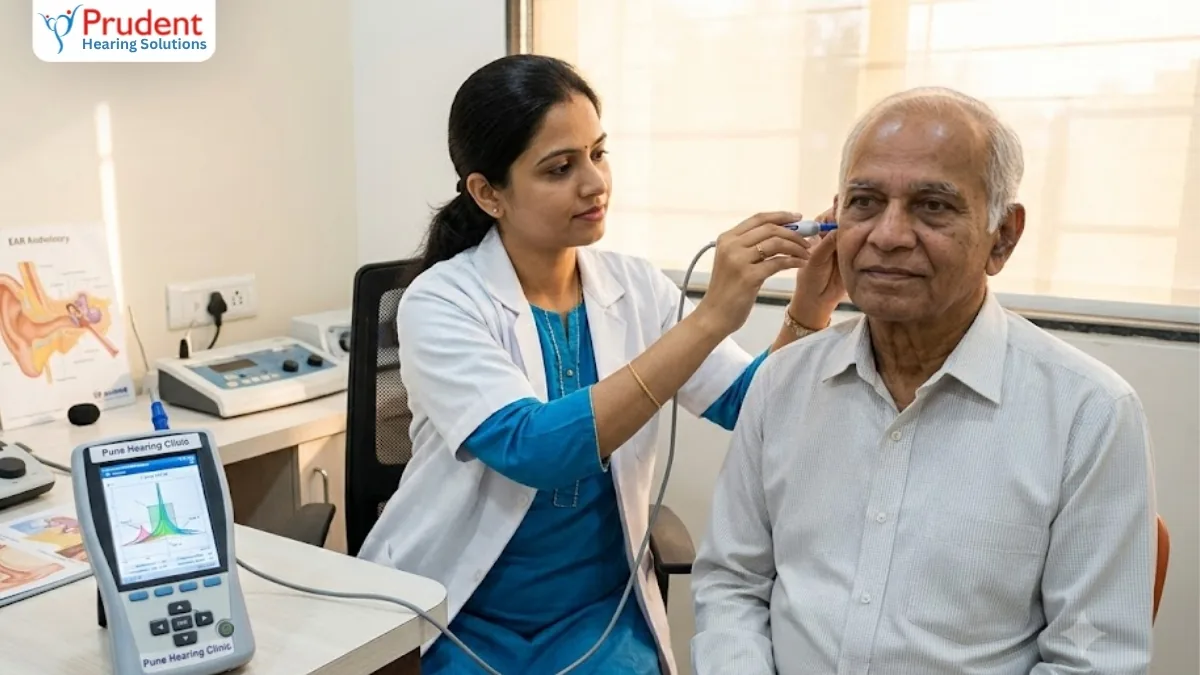
The test is quick and gentle. A small soft-tipped probe, holding a tiny speaker and microphone, is placed just inside the ear canal. It plays soft clicks or tones and records whether the cochlea sends an emission back. Nothing goes deep into the ear, there are no needles and there is no discomfort. Each ear usually takes only a few minutes, and it is often done while a baby sleeps or feeds.
What it tells you: whether the outer hair cells of the cochlea are working. A fast, reliable check of inner-ear function. This is why OAE is commonly the first step in newborn hearing screening.
What it does not do: an OAE test does not check the hearing nerve or the brainstem beyond the cochlea. It can also be thrown off by fluid or birth debris (vernix) in a newborn's ear, wax, or a noisy room: any of which can cause a 'refer' even when hearing is actually fine. That is why a refer is repeated or followed up with a BERA rather than treated as a final answer.
What is a BERA / ABR (auditory brainstem response) test?
BERA stands for Brainstem Evoked Response Audiometry. It is the same test many centres call ABR: Auditory Brainstem Response. Where OAE checks the cochlea, BERA looks one step further along the pathway: it measures the electrical response of the hearing nerve and the brainstem when sound reaches them.
Here is what happens. A few small sticker electrodes are placed on the skin, typically on the forehead and behind or near each ear. Soft earphones or gentle insert tips play a series of clicks or tone bursts.
The electrodes pick up the tiny electrical signals the hearing nerve and brainstem produce, and a computer averages thousands of them into a waveform the audiologist reads. The electrodes only rest on the skin and simply listen; nothing is sent into the body, there are no needles into the head, and there is no pain.
Because it is objective, the person does not have to do anything: they just need to stay still and relaxed, which is why babies are usually tested during natural sleep (and, when a child cannot settle, light sedation may be arranged with a doctor). BERA takes longer than OAE, often anywhere from about half an hour to an hour or more depending on how settled the child is and whether thresholds are being measured.
What it tells you: whether the sound signal is travelling properly along the hearing nerve to the brainstem, and, with frequency-specific (tone-burst) BERA, an estimate of the softest sound the ear responds to at different pitches. In adults, BERA is also used to check for problems sitting behind the cochlea, such as pressure on the hearing nerve, especially when hearing loss is on one side only.
Why 'objective' matters so much
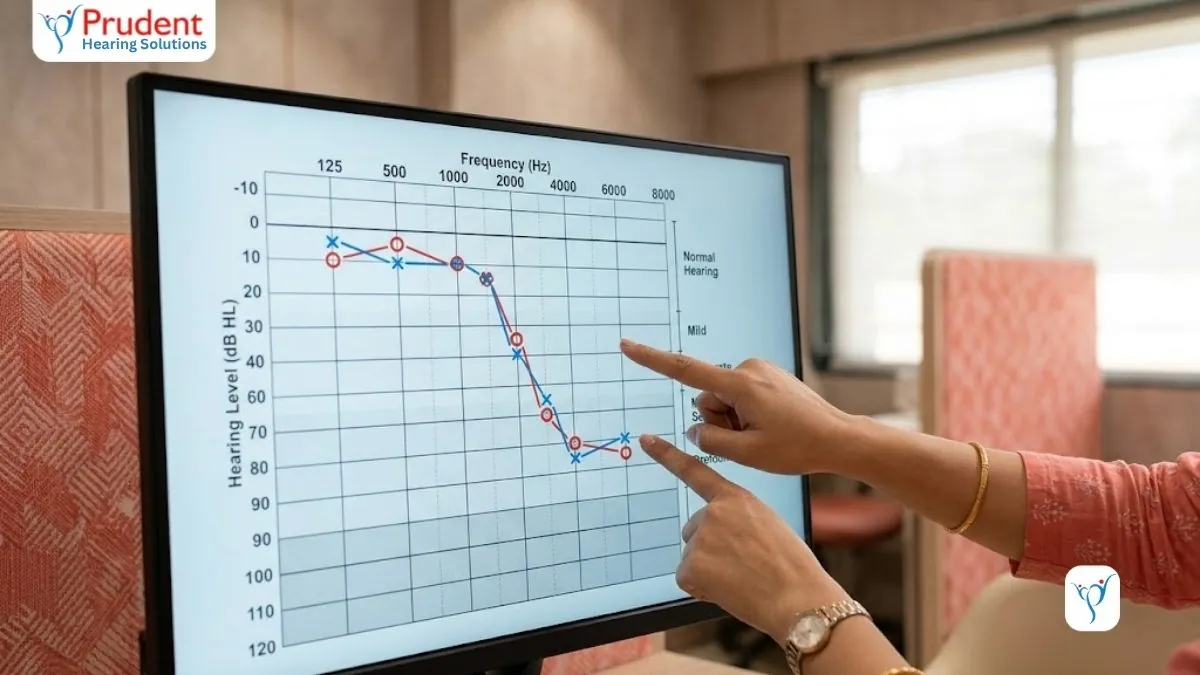
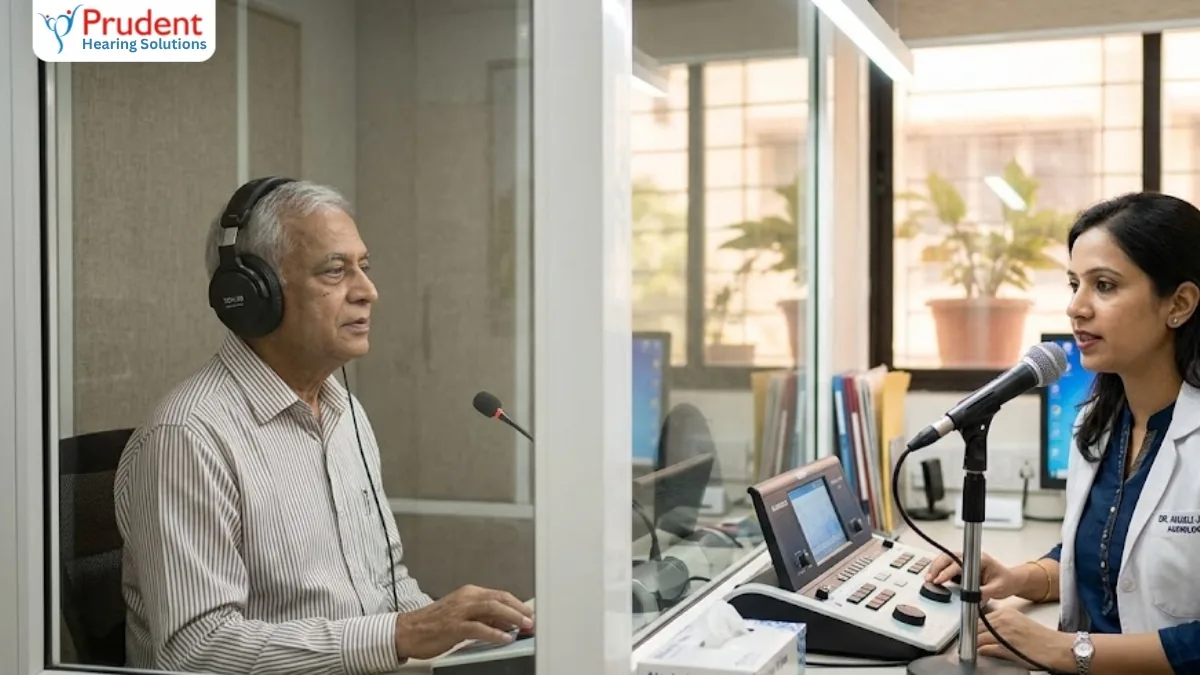
Most people picture a hearing test as sitting in a booth and raising a hand each time you hear a beep. That test, pure tone audiometry (PTA), is excellent and remains the standard for anyone who can take part. But it is behavioural: it depends on the person noticing the sound and choosing to respond.
A newborn cannot do that. A toddler often will not cooperate on demand. And some adults (after a stroke, with certain disabilities, or when a reliable response simply cannot be obtained) cannot take a behavioural test either. Objective tests remove that requirement entirely. OAE and BERA read what the ear and nerve are doing directly, so hearing can be assessed in a baby fast asleep in a parent's arms. That is the gap these two tests were built to fill.
When is each test used?
OAE and BERA are used whenever a standard behavioural test is not possible or not enough on its own. The most common situations:
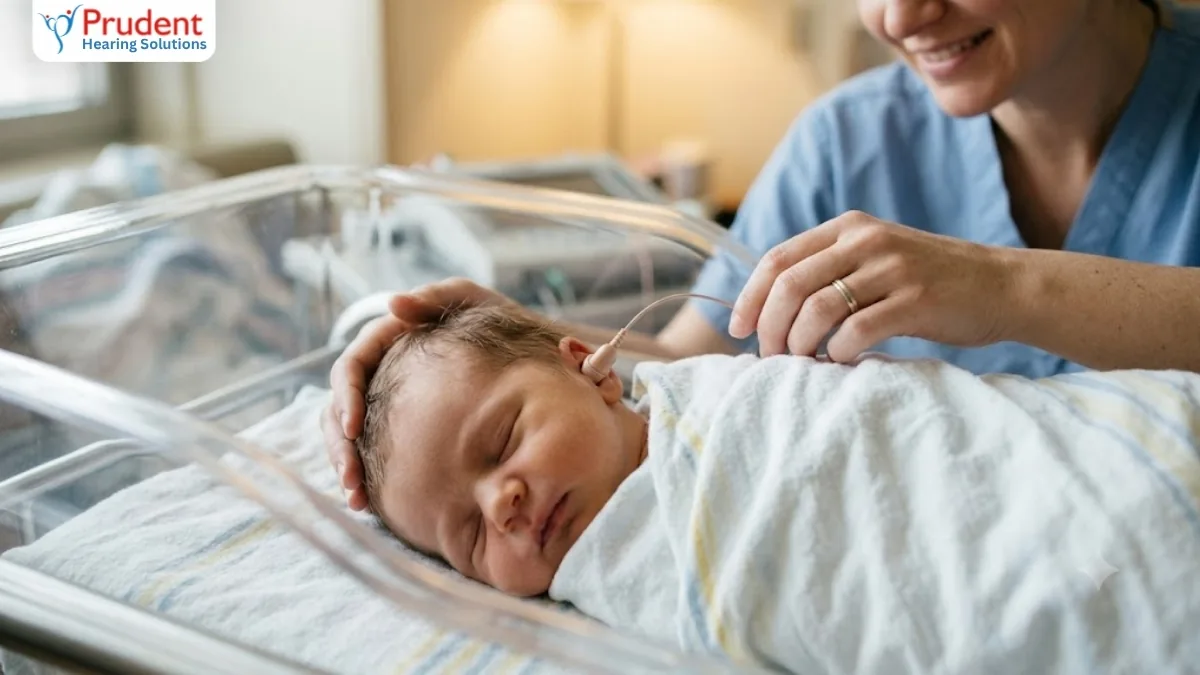
- Newborns and infants: OAE and/or an automated BERA are used to screen hearing in the first weeks of life, with a full diagnostic BERA if screening refers.
- Toddlers and young children who are too young to give a reliable response in a booth.
- Children with delayed speech, frequent ear infections, or a family history of hearing loss, where objective confirmation is helpful.
- Adults who cannot respond reliably, for example after a stroke or with certain disabilities, or where a behavioural result needs cross-checking.
- Adults with hearing loss on one side, persistent ringing (tinnitus) or dizziness, where a doctor wants BERA to check the hearing nerve behind the cochlea.
- Situations where an exaggerated or non-organic hearing loss is suspected and an objective measure is needed.
Newborn hearing screening in India
The reason newborn screening matters is timing. The first months and years of life are when a baby's brain learns to listen, and later to talk. Hearing loss that is found and acted on early gives a child a far better start with speech and language than one found years later. This is why hearing screening for newborns is encouraged wherever it is available.
A widely followed international benchmark is the '1-3-6' goal: screen a baby's hearing by around one month of age, confirm any diagnosis by around three months, and begin support by around six months. Treat these as target timelines rather than fixed rules: exact practice and timing vary, so confirm the right schedule for your child with your paediatrician or audiologist.
In practice, many hospitals use a two-stage approach. They screen first with OAE; if a baby refers, they repeat it and/or move to an automated BERA; and a baby who still refers is sent for a full diagnostic BERA to measure hearing properly. Not every hospital in India screens every newborn routinely yet, so if your baby was not tested, it is entirely reasonable to ask for a hearing screen, especially if there is a family history of hearing loss or any concern.
How BERA and OAE work alongside PTA and tympanometry
These tests are not rivals: each looks at a different part of the hearing system, and an audiologist often uses several together to get the full picture. Here is how the common tests fit:
- OAE checks the cochlea's outer hair cells: quick, objective, first-line for screening.
- BERA/ABR checks the hearing nerve and brainstem and can estimate hearing thresholds: objective, and the fuller diagnostic step for babies.
- Pure tone audiometry (PTA) maps hearing across different pitches into an audiogram: the standard behavioural test for anyone old enough to respond.
- Tympanometry checks the middle ear: eardrum movement, pressure and fluid. It does not measure hearing itself, but it explains why sound might be blocked, and it matters here because middle-ear fluid can cause an OAE to refer.
- Speech audiometry checks how well someone understands words, not just detects tones: useful once a child or adult can take part.
How the pieces fit together in real cases
A typical infant pathway shows how these tests complement one another. A baby refers on an OAE screen. Tympanometry is used to check whether middle-ear fluid might be the cause. A diagnostic BERA then estimates the baby's hearing thresholds. As the child grows and can take part, behavioural tests (first play-based methods, later pure tone audiometry) confirm and refine those findings.
For adults, it usually runs the other way. Pure tone audiometry is done first because most adults can respond, and BERA is added only when a doctor needs to look at the nerve pathway, for example with one-sided hearing loss or unexplained dizziness. In both directions, no single test is the whole story; each answers a different question, and together they give a confident result.
What to expect on the day
For an OAE test, expect something quick and low-key. A soft tip goes gently into the ear, soft sounds play for a few minutes per ear, and that is it. A calm, feeding or sleeping baby gives the cleanest result, so a quiet room helps a lot.
For a BERA test, a settled, sleeping child is the goal. Clinics often ask parents to keep the baby awake beforehand and time the appointment around a nap, or to feed the baby to sleep once you arrive. It helps to come with clean, dry skin on the forehead and around the ears, skip oils and creams there so the electrodes stick well, and, where possible, with ears free of wax or active infection. For older or restless children who cannot settle naturally, a doctor may arrange light sedation.
For adults, there is nothing to do but relax and stay still; many people drift off during the test, and that is perfectly fine. None of these tests requires you to concentrate or perform, which is the whole point of them.
What the results mean
Screening versions of OAE and BERA usually give a simple result: 'pass/clear' or 'refer'. It is worth repeating: a refer is not a diagnosis. Movement, background noise, wax, or fluid and vernix in a newborn's ear can all cause a refer even when hearing is normal, and a large number of babies who refer on the first screen pass comfortably on a repeat test.
A full diagnostic BERA gives more: estimated hearing thresholds at different pitches, and clues to where along the pathway any problem lies. Your audiologist will talk you through what the waveforms show and what, if anything, should happen next. If a hearing loss is confirmed, that is the point at which options are discussed calmly and clearly.
The single most important thing a parent can do after a refer is to follow through with the recommended fuller test. Early answers, whichever way they go, are always better than uncertainty.
How much do BERA and OAE tests cost in India?
The cost varies by centre and city. It also depends on whether it is a quick screening OAE or a full diagnostic BERA, and whether sedation is needed, which involves a doctor and adds to the total. Because of that spread, we do not quote a fixed figure here; a precise-sounding number would simply be wrong for many places. Always confirm the current price directly with the centre doing the test before you book.
It is also worth knowing that some government hospitals and organised newborn-screening programmes offer hearing screening free or at low cost, so it is always worth asking at the place of birth or your nearest government facility.
At Prudent, our standard 45-minute hearing test is free. BERA and OAE, however, are specialised tests done with specific equipment, so they sit outside that free assessment. Call +91 9429690093 and we will explain what is available, what the test involves, and what it will cost, before anything is booked.
Remember: these are tests, not treatments
A hearing test, objective or behavioural, finds and measures hearing loss. It does not cure it. If a permanent hearing loss is confirmed, the conversation turns to what can help: for many children and adults that means hearing aids, and for some children a specialist will discuss further options. A hearing aid manages hearing loss, it does not cure it, but when it is fitted early and well, especially in a young child, it supports listening and the development of speech at the age it matters most.
So if your baby has referred on a screen, or an audiologist has recommended a BERA, try not to panic, but do follow it through. Getting a clear, accurate answer is the first and most valuable step. Prudent's RCI-registered audiologists (MASLP/BASLP) are here to help you understand each test and what comes after. Book a free hearing test or call +91 9429690093 and we will point you to exactly the right assessment for your child or yourself.
Continue reading
Frequently asked questions
Are the BERA and OAE tests painful or safe for my baby?
Both are completely painless and safe. An OAE test uses a soft tip in the ear that plays quiet sounds; a BERA test uses sticker electrodes on the skin that only listen to the body's own tiny electrical signals. Nothing is sent into the body, there are no needles and no radiation. Most babies sleep right through the test.
What is the difference between an OAE test and a BERA test?
An OAE test checks the cochlea (the inner ear's outer hair cells) and is very quick: a good first screening step. A BERA/ABR test checks the hearing nerve and brainstem and can also estimate hearing thresholds, so it is the fuller diagnostic test. They answer different questions about different parts of the hearing pathway, which is why both are often used together.
My baby 'referred' or 'failed' the newborn hearing screening: does that mean my baby is deaf?
No. A refer is not a diagnosis. Fluid or birth debris in the ear canal, wax, movement, or a noisy room can all cause a refer even when hearing is perfectly normal, and many babies pass on a repeat test. A refer simply means a fuller test, usually a diagnostic BERA, is needed to be sure. The important thing is to follow through with that next test, because early answers matter.
Does my child have to be asleep for the BERA test?
Ideally, yes. BERA works best when the child is still and relaxed, so babies are usually tested during natural sleep. Clinics often ask you to keep the baby awake beforehand and then feed them to sleep at the appointment. For older or restless children who cannot settle, a doctor may arrange light sedation. Adults simply rest quietly and often doze off, which is fine.
How much does a BERA test cost in India?
It varies, by centre and city, by whether it is a quick screening or a full diagnostic BERA, and by whether sedation is needed. We do not quote a fixed figure because it would not be accurate everywhere, so always confirm the current price with the centre doing the test. Some hospital newborn-screening programmes offer screening free or at low cost. At Prudent, our standard 45-minute hearing test is free; BERA and OAE are specialised, so call +91 9429690093 and we will explain the cost before booking.
Can adults have a BERA test, or is it only for babies?
Adults can and do have BERA. It is used for anyone who cannot respond reliably to a standard hearing test, to cross-check a behavioural result, and to examine the hearing nerve behind the cochlea when there is one-sided hearing loss, ringing or dizziness. For most cooperative adults, though, pure tone audiometry remains the main test, with BERA added only when a doctor specifically needs it.
Free consultation
Ready to hear the difference?
Book a free 45-minute hearing test at any Prudent Hearing clinic: no obligation, honest advice, expert audiologists.