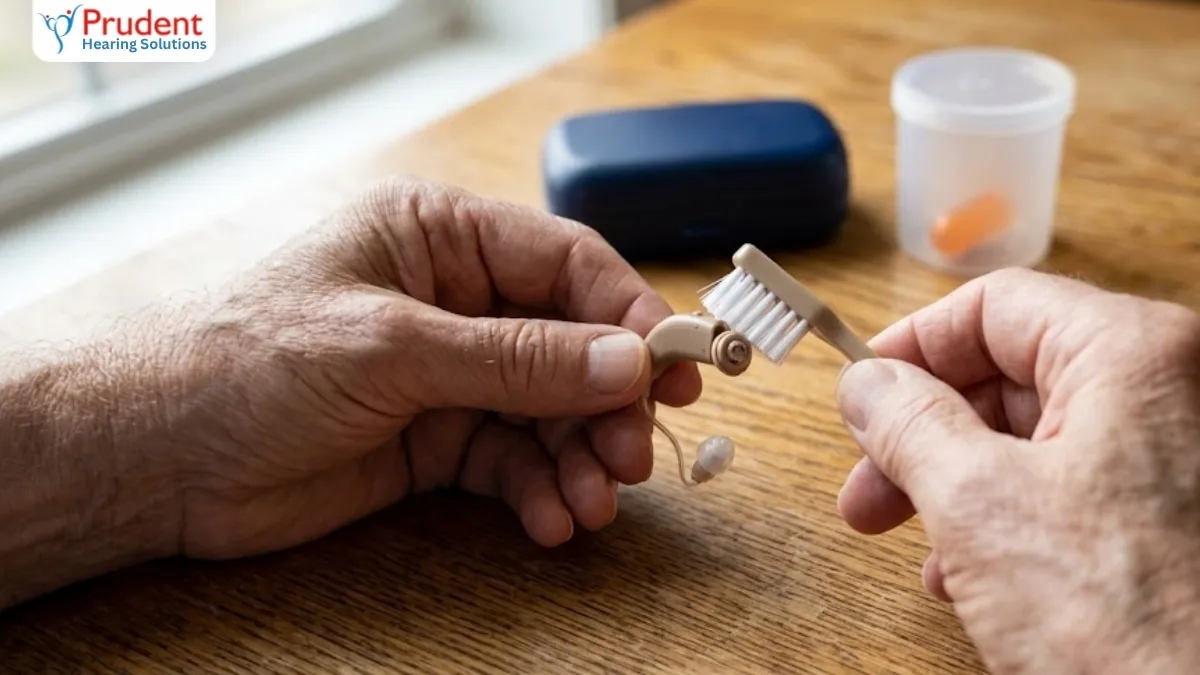
Yes, for most people with permanent hearing loss, wearing hearing aids all waking hours is the clinical recommendation. Your brain re-learns how to process sound through daily, consistent use. Taking regular daytime breaks slows this and makes adjustment harder.
The short answer: wear them all waking hours
For most people with permanent sensorineural hearing loss, the clinical recommendation is to wear hearing aids during all waking hours: roughly 10 to 16 hours a day. Your brain's auditory cortex relies on consistent input to maintain and strengthen the neural pathways used for processing speech and sound. When you take daytime breaks, you interrupt that re-learning process and typically extend the adjustment period from weeks into months.
The one time you should always remove them is before sleep. Hearing aids are not designed for overnight use: sleeping in them causes physical pressure on the ear canal, traps moisture, and can cause feedback from pillow contact. More importantly, your auditory system benefits from the rest, just as eyes benefit from closing.
Why wearing time matters for adjustment
Many first-time users find that sounds feel overwhelming in the first week. Traffic seems louder, their own voice sounds strange, and the refrigerator appears to have developed a new hum. This is normal, and it is because the brain has adapted over months or years to filtering out sound at reduced volume. When hearing aids suddenly provide normal loudness again, everything needs to be re-categorised.
The adjustment happens through neuroplasticity: the brain's ability to rewire based on new input. This rewiring requires consistent stimulation. If you wear aids for four hours, take them off, put them back in, the brain never settles into the new pattern. Most audiologists set a full-day wear target from week one, occasionally with a gradual start for people with very significant loss or a long history of unaided hearing.
Can you sleep with hearing aids in?
No, this is not recommended, even though it will not cause permanent damage if it happens occasionally. The reasons to remove them before bed:
- Pressure from the pillow can push the device uncomfortably into the ear canal, particularly for in-the-ear (ITE) styles
- Moisture from sweating overnight accelerates internal corrosion
- The microphone picks up pillow-rubbing noise, which can cause feedback and disturb your sleep
- Battery-powered aids drain unnecessarily; rechargeable aids benefit from their nightly charging cycle
- The ear canal needs time without an occluded (sealed) tip to allow normal air circulation
Should you remove them during loud noise or music?
No. Modern hearing aids have automatic sound management systems that keep output safe and comfortable at all volumes. If you find a specific environment genuinely uncomfortable, tell your audiologist at your next tuning visit: this is an adjustment that can be made in the programming, not a reason to stop wearing the aid.
Removing aids during noise also has the opposite effect to what most people expect. The brain is better at separating speech from noise with two well-fitted aids than with unaided ears once significant loss is present. Taking them out in a restaurant because it is 'too loud' typically makes the experience worse, not better.
When is it actually okay to take them off during the day?
- Before swimming, showering, or water sports (even IP68-rated aids are not for prolonged submersion)
- Before applying hair spray, dry shampoo, or any aerosol near the head: these residues block microphone ports
- During an MRI scan (always follow the imaging centre's instructions)
- During contact sports with a significant risk of a blow to the head
- Before any procedures near the ear (always tell the clinician you wear aids)
What about naps?
A short nap, 20 to 30 minutes, is fine either way. If removing the aids is disruptive enough that you skip the nap, leave them in. If you tend to sleep for an hour or more, it is worth removing them, airing the ear canal, and letting the drying kit do its job.
The wearing-time target that most audiologists use
Eight or more hours per day is the common minimum target. Many studies link fewer than eight hours of daily wear to slower adaptation, reduced speech understanding over time, and higher rates of people giving up. At Prudent, we check wearing time at every follow-up, most modern aids log it in the app, because it is the single most reliable predictor of whether the fitting will succeed.
If you are struggling to wear your aids comfortably for a full day, the most likely reason is a fitting or programming issue, not the aids themselves. Book a free hearing test and fitting review so we can look at what is making them uncomfortable.
Frequently asked questions
Should I wear my hearing aids all day?
Yes, for most people with permanent hearing loss. The usual advice is all waking hours, roughly 10 to 16 hours a day, because the brain relearns sound through steady daily use. Daytime breaks tend to stretch adjustment from weeks into months.
Can I sleep with my hearing aids in?
It is not recommended, although an occasional night will not cause damage. Pillow pressure can push the aid into the canal, overnight sweat speeds corrosion, the microphone picks up rubbing noise, and your ear canal needs time to breathe.
Should I take my hearing aids out in loud places?
No. Modern aids manage loud sound automatically and keep it at a safe, comfortable level. If a particular place still feels uncomfortable, tell your audiologist so the programming can be adjusted.
When should I take my hearing aids off during the day?
Before swimming, showering or water sports, before hair spray or any aerosol near your head, during an MRI scan, during contact sports and before any procedure near the ear.
How many hours a day should I wear hearing aids at minimum?
Eight hours or more is the common minimum target. Fewer than eight hours a day is linked to slower adjustment and a higher chance of giving up, which is why we check wearing time at every follow-up.
Free consultation
Ready to hear the difference?
Book a free 45-minute hearing test at any Prudent Hearing clinic: no obligation, honest advice, expert audiologists.