Neither Phonak nor Oticon is universally better. Phonak leans towards universal Bluetooth (including Android), an active noise-beam and add-ons like Roger; Oticon leans towards a wide, natural, open soundscape through its BrainHearing approach. Both are fitted at Prudent, both let you trial before you buy, both GST-exempt with up to 20-30% off MRP. Your audiogram, lifestyle and personal listening preference at a fitting decide.
The short answer: neither Phonak nor Oticon is universally better
Neither Phonak nor Oticon is the better hearing aid, and anyone who tells you one always beats the other is selling something. They are two of the most respected names in audiology, built around two different ideas of what good hearing should feel like. Phonak (from Sonova) leans towards connectivity and control: the strongest universal Bluetooth on the market, sound processing that actively steers towards the voice you want to hear, and add-ons for the very hardest listening situations.
Oticon (from Demant) leans the other way, towards a wide, natural, open soundscape that keeps you aware of everything around you and lets your brain do the choosing. The right one for your parent is decided by their audiogram, their daily life, and, honestly, what simply sounds better in their ears on the day, not by the badge. For every model and India price, see our Phonak and Oticon brand pages.
One thing is true of both, and worth saying plainly at the start: a hearing aid manages hearing loss, it does not cure it. No brand changes that. Both are fitted the same way at Prudent, where we test first and then match the aid to the loss; both let you trial before you buy; both are GST-exempt in India; and both come with up to 20-30% off MRP.
So the comparison is not about which name sounds more premium. It is about which approach manages your loss better in the rooms where you actually spend your life.
Two philosophies: steer towards the voice, or keep the whole scene open
Phonak's design idea is to help you focus. Its AutoSense operating system listens to the room, works out what kind of environment you are in, and shifts settings automatically, leaning on directional microphones to bring the speech in front of you forward while pushing the rest back. The intent is simple: make the voice you are trying to hear stand out from the noise around it, without you touching a button.
Oticon's design idea is close to the opposite, and deliberately so. Its BrainHearing philosophy and OpenSound approach, driven by a Deep Neural Network trained on millions of real-life sound scenes (in platforms such as Oticon More, Real and Intent), try to clean up noise while keeping the full soundscape available rather than narrowing everything down to one speaker. The thinking is that your brain is the best sound processor you own, so the aid should hand it a natural, balanced picture and let it decide what to pay attention to.
Neither philosophy is 'correct'. A beam pointed at one speaker is brilliant when there is one person you must hear in a noisy room. A wide, open scene is lovely at a family lunch where three people are talking at once and you want to follow all of them. This single difference in design intent is the thread that runs through everything below.
Connectivity and your phone: Phonak's clearest advantage
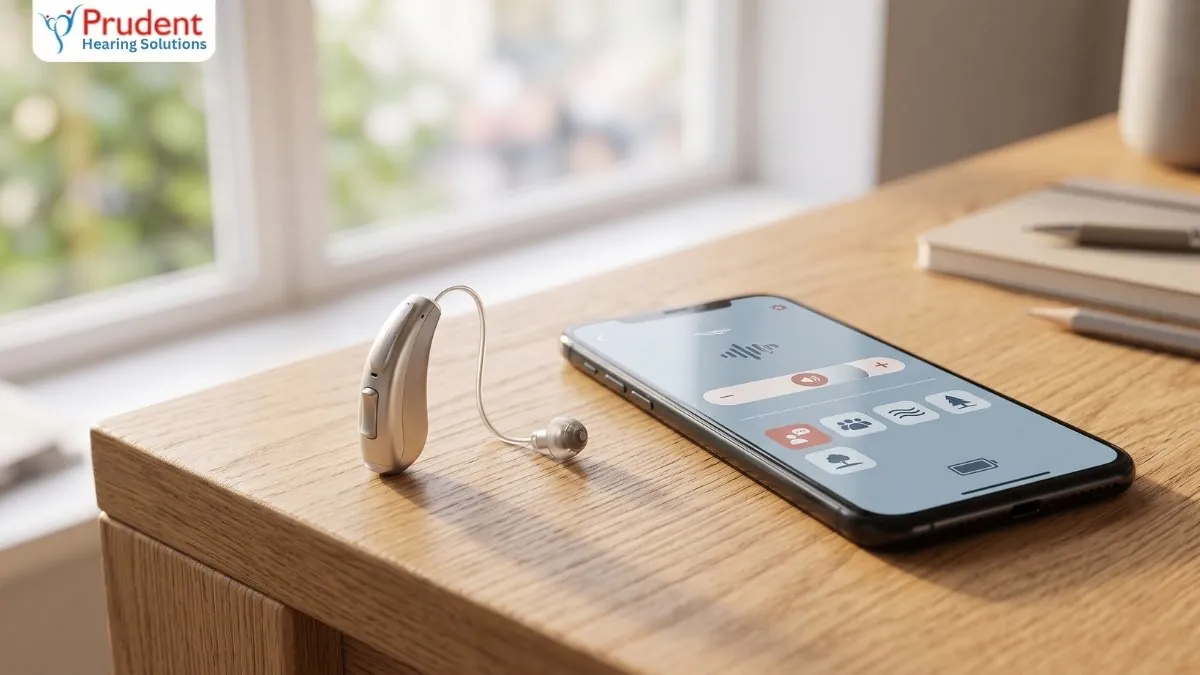
Phonak built its wireless around a connection that pairs with almost anything: Android phones, older iPhones, laptops, tablets. You do not need a specific handset generation, and you do not need an intermediary streamer hanging around your neck. Calls come straight to both ears. This matters in India, where most of the patients we see are on Android, often a phone that is a few years old.
Oticon streams well too. It has historically been strongest with iPhone, and it supports direct streaming to Android on its newer platforms, which works smoothly for a great many people. But if your parent carries an older or less common Android and wants fuss-free calls in both ears without thinking about compatibility, Phonak is still the safer bet, and its newer Infinio and Sphere platforms continue that connectivity-first tradition.
The way to settle this is not the spec sheet. Bring the actual phone to the appointment, not the model number, but the phone itself. We pair it on the spot, and that one step answers the Bluetooth question faster than any comparison table.
Hearing in noise: a focused beam and Roger, or an open scene cleaned up
This is where the two philosophies really separate. Phonak's AutoSense switches into a noise program on its own and uses directional microphones to focus forward. For the very hardest situations, a big noisy restaurant, a lecture hall, a meeting across a long table, Phonak's Roger remote-microphone system is a genuine differentiator: a small microphone placed near the speaker sends their voice straight into the aids. When one voice absolutely must cut through a wall of noise, few things beat it.
Oticon takes the other route. Instead of clamping down onto a single direction, its Deep Neural Network works to reduce the noise while keeping surrounding speech and sounds available, so in a group you can still swing your attention naturally from one person to another. Many users find this less tiring and closer to how normal hearing feels, because they are not locked onto whoever happens to be in front of them.
The honest trade-off: Phonak may give the clearest single voice in extreme noise, while Oticon may feel more natural and keep you connected to the whole table. Which one you prefer is personal, and it is exactly the kind of thing a trial in your own noisy places, not a showroom, is built to settle. If your parent is a teacher, sits in long meetings, or attends functions in loud halls, put Roger on the list to try.
Natural sound and own-voice comfort
Oticon's reputation is for natural, open, restful sound. Users often describe less of the 'in a tunnel' or over-processed feeling that first-time wearers dread, and many find group and open listening comfortable because the scene feels familiar rather than filtered. For someone nervous about how hearing aids will make the world sound, that ease of adjustment can matter as much as any single feature.
Own-voice comfort deserves a mention because it trips up so many first-time users, who complain that they 'sound like they are talking inside a barrel'. Your own voice reaches your ears differently from everyone else's, partly through the air and partly through your skull, so a hearing aid has to handle it thoughtfully.
Both brands manage this through their sound processing and, just as importantly, through the physical fit and venting chosen at the fitting. If your parent talks for a living, or has tried aids before and hated hearing themselves, say so at the appointment, because it changes the recommendation.
The fair summary is this: some people find Phonak's focused clarity better in noise but a touch narrower, and some find Oticon more natural but occasionally want more help locking onto one voice in the toughest rooms. That is a preference, not a verdict, and there is no way to know which camp your parent falls into except to let their ears try both.
Styles, power and rechargeable batteries
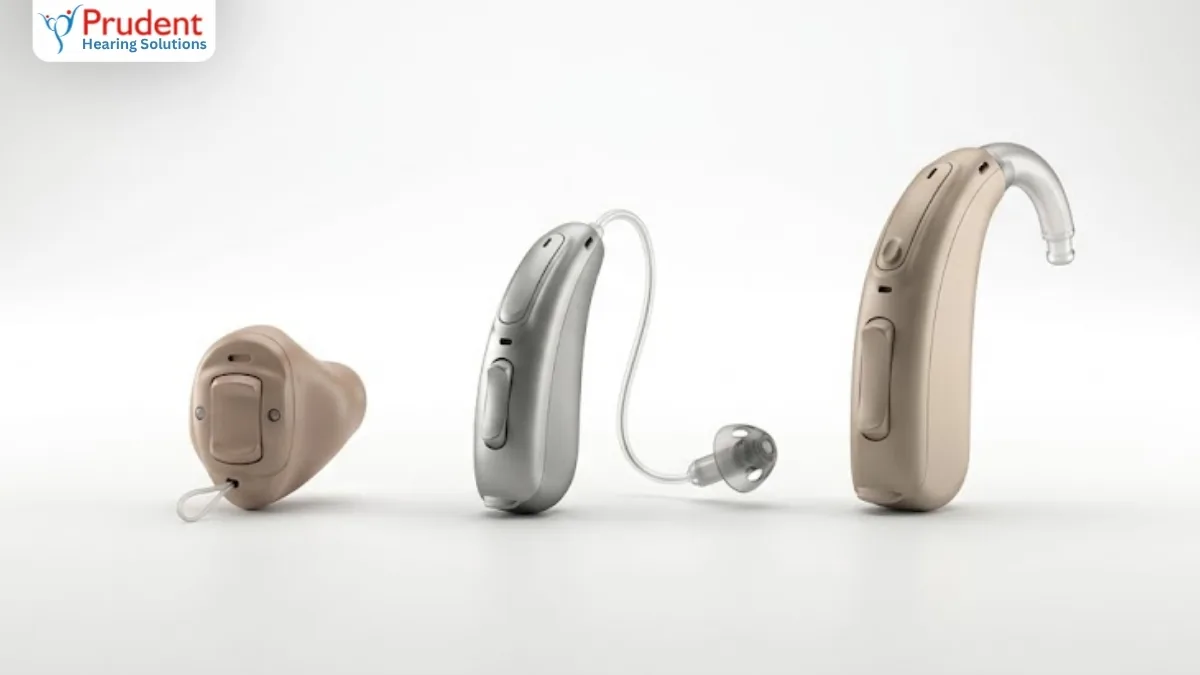
On the hardware itself, the two are broadly matched. Both offer the full range of styles: receiver-in-canal (RIC) aids, behind-the-ear (BTE) aids, and custom in-the-ear aids moulded to your canal. Both offer rechargeable and disposable-battery versions across their lineups. The choice between rechargeable and a replaceable battery is about your parent's hands and daily habits, not about the brand.
Where Phonak has a particular edge is power and custom fitting. Its Virto family covers custom in-the-ear aids, and its Naida super-power family is built for severe-to-profound loss, with a long-standing reputation among audiologists for pushing hard while staying clean. Phonak also offers a CROS setup for single-sided hearing. Oticon fields capable custom and power options of its own, so this is a question of degree rather than a gap.
Keep in mind that the smallest, most discreet styles trade away battery life and power. That trade-off catches people out, which is why the style is matched to the loss and to dexterity at the fitting rather than chosen for looks alone. For heavier losses, read our guide to hearing aids for severe and profound loss; for one-sided hearing, our guide to CROS and BiCROS explains the options.
Who should lean Phonak
If several of these describe your parent, Phonak deserves the first look. But if the loss is mild-to-moderate and they are on a recent iPhone in mostly quiet settings, none of these may tip the decision, and both brands will serve them well.
- They are on Android, or an older or less common phone, and Bluetooth calls in both ears matter.
- They spend time in very tough noise, such as big restaurants, lectures or long meetings, and would benefit from the Roger remote microphone.
- Their loss is severe-to-profound, where the Naida super-power family earns its place.
- They want the aid to actively pick out and steer towards one voice rather than keep the whole scene open.
- They prefer a hands-off aid that senses the room and adjusts on its own.
- They have single-sided hearing where a Phonak CROS setup is on the table.
Who should lean Oticon
If these sound more like your parent, start with Oticon. As with Phonak, none of this is a rule; it is a starting point that a trial in real life either confirms or overturns.
- They value a natural, open, restful sound above almost everything else.
- They spend time in groups and open settings and want to stay aware of everyone, not just the person in front of them.
- They found earlier hearing aids too 'processed', too narrow, or simply tiring to wear all day.
- They put everyday comfort and low listening effort at the top of the list.
- They are on iPhone, though Oticon is by no means iPhone-only.
Price and value in India
Both Phonak and Oticon are premium global brands, and both are sold in tiers, roughly an essential tier, a mid tier and a premium tier. Moving up a tier buys better noise handling and more connectivity features, not a 'better brand'. Because both lineups are wide, there is usually a model to suit most budgets within each brand.
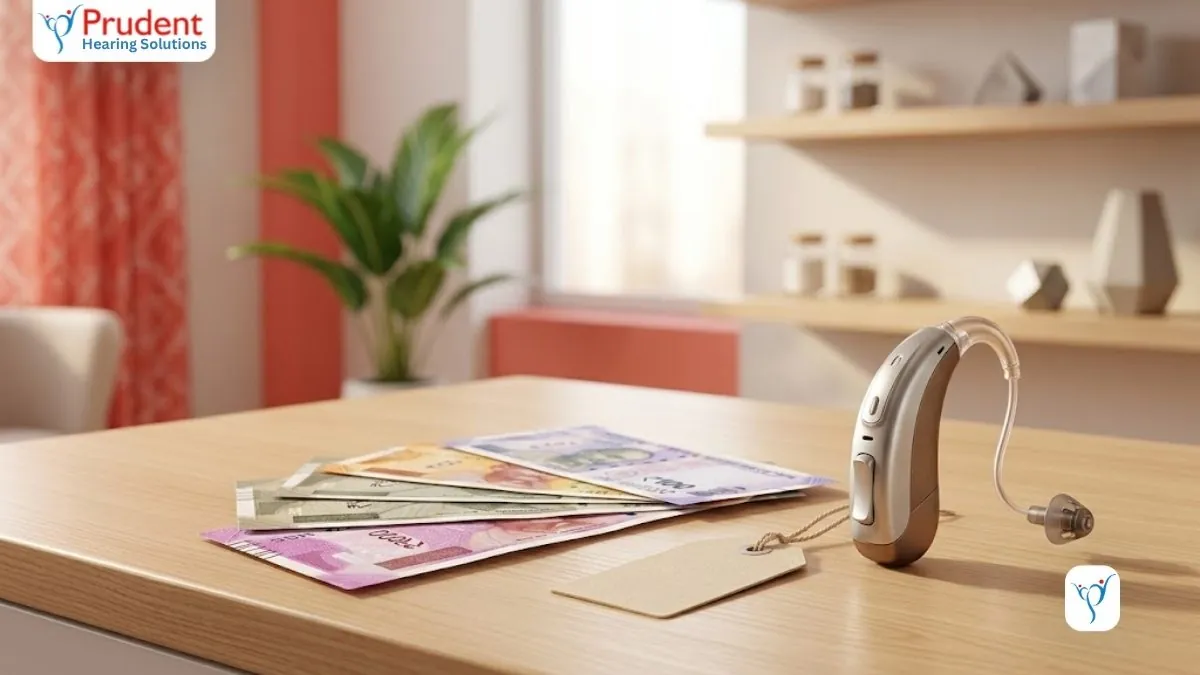
We are not going to quote exact rupee figures here, and you should be wary of anyone who does casually. MRPs move with the model, the generation and the technology tier, and they change over time, so we confirm the real number for you after the test rather than repeat a price that may be stale.
What is always true: hearing aids are GST-exempt in India, Prudent gives up to 20-30% off MRP on both brands, 0% EMI is available to spread the cost, and you can trial before you buy. Our hearing aid price guide for 2026 explains what actually drives the numbers up and down.
The most useful value advice is boring but reliable: do not pay for a top-tier feature set your parent will not use. A mid-tier aid matched carefully to the audiogram and to daily life very often beats a premium aid chosen off a spec sheet. The technology tier matters more than the badge on the front. For the shortlist across brands, see the best hearing aids in India.
How we decide at Prudent, and what to do next
It starts with a free 45-minute hearing test, which gives you an audiogram read by our RCI-registered audiologists (MASLP or BASLP qualified). That audiogram is what turns this whole Phonak-versus-Oticon debate from a spec-sheet argument into two or three specific models with real prices, matched to a loss that has actually been measured.
Bring three things to the appointment. Bring the actual phone, which settles the Bluetooth question in a minute. Bring a family member, because a second set of ears genuinely helps when you are comparing how two aids sound. And bring an honest budget and an honest description of the rooms that matter most, the noisy restaurant, the lunch table, the temple hall, the phone call, so we can trial both approaches where they will really be used and let the ears decide.
We fit both Phonak and Oticon, alongside Signia, Widex, ReSound, Starkey, Unitron and Interton, so we have no reason to push one over the other. Book a free hearing test at any Prudent clinic, browse the hearing aids we fit, or reach us through get in touch. For the wider picture, our rundown of 10 hearing aid brands in India puts these two in context, and how to choose the right hearing aid walks through the narrowing logic. Prudent Hearing Solutions.
Continue reading
Frequently asked questions
Is Phonak better than Oticon?
Neither is universally better. Phonak leans towards universal Bluetooth (including Android), an active noise-focusing beam and add-ons like the Roger remote microphone. Oticon leans towards a wide, natural, open soundscape through its BrainHearing and Deep Neural Network processing. The right one depends on your audiogram, your lifestyle and what sounds best to you at a fitting, which is why we let you trial both before you buy.
Which is better for an Android phone, Phonak or Oticon?
Phonak has the clearer edge here. Its universal Bluetooth pairs with almost any phone, including Android and older handsets, with calls going straight to both ears. Oticon supports Android streaming on its newer platforms and works well for many people, but if you carry an older or less common Android, Phonak is the safer choice. Bring your actual phone to the appointment so we can pair it on the spot.
Which is better for hearing in noisy places like restaurants?
Both handle noise well, in different ways. Phonak focuses forward on one voice and, for the very hardest rooms, its Roger remote microphone can send a speaker's voice straight to the aids. Oticon instead cleans up the noise while keeping the whole scene open, so you can follow several people naturally. Phonak may give the clearest single voice in extreme noise; Oticon may feel more natural in a group. A trial in your own noisy places decides it.
Which hearing aid sounds more natural?
Oticon is widely known for a natural, open, restful sound, and many users find group and open listening comfortable with it. That said, naturalness is subjective, and some people prefer Phonak's more focused clarity in noise. There is no way to know which suits your ears except to trial both in real life, which you can do at Prudent before deciding.
Which is better for severe or profound hearing loss?
For severe-to-profound loss, Phonak's Naida super-power family has a long-standing reputation for delivering enough clean power, and Phonak also offers a CROS option for single-sided hearing. Oticon has capable power options too. The only way to know what suits you is a proper hearing test; your audiogram, not the brand name, decides which powerful model is right.
Can I try both Phonak and Oticon before buying?
Yes. At Prudent you can trial before you buy, so you can compare both brands in your own daily environments rather than a showroom. Both are GST-exempt in India, both come with up to 20-30% off MRP, and 0% EMI is available to spread the cost. Start with a free 45-minute hearing test to get your audiogram, then we shortlist two or three specific models to try.
Free consultation
Ready to hear the difference?
Book a free 45-minute hearing test at any Prudent Hearing clinic: no obligation, honest advice, expert audiologists.