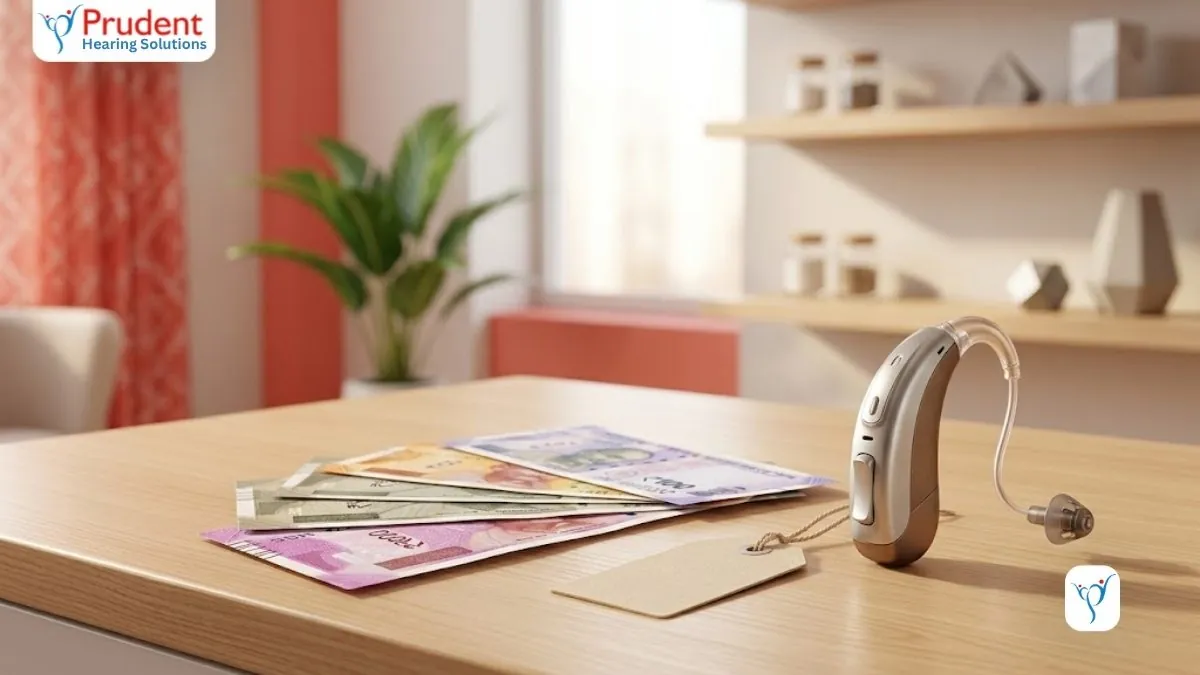
Learn how Indian income-tax law can offer relief for hearing loss through Section 80U (for a taxpayer with a certified disability) and Section 80DD (for those supporting a dependent). Understand the disability-certificate requirement, the 40 percent and 80 percent thresholds, the flat deduction amounts under current provisions, GST exemption on hearing aids, and why the old versus new tax regime matters. General information, not tax advice.
Yes, Indian income-tax law can offer relief connected to hearing loss, but it works through disability provisions, not through a line item that says "hearing aid". Under current Income Tax Act provisions, a taxpayer with a certified hearing disability of 40 percent or more may claim a flat deduction under Section 80U, and a taxpayer who financially supports a dependent with such a disability may claim a similar deduction under Section 80DD.
These are fixed deductions tied to a valid disability certificate, not refunds of what you spent on the device. This article is general educational information, not tax advice. Please confirm the current rules and your own eligibility with a qualified chartered accountant before you file.
How income-tax relief connects to hearing loss
Most people expect a tax break to work like a shopping bill: buy a hearing aid, keep the receipt, deduct the cost. Indian law does not usually work that way for hearing aids. The relief sits inside the disability sections of the Income Tax Act, and the trigger is not the purchase but a certified degree of disability.
Once a recognised medical authority certifies hearing disability at the qualifying threshold, a fixed deduction becomes available regardless of the exact rupee amount spent that year. That is why the disability certificate, and not the invoice, is the document that really matters here.
Section 80U: when you are the person with hearing disability
Section 80U applies when the taxpayer is themselves a person with a disability. If you have a certified hearing disability and you are the one filing the return, this is usually your route. Under current Income Tax Act provisions, it gives a flat deduction from your taxable income based on the severity recorded on your certificate. You do not have to itemise medical bills to claim it, but you must hold a valid certificate from the prescribed authority.
- You are the taxpayer and the person with the certified hearing disability
- The deduction is a fixed amount set by law, not a reimbursement of your spending
- A valid disability certificate is mandatory and may need renewal when it expires
- Only one of 80U or 80DD applies to a given person, so the same disability is not claimed twice
Section 80DD: when you support a dependent with disability
Section 80DD is for a taxpayer who supports a dependent with a disability. This is the common situation when a working adult looks after a parent, spouse, child, or sibling who has hearing loss.
Under current Income Tax Act provisions, the deduction is a fixed statutory amount, but to claim it you must have incurred expenditure on medical treatment, nursing, training, and rehabilitation of the dependent, or have paid or deposited into an approved scheme for the dependent's maintenance. Assistive devices and the rehabilitation that goes with a hearing aid fitting can fall within the spirit of this section, which is one reason families ask about it.
- A "dependent" typically means a spouse, child, parent, brother, or sister who depends on you
- The dependent must not have separately claimed a deduction under 80U for the same disability
- The deduction is a fixed statutory amount, again based on the severity band on the certificate, not the exact sum you spent
- Keep proof of expenditure and the certificate, and confirm documentation needs with your CA
What kind of expenses the sections have in mind
The disability sections are framed around the broader cost of living with a disability: medical treatment, therapy, training, and rehabilitation. A hearing aid manages hearing loss rather than curing it, and fitting one well involves testing, programming, follow-up, and sometimes auditory rehabilitation. Because the deduction is a flat amount and not a bill-by-bill refund, the exact split of your spending matters less than holding the certificate. Your chartered accountant can tell you precisely how your situation maps to the current rules.
The disability certificate is the key requirement
Both sections stand or fall on a valid disability certificate issued by a recognised medical authority. For hearing loss this generally follows an audiological assessment, so a properly documented hearing test is the practical starting point. At our clinics we help roughly 30 to 40 families a year obtain the audiological documentation they need for the certificate process, starting from the hearing test itself.
If you are unsure how the certificate is obtained or what percentage your audiogram translates to, our guide to the hearing disability certificate in India walks through the process, and a formal hearing test is where the measurement begins.
- 40 percent or more disability is the standard threshold to qualify at all under current provisions
- 80 percent or more is treated as "severe disability", which qualifies for the higher deduction band
- Certificates can carry an expiry or review date, so an out-of-date certificate may not be accepted
- The percentage on the certificate, not the price of the device, decides which band you fall into
"The document that qualifies you for these deductions is the disability certificate, not the hearing-aid invoice. Get the assessment and certificate right first, then let your chartered accountant handle the claim."
Deduction amounts under current provisions
The deductions under both 80U and 80DD are flat amounts fixed by law, and they step up with severity. Under current Income Tax Act provisions, the widely cited figures are Rs 75,000 for a certified disability of 40 percent up to 79 percent, and Rs 1,25,000 where the disability is 80 percent or more and is classified as severe.
These are deductions from taxable income, so the actual money saved depends on your tax slab. Figures and thresholds can change from one Finance Act to the next, so treat these numbers as indicative and verify the current amounts with your chartered accountant before filing.
- 40 to 79 percent certified disability: deduction of Rs 75,000 under current provisions
- 80 percent or more (severe disability): deduction of Rs 1,25,000 under current provisions
- The benefit is a reduction in taxable income, not a cash refund of hearing-aid cost
- Amounts are the same in structure across 80U and 80DD, but claimed by different people
Hearing aids are GST-exempt in India
Separate from income tax, there is a purchase-level benefit worth knowing. Hearing aids are exempt from GST in India, so you do not pay goods and services tax on the device itself. This is not a deduction you claim on your return; it is simply built into the price you pay at the point of sale.
At our clinics pricing is quoted GST-exempt, with up to 20-30% off MRP and 0% EMI where offers apply, confirmed at your appointment. The income-tax deductions above sit on top of this GST exemption; they are two different reliefs.
Old versus new tax regime can change your eligibility
This point is easy to miss and genuinely important. India now offers a choice between the old tax regime and the new tax regime, and many of the older deductions, including several disability-linked ones, behave differently depending on which regime you choose. A deduction available under one regime may not be available under the other.
So the answer to "can I claim this?" is not just about your certificate; it also depends on the regime you file under and the rules in force that year. Do not assume the benefit carries across automatically. Your chartered accountant can compare both regimes for your specific numbers and tell you which one actually leaves you better off.
How this fits with insurance and government schemes
Tax relief is one piece of a larger picture. Health insurance in India often treats hearing aids as an excluded aid or appliance, though terms vary by policy, and our note on hearing aids and insurance in India explains how to read your own cover.
For lower-income families and specific eligibility categories, subsidised or assisted devices may be available through public programmes, which we cover in government schemes for hearing aids in India. Used together, a GST-exempt purchase, any applicable scheme support, and a correctly claimed disability deduction can each reduce the overall burden.
A clear and repeated caution
Everything here is general information to help you ask the right questions, not personalised tax advice, and no figure above should be treated as final. Deduction amounts, thresholds, the definition of a dependent, certificate requirements, and regime rules are all set by law and change over time.
The right move is simple: get a proper hearing test, obtain a valid disability certificate if you qualify, keep your records, and then sit with a qualified chartered accountant to confirm exactly what you can claim under the current Income Tax Act provisions for your regime and your year of filing. On the hearing side, remember that a hearing aid manages hearing loss, and the correct model is decided by an audiologist at your test, never chosen from a web page.
Continue reading
Frequently asked questions
Can I directly deduct the cost of my hearing aid from my income tax?
Not as a simple bill-based deduction. Under current Income Tax Act provisions, relief comes through the disability sections (80U or 80DD) as a flat deduction tied to a certified disability of 40 percent or more, not as a refund of what you paid for the device. Confirm your eligibility with a chartered accountant.
What is the difference between Section 80U and Section 80DD?
Section 80U is claimed by a taxpayer who themselves have a certified disability. Section 80DD is claimed by a taxpayer who financially supports a dependent with a disability, covering medical treatment, training, and rehabilitation. The same disability cannot be claimed under both. A CA can confirm which applies to you.
How much deduction can I claim?
Under current Income Tax Act provisions, the flat deduction is Rs 75,000 for a certified disability of 40 to 79 percent, and Rs 1,25,000 for severe disability of 80 percent or more. These are deductions from taxable income and can change with each Finance Act, so verify the current figures with your chartered accountant.
Do I need a disability certificate?
Yes. A valid disability certificate from a recognised medical authority is mandatory for both 80U and 80DD, and it can carry an expiry or review date. For hearing loss it follows an audiological assessment. See our guide to the hearing disability certificate in India to understand the process.
Does the new tax regime affect these deductions?
It can. Several older deductions, including disability-linked ones, are treated differently under the new regime compared with the old regime, so a benefit available under one may not be available under the other. Ask your chartered accountant to compare both regimes for your specific numbers before filing.
Are hearing aids taxed under GST in India?
No. Hearing aids are GST-exempt in India, so no goods and services tax is charged on the device itself. This is separate from income-tax deductions; it is simply reflected in the price you pay. At our clinics pricing is quoted GST-exempt and confirmed at your appointment.
Can two family members claim for the same person?
No. The same disability cannot be claimed under both 80U by the person and 80DD by a supporter. Under current provisions the benefit is claimed once. Your chartered accountant can advise which family member should claim and how to document it correctly.
Free consultation
Ready to hear the difference?
Book a free 45-minute hearing test at any Prudent Hearing clinic: no obligation, honest advice, expert audiologists.