Educational information, not medical advice. This article is written to help you understand common ear and hearing issues. It is not a substitute for professional diagnosis or treatment. If your symptoms are severe, sudden, or persistent, please consult a qualified doctor or audiologist. For urgent symptoms (sudden hearing loss, bleeding from the ear, severe pain with dizziness, or a head injury), seek medical care the same day.
A middle or outer ear infection often causes muffled hearing that clears with treatment. But repeated infections can leave permanent damage. Here is how to tell the difference, and what to do if hearing does not return after the infection clears.
Ear infections are most commonly associated with children, but adults get them too, and in adults they can be a significant cause of hearing loss. The key distinction is between temporary hearing loss from fluid or inflammation, which reverses with treatment, and permanent damage from repeated or severe infection, which does not. Knowing which you are dealing with guides the right next step.
Types of Ear Infection That Affect Hearing
Acute Otitis Media (Middle Ear Infection)
The most common type. Bacteria or viruses infect the space behind the eardrum. Fluid builds up, the eardrum cannot vibrate properly, and hearing becomes muffled. This is usually treated with antibiotics in bacterial cases, and hearing typically returns to normal once the fluid clears.
Otitis Media With Effusion (Glue Ear)
Fluid remains in the middle ear after an infection without active infection. The eardrum is intact but the fluid dampens sound. This can persist for weeks or months. In adults it is less common than in children but does occur, particularly after a cold, flu, or allergic episode. Hearing loss is usually mild to moderate and resolves when the fluid drains.
Chronic Suppurative Otitis Media (CSOM)
Repeated or long-standing middle ear infection that has caused a hole (perforation) in the eardrum. CSOM is a significant cause of permanent hearing loss in adults in India. Treatment requires ENT evaluation, possible surgery (myringoplasty or tympanoplasty), and control of the underlying infection. Hearing loss from CSOM may be partially or fully permanent depending on the extent of eardrum and middle ear bone damage.
Otitis Externa (Swimmer's Ear)
Infection of the outer ear canal. Causes ear pain, discharge, and sometimes a blocked feeling, but only rarely causes permanent hearing loss. Treated with antibiotic or antifungal ear drops. Hearing returns once the swelling and discharge clear.
When Hearing Should Return After Treatment
- Acute otitis media: hearing typically improves within one to two weeks of starting antibiotics as the fluid resolves.
- Otitis media with effusion: may take up to three months to clear fully in adults. If it persists beyond three months, ENT evaluation for the cause is appropriate.
- CSOM with perforation: hearing loss from the perforation itself is usually conductive and partial. It may improve significantly after surgical repair, but results depend on the state of the ossicles (the small bones of the middle ear).
- Otitis externa: hearing returns to baseline within days of treatment as canal swelling subsides.
What If Hearing Does Not Return?
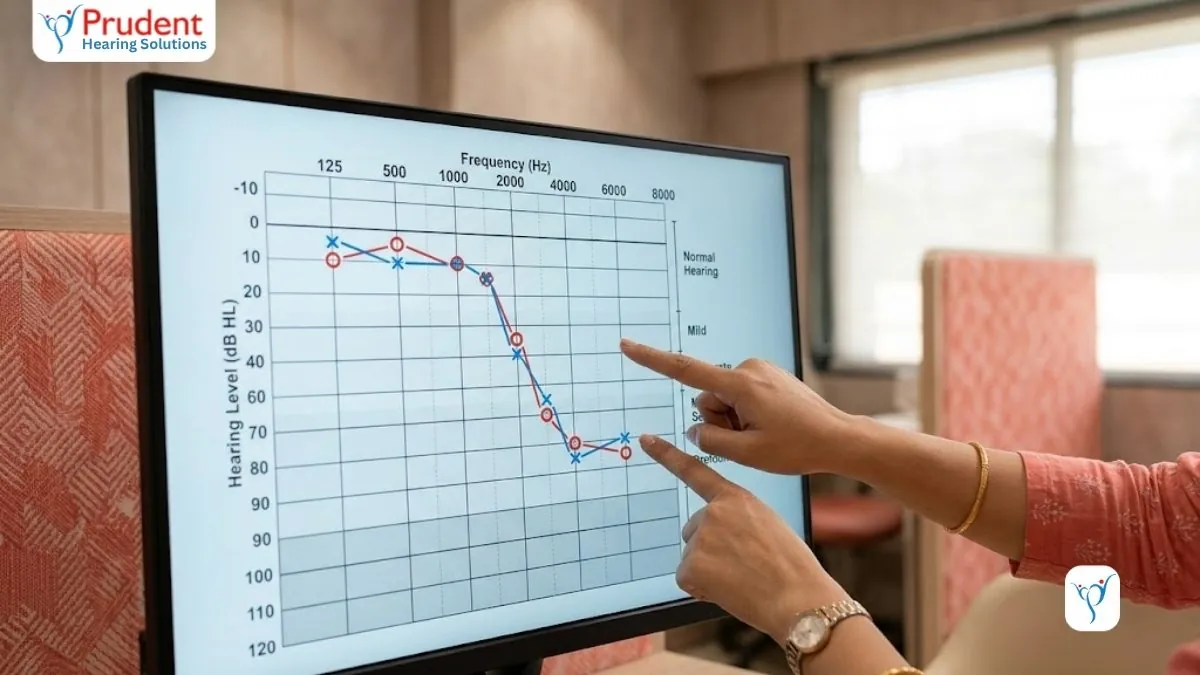
If your hearing is still muffled or reduced two to four weeks after an ear infection that has otherwise cleared, you need a pure tone audiometry (PTA) test. The test maps your hearing at multiple frequencies and distinguishes between conductive loss (outer or middle ear problem) and sensorineural loss (inner ear or nerve problem). This distinction determines what happens next:
- Conductive loss: often treatable with surgery or further medical management. Hearing aids are also very effective for conductive loss if surgery is not indicated.
- Sensorineural loss: not treatable with surgery in most cases. Hearing aids restore functional hearing for most patterns of sensorineural loss.
- Mixed loss: a combination of both, requiring an individuated treatment plan from an ENT and an audiologist working together.
Getting a Hearing Test After an Ear Infection
Wait until the infection has fully resolved before getting a PTA test, ideally two to four weeks after symptoms clear. A test done while the ear canal still has discharge or the middle ear still has fluid will not reflect your true hearing baseline.
Prudent Hearing Solutions offers free home hearing tests for adults in Pune, Mumbai, Navi Mumbai, Delhi, Bengaluru and Goa. If you have recently recovered from a middle ear infection and are unsure whether your hearing has fully returned, a home test is a convenient starting point. Call or WhatsApp +91 94296 90093 to book.
Continue reading
Frequently asked questions
How long should I wait after an ear infection before getting a hearing test?
Wait until the infection has fully cleared and the ear canal is dry and free of discharge, ideally two to four weeks after all symptoms resolve. A PTA test done while fluid or infection is still present will not reflect your true baseline hearing.
Can a middle ear infection cause permanent hearing loss in adults?
A single acute middle ear infection rarely causes permanent hearing loss in adults if treated appropriately. However, repeated episodes of infection (chronic otitis media) or infection that leads to eardrum perforation or damage to the ossicles can result in permanent conductive hearing loss. This is why chronic or recurring ear infections should be evaluated by an ENT specialist, not managed with repeated rounds of antibiotics alone.
My ear was infected three months ago and I still feel like sounds are muffled. Should I be worried?
Yes, this warrants investigation. Muffled hearing three months after an ear infection suggests either fluid still present in the middle ear (otitis media with effusion), eardrum thickening or scarring from the infection, or in some cases sensorineural hearing loss from the infection affecting the inner ear. Book an ENT consultation and a pure tone audiometry test.
Will a hearing aid help hearing loss from a middle ear infection?
Hearing aids are very effective for conductive hearing loss, which is the type usually caused by middle ear infection or eardrum perforation. If surgical repair is not indicated or has not fully restored hearing, a well-fitted hearing aid typically provides significant benefit for speech clarity.
Free consultation
Ready to hear the difference?
Book a free 45-minute hearing test at any Prudent Hearing clinic: no obligation, honest advice, expert audiologists.