Educational information, not medical advice. This article is written to help you understand common ear and hearing issues. It is not a substitute for professional diagnosis or treatment. If your symptoms are severe, sudden, or persistent, please consult a qualified doctor or audiologist. For urgent symptoms (sudden hearing loss, bleeding from the ear, severe pain with dizziness, or a head injury), seek medical care the same day.
Hearing loss is linked to loneliness and low mood, but that is association, not proven cause. Here is what the evidence shows and what to do next.
Quick answer
Hearing loss does not directly "cause" depression the way a virus causes a fever. But research consistently links untreated hearing loss with a higher risk of low mood, loneliness and social withdrawal. The most plausible path is indirect: straining to follow conversation makes socialising exhausting, people pull back, and isolation feeds depression. This is a strong association, not certain causation.
Key takeaways
- Studies find a real link between hearing loss, loneliness and depression, but the evidence shows association, not proven cause and effect.
- The likely mechanism is social: difficulty enjoying conversation leads to withdrawal, and isolation raises the risk of low mood.
- Isolation and untreated hearing loss are both flagged as modifiable risks in later life, so acting early matters.
- A hearing test is a sensible first step if you notice both withdrawal and hearing difficulty.
- If you have thoughts of self-harm, treat it as urgent and contact a doctor or helpline now, do not wait.
Hearing loss does not directly "cause" depression the way a virus causes a fever. But research consistently links untreated hearing loss with a higher risk of low mood, loneliness and social withdrawal. The most plausible path is indirect: straining to follow conversation makes socialising exhausting, people pull back, and isolation feeds depression. This is a strong association, not certain causation.
Is the link between hearing loss and depression real?
Yes, the pattern shows up repeatedly. People with untreated hearing loss report more loneliness and depressive symptoms than peers who hear well. A 2025 review of hearing loss, loneliness and depression describes how reduced hearing feeds social disconnection, which in turn tracks with lower mood.
The World Health Organization also notes that unaddressed hearing loss affects communication and can contribute to feelings of isolation, according to the WHO fact sheet on deafness and hearing loss.
The link is consistent across populations. That consistency is why clinicians take it seriously, even though a link is not the same as a cause.
Does hearing loss actually cause depression, or just come with it?
This is the important distinction. Most of the evidence is observational. It shows that hearing loss and depression appear together more often than chance would predict. It does not prove one triggers the other.
Several explanations are possible. Hearing difficulty may drive withdrawal that leads to depression. Or a shared factor, such as ageing, vascular health or another condition, may raise both risks at once. In many people, more than one path is likely working together.
So the honest answer is: hearing loss is a plausible contributor to depression through isolation, but "cause" overstates what the studies can prove.
What is the mechanism linking ears and mood?
The clearest explanation is social. When following speech takes constant effort, conversations stop being enjoyable. The NIDCD notes that age-related hearing loss can make it hard to enjoy talking with friends and family, which nudges people to avoid social settings.
Over time, that avoidance narrows a person's world. Research on social isolation and dementia risk in older adults highlights how isolation carries its own serious risks in later life. Loneliness and low mood tend to reinforce each other, and hearing loss can quietly set that cycle in motion.
There may also be added mental effort. Straining to decode speech uses cognitive resources, which can leave people tired and less motivated to engage, deepening the pattern.
Can treating hearing loss improve mood?
It can help, though it is not a guaranteed cure for depression. The logic is straightforward: if isolation drives low mood, restoring easier communication can reopen social life.
Hearing aids are designed to make speech clearer and conversation less tiring. The NIDCD explains that hearing aids can improve a person's ability to communicate and take part in daily life. Many people report feeling more connected once they can follow group conversation again.
The evidence that treating hearing loss improves mood is encouraging but still emerging. Hearing devices are best seen as part of the picture. If depression is present, it needs its own assessment and care from a doctor or mental health professional. A hearing test addresses the hearing side, not the mood side.
What should I do if I notice both hearing loss and low mood?
Take both seriously and address them in parallel.
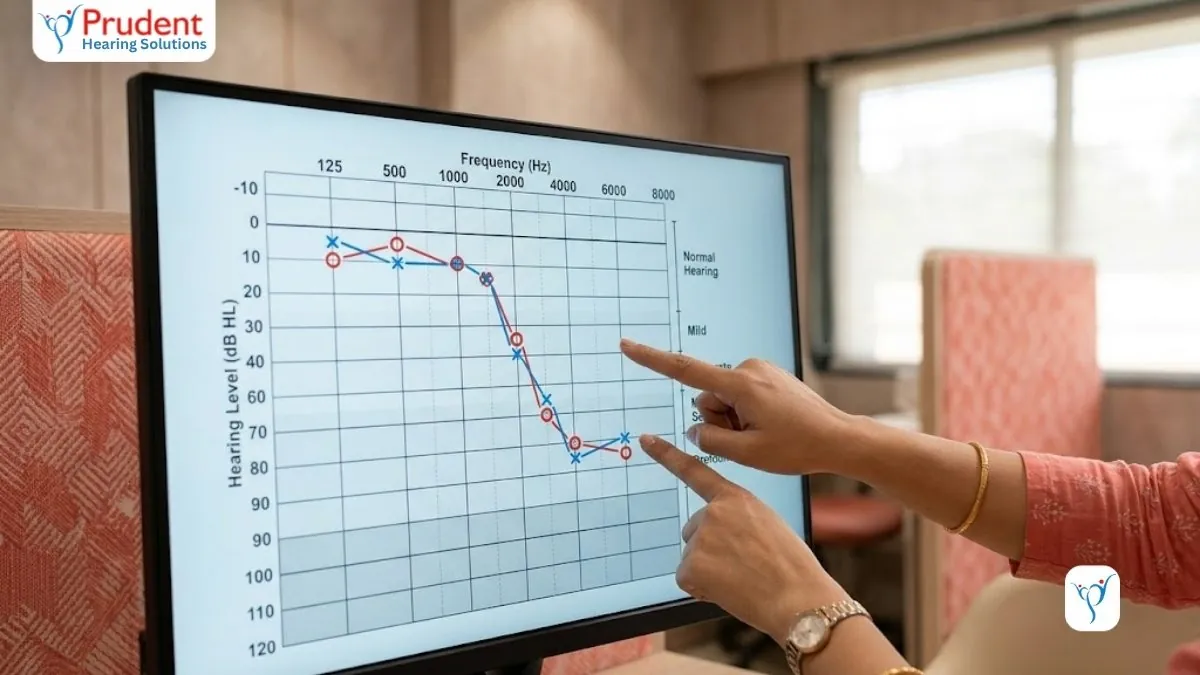
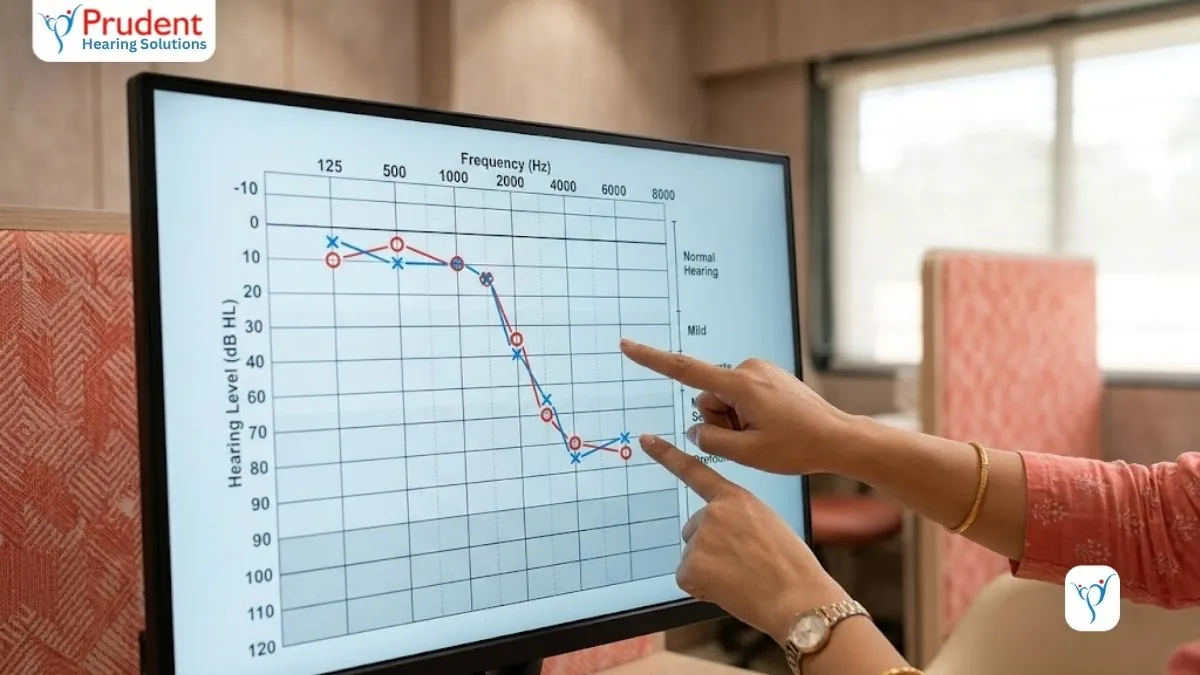
Start with a professional hearing test to measure what is actually happening with your ears. If leaving home is hard, a home visit can bring testing to you. Our team can talk through options at any Prudent Hearing Solutions clinic, and explain how hearing aids may make conversation easier.
For the mood side, speak to a doctor or a qualified mental health professional. The two paths support each other: hearing help can widen your social world, and mental health support can lift the fog that makes reaching out feel impossible.
To understand the wider picture of how hearing, connection and brain health interact, read our pillar guide, Hearing Loss, Loneliness and the Brain: What the 2024 Lancet Dementia Report Really Says (and What You Can Do).
If you or someone you love is having thoughts of self-harm, this is urgent. Contact a doctor, an emergency service, or a mental health helpline straight away.
Frequently asked questions
Does everyone with hearing loss get depressed?
No. Many people with hearing loss never develop depression. The link is a raised risk across a population, not a certainty for any one person. Good social support and early treatment appear to lower that risk.
Will hearing aids cure my depression?
No, hearing aids are not a treatment for depression. They can make communication easier and reduce isolation, which may lift mood for some people, but depression needs its own assessment and care from a qualified professional.
Is the hearing loss and depression link proven cause and effect?
Not proven. The research shows a consistent association and a plausible mechanism through loneliness and withdrawal, but most studies cannot prove that hearing loss directly causes depression.
Can treating hearing loss early prevent low mood later?
It may help by keeping you socially connected, and isolation is a recognised modifiable risk in later life. Prevention is not guaranteed, but acting early is a reasonable, low-risk step.
When should I seek urgent help?
If you have thoughts of harming yourself or feel unable to cope, seek help immediately from a doctor, emergency service or mental health helpline. Do not wait for a hearing appointment.
Sources & further reading
We cross-checked this article against the following authoritative sources. Guidance and figures reflect the most recent public guidance available at the time of last review (September 2026). Clinical review by the Prudent Hearing clinical team.
- The Lancet Commission on dementia prevention, intervention, and care: 2024 report (thelancet.com)
- Age-Related Hearing Loss (Presbycusis), NIDCD (nidcd.nih.gov)
- Hearing Aids, NIDCD (nidcd.nih.gov)
- Deafness and hearing loss fact sheet, WHO (who.int)
- Hearing loss, loneliness and depression (PMC, 2025) (pmc.ncbi.nlm.nih.gov)
- Social isolation and dementia risk in older adults (GSA/Oxford, 2025) (academic.oup.com)
Free consultation
Ready to hear the difference?
Book a free 45-minute hearing test at any Prudent Hearing clinic: no obligation, honest advice, expert audiologists.