Educational information, not medical advice. This article is written to help you understand common ear and hearing issues. It is not a substitute for professional diagnosis or treatment. If your symptoms are severe, sudden, or persistent, please consult a qualified doctor or audiologist. For urgent symptoms (sudden hearing loss, bleeding from the ear, severe pain with dizziness, or a head injury), seek medical care the same day.
What happens in cochlear implant surgery and switch-on: the work-up, the operation, 2-4 days in hospital, healing, activation, mapping and rehabilitation.
The short answer
Cochlear implant surgery places the internal part of the implant under the skin behind the ear and threads a thin electrode into the cochlea, under general anaesthesia. You do not hear through it straight away. After a healing period, the external sound processor is fitted and switched on, and an audiologist programmes it in a series of 'mapping' sessions. Then comes the part that matters most: months of practice and therapy while the brain learns to make sense of the new signal.
This guide walks through each stage, from the tests before surgery to everyday life afterwards. For the costs involved, see our cochlear implant cost guide; to understand who is offered an implant in the first place, read cochlear implant eligibility in India.
Before surgery: the work-up
No one goes straight to surgery. The implant team first confirms that an implant is the right choice and that it is safe for you. The pre-operative work-up typically includes:
- Detailed hearing tests, including speech testing with well-fitted hearing aids.
- CT and/or MRI scans to check the shape of the cochlea and the hearing nerve.
- An ENT examination and a check of your general health.
- An anaesthesia assessment, because the operation is done under general anaesthesia.
- Counselling about realistic expectations, the device options and the rehabilitation commitment.
Your team may also advise vaccinations before surgery; follow their advice. This is also the stage to ask for an itemised, written estimate, because the cost of the work-up, surgery, hospital stay and first year of therapy adds up.
Surgery day: what happens
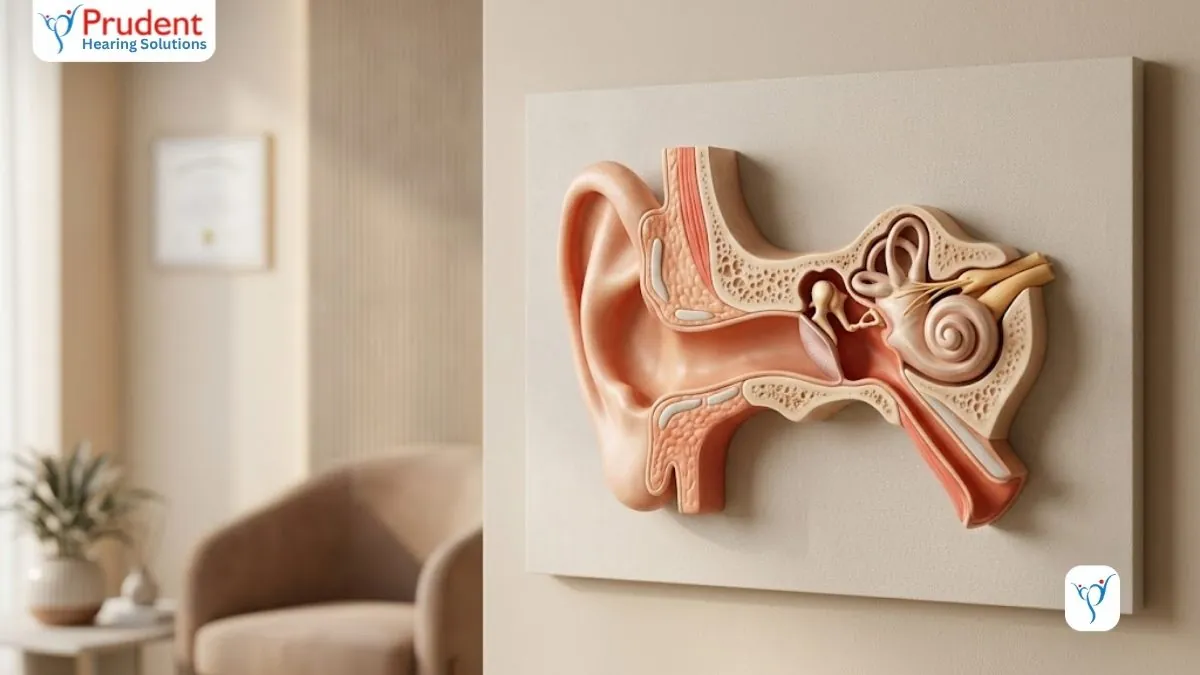
The operation is done under general anaesthesia, so you are asleep throughout. The surgeon makes a cut behind the ear, creates a small bed in the bone for the internal receiver, and places a thin electrode array into the cochlea, the snail-shaped hearing organ of the inner ear. The receiver sits under the skin, where the external part will later attach by a magnet. The implant is usually tested during the operation to check that it is working before the wound is closed.
After surgery: hospital stay and healing
Most people stay in hospital for about 2 to 4 days. There is usually a dressing or bandage around the head at first, and some discomfort around the wound, which is managed with painkillers. Some people notice temporary dizziness, ringing in the ear or a change in taste; mention anything like this to your team.
Remember that you will not hear through the implant yet. The internal part has no power of its own, so it stays silent until the external processor is fitted at switch-on. Contact your surgical team promptly if you notice increasing swelling, redness, discharge from the wound, a fever, or any weakness of the face.
"The surgery puts the hardware in. Switch-on and rehabilitation are where hearing is actually rebuilt."
Switch-on: the first time you hear
Once the wound has healed, usually after a healing period your surgeon will set, the external sound processor is fitted. It sits behind the ear and connects to the internal receiver through the skin using a magnetic coil. At switch-on, the audiologist activates the electrodes one by one and sets comfortable levels for each.
It is important to know what switch-on usually feels like. Many people describe the first sounds as beeps, buzzes or voices that sound robotic or cartoon-like, rather than normal speech. That is expected: the brain has not yet learned to interpret electrical stimulation from the implant. With regular use, practice and adjustments, sounds typically become more natural and more meaningful.
Mapping: tuning the implant over time
Mapping is the process of programming the implant: setting how much stimulation each electrode delivers so that sounds are audible and comfortable. Your levels change as you adapt, so mapping happens repeatedly, frequently at first and less often once things are stable.
| Stage | What happens |
|---|---|
| Switch-on | Processor fitted; electrodes activated; first comfortable levels set |
| Early weeks and months | Frequent mapping sessions as your brain adapts and levels change |
| First year | Ongoing mapping alongside speech and listening therapy |
| Long term | Periodic check-ups; the external processor is usually replaced or upgraded every 5 to 7 years |
Rehabilitation: learning to hear again
Rehabilitation is not optional. After switch-on, the brain has to learn to hear through the implant, which means months to a couple of years of auditory-verbal therapy and mapping sessions, especially for children. Sessions with a therapist are combined with daily listening practice at home: conversation, reading aloud, phone practice, and for children, structured play and speech work. Families make a large difference here.
For a child, consistent therapy and a home full of spoken language are central to developing speech. For adults who lost their hearing after learning to speak, the work is often about reconnecting sounds with words they already know. In both cases, regular wear of the processor matters as much as the therapy sessions.
Living with a cochlear implant
- Charge or replace the processor's batteries daily, as your team shows you.
- Keep the external processor dry, unless you are using an accessory designed for water.
- Always tell doctors and scanning staff you have an implant before any MRI scan, because the internal part contains a magnet.
- Carry your implant card when you travel; see hearing devices at airport security and in an MRI.
- Ask your team about contact sports and any activities that could knock the implant site.
Costs, funding and where to start
A cochlear implant in India in 2026 costs roughly ₹7 to 12 lakh or more per ear, all-in, and the central ADIP scheme funds implants for eligible children from low-income and BPL families through empanelled hospitals, with several states running their own programmes. Our cochlear implant cost guide breaks this down, and hearing aid vs cochlear implant explains when an implant is the right step.
The journey always starts with an accurate hearing test and a proper trial of powerful hearing aids. Book a free hearing test at any Prudent clinic in Pune, Mumbai, Navi Mumbai, Delhi or Bengaluru. If your results suggest an implant might help, our RCI-registered audiologists will explain them clearly and point you towards an ENT and implant team for evaluation. Call +91 94296 90093. Prudent Hearing Solutions.
Free consultation
Ready to hear the difference?
Book a free 45-minute hearing test at any Prudent Hearing clinic: no obligation, honest advice, expert audiologists.