The best way to hear the TV with hearing aids is a wireless TV streamer that sends the sound straight to your aids at your own volume. Turning on subtitles, dialogue-boost settings and a soundbar also help. Here are the options, and what each costs you in convenience.
The short answer
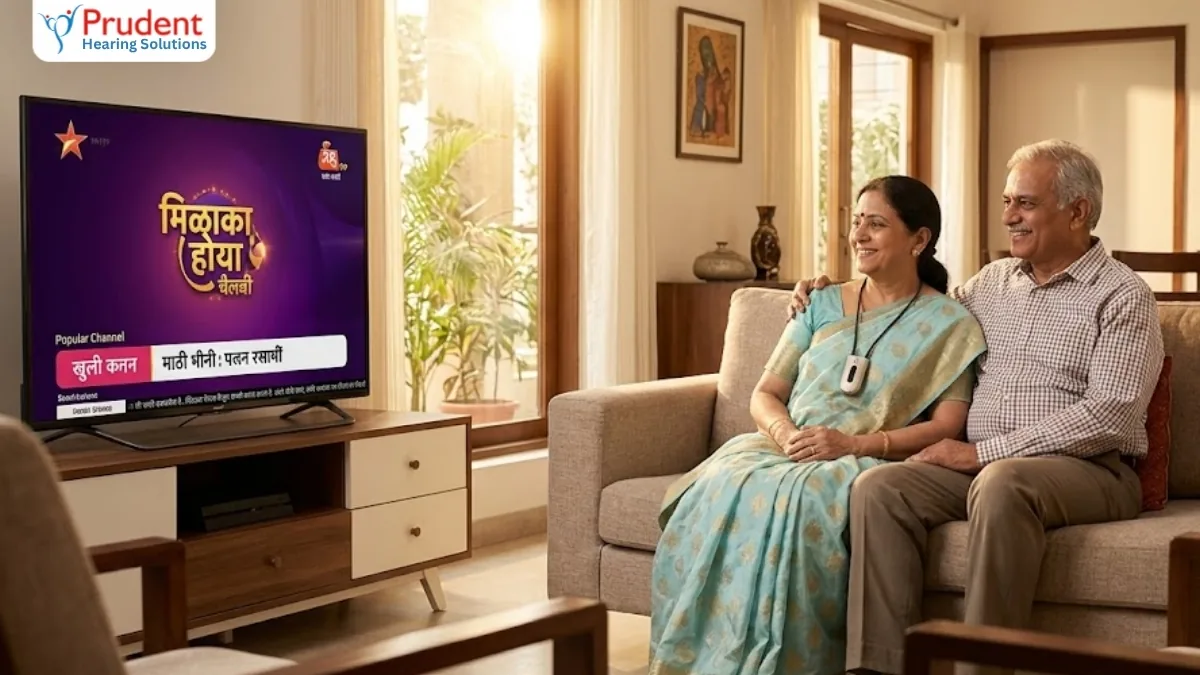
A wireless TV streamer is the best fix. It plugs into the TV and sends the sound directly to your hearing aids, so you set your own volume and the rest of the family sets theirs. If that is not an option, turn on subtitles, use the TV's dialogue-enhance mode, add a soundbar with a speech setting, or use a neckloop or headphones.
The TV is one of the first places hearing loss shows up at home, and the volume war it causes is a common reason families come to us. Fixing it makes a real difference to daily life.
Option 1: a hearing aid TV streamer
Most major brands make a small transmitter, sometimes called a TV adapter or TV connector, that connects to the TV by an optical, HDMI ARC or headphone/RCA cable and sends the audio to compatible aids wirelessly.
- Pros: clear sound straight into both ears, independent volume, works while others watch at normal volume, and many keep working when you leave the room.
- Cons: it costs extra, it works only with compatible aids, and it must be set up correctly for your TV's outputs.
- Check before buying: which cable output your TV offers, and that the accessory suits your exact hearing aid model.
If your aids already have Bluetooth, our Bluetooth hearing aids guide explains what streams to what.
Option 2: fix the TV sound itself
- Subtitles: turning captions on removes the strain of guessing words, and they help even with aids.
- Dialogue or speech mode: many TVs and streaming boxes have a clear-voice or dialogue setting that lifts speech over background music.
- Soundbar: a soundbar with a speech-enhancement mode gives clearer dialogue than built-in speakers.
- Sit closer and reduce room echo and background noise.
Option 3: other assistive devices
- Neckloop or headset paired with the TV, for aids with a telecoil.
- Wireless TV headphones worn over or without the aids, for occasional use.
- See our overview of assistive listening devices in India.
Why the TV is hard even with hearing aids
TV speech competes with music and effects, is often mixed quietly, and comes from a speaker across a room with echo. A hearing aid amplifies all of that, so clarity does not always improve. Sending the sound directly to the aid bypasses the room, which is why a streamer works so well.
What to ask at your fitting
- Does my hearing aid model support a TV streamer, and which one?
- Which output does my TV need, and can you set it up at home?
- Can the aids have a dedicated TV program?
We can set up TV streaming for you during a home visit so it works on your own television. Book a free hearing test to start.
Frequently asked questions
What is the best way to hear the TV with hearing aids?
A wireless TV streamer. It plugs into the TV and sends the sound straight to your hearing aids, so you set your own volume while the rest of the family watches at theirs.
How does a hearing aid TV streamer connect to the TV?
It connects by an optical, HDMI ARC or headphone/RCA cable and sends the audio wirelessly to compatible aids. Check which output your TV has and that the streamer suits your exact hearing aid model.
Why is the TV hard to follow even with hearing aids?
TV speech competes with music and effects, is often mixed quietly and reaches you across a room with echo. A hearing aid amplifies all of that, which is why sending the sound straight to the aid with a streamer works so much better.
How can I hear the TV better without buying a streamer?
Turn on subtitles, use the TV's dialogue or clear-voice mode, add a soundbar with a speech setting, sit closer and cut background noise. A neckloop works with telecoil aids, and wireless TV headphones help for occasional use.
What should I ask my audiologist about TV listening?
Ask whether your hearing aid model supports a TV streamer and which one, which TV output it needs and whether the clinic can set it up at home, and whether your aids can have a dedicated TV program.
Free consultation
Ready to hear the difference?
Book a free 45-minute hearing test at any Prudent Hearing clinic: no obligation, honest advice, expert audiologists.