Educational information, not medical advice. This article is written to help you understand common ear and hearing issues. It is not a substitute for professional diagnosis or treatment. If your symptoms are severe, sudden, or persistent, please consult a qualified doctor or audiologist. For urgent symptoms (sudden hearing loss, bleeding from the ear, severe pain with dizziness, or a head injury), seek medical care the same day.
Hearing loss is linked with poorer balance and a higher risk of falls in older adults. It is an association, not a guaranteed cause, with three likely reasons: less awareness of your surroundings, the balance organs sharing the inner ear, and the mental effort of straining to hear. Here is why it matters in India and how a hearing check fits into fall prevention.
If you or a parent is over 60 and the hearing has started to slip, it is worth knowing that hearing loss is linked with poorer balance and a higher risk of falls. This is an association, not a certainty, and it does not mean a fall is coming. Researchers think three things are at play: hearing gives your brain a steady stream of information about what is around you, the same inner ear that hears also holds your balance organs, and straining to follow speech uses up mental effort that would otherwise help you stay steady. In India, where a fall for an older person can mean a fractured hip and a long, hard recovery, this link is worth taking seriously. The practical takeaway is simple: make a hearing check part of looking after balance, not something separate from it.
Why a fall is a bigger deal as you get older
In your thirties a stumble is a bruise and a story. Past 65, the same fall can break a wrist or a hip, and the recovery is far slower. In India this matters in ways that go beyond the injury itself. Many homes have steep stairs, uneven thresholds, wet bathroom floors and dim lighting. Joint families are common, but so are seniors who live alone or spend the day at home while younger family are at work. A hip fracture can mean weeks in bed, a loss of confidence, and a fear of moving that quietly makes the next fall more likely. Preventing the first fall is far easier than recovering from it.
The link is real, but it is an association
Let us be clear about what the evidence does and does not say. Studies have repeatedly found that older adults with hearing loss report more falls than those with normal hearing, and that the risk tends to rise as the loss gets worse. That is an association: the two things travel together. It is not proof that hearing loss directly causes every fall, and it does not mean that treating your hearing will remove the risk. Falls have many causes at once, including eyesight, muscle strength, blood pressure, medication, the inner ear and the home. Hearing is one thread in that cloth, and a thread worth checking.
How hearing and balance are connected
Three plain-language mechanisms explain why hearing and steadiness tend to go hand in hand.
Your ears feed your brain a map of the room
Hearing does more than let you follow a conversation. It gives your brain a constant, low-level picture of what is around you: a scooter coming up from behind, a person walking down the corridor, the echo that tells you a room is small or the floor is hard. When that stream of sound fades, your brain has less to work with, and you notice hazards later. On a busy Indian street or a crowded railway platform, that half-second of extra warning matters.
The balance organs sit inside the ear
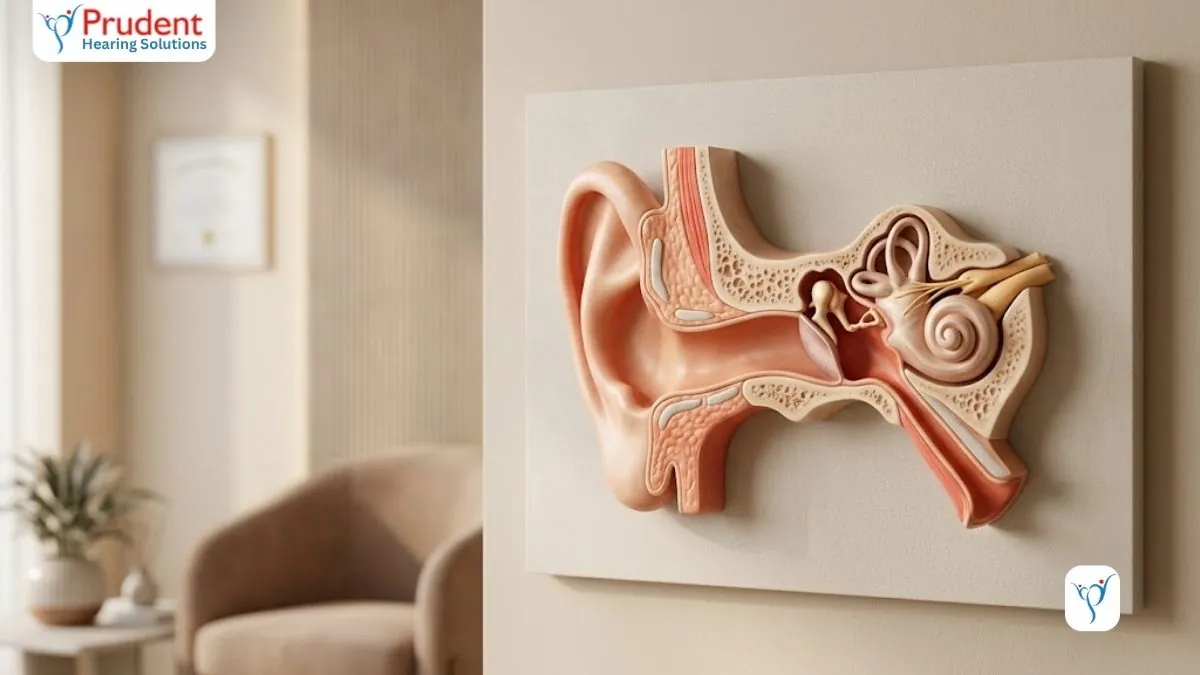
The inner ear is not only for hearing. Right next to the hearing organ, the cochlea, sit the vestibular organs, the tiny fluid-filled canals that tell your brain which way your head is turning and whether you are upright. Because they share the same neighbourhood and the same blood supply, conditions that affect hearing can sometimes affect balance too. This is why some ear problems bring both hearing changes and dizziness. It is also why a spinning sensation is never something to shrug off. If the room turns, that is a separate problem that needs its own assessment, and our guide to vertigo, BPPV and Meniere's disease explains those specific conditions.
Straining to hear leaves less brain for staying upright
Staying balanced is not fully automatic; it quietly uses part of your attention. So does listening when your hearing has faded. When you strain to follow speech in a noisy room, your brain spends effort decoding words that it would otherwise spend on posture, footing and the step in front of you. Researchers call this cognitive load. It is the same effort tax that links untreated hearing loss with faster cognitive decline. Ask anyone to do hard mental arithmetic while walking and watch them slow down or stop. Straining to hear works the same way.
"Falls in older adults almost never have a single cause. Hearing is one factor you can actually check and act on, alongside eyesight, strength and a safer home."
What actually helps
You cannot remove every risk, but you can lower it. Here is where hearing fits into sensible fall prevention.
Make a hearing check part of fall prevention
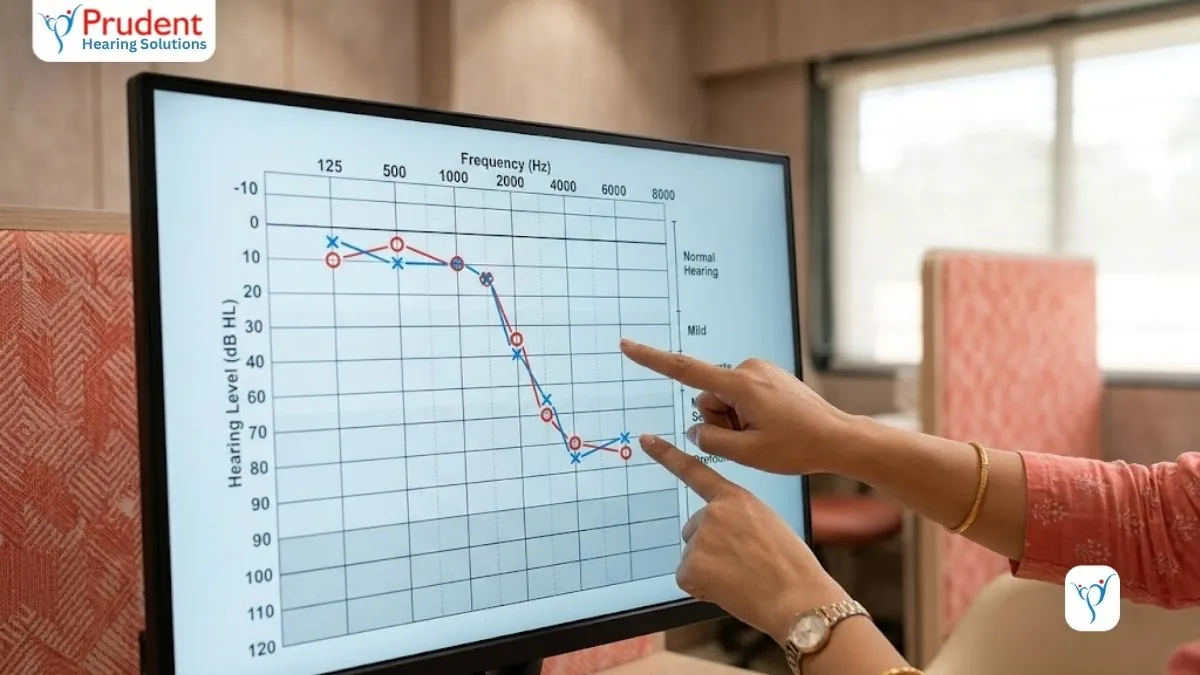
If you or a parent has had a fall, feels unsteady, or has simply noticed the hearing slipping, get it tested. A hearing test is quick, painless and, at Prudent, free and about 45 minutes long. It tells you the shape and degree of any loss, which is the starting point for everything else. Age-related hearing loss, or presbycusis, comes on so gradually that most people underestimate it. If you are unsure whether it is time, our list of signs you need a hearing test is a good gut check, and our guide to the types and causes of hearing loss explains the different kinds in plain language.
Treat any hearing loss with well-fitted aids
If a loss is found, well-fitted hearing aids restore some of that stream of environmental sound and ease the mental effort of listening. It is reasonable to expect that this supports your awareness of what is around you. But be careful with the claim: hearing aids are not a proven fall-prevention treatment, and no honest audiologist will promise they stop falls. What they do well is manage hearing loss so daily life is easier and less tiring. They manage the loss; they do not cure it. Fitting matters more than the brand, and for older users comfort, simple controls and rechargeable batteries often count for more than the flashiest features. Our guide to the best hearing aids for senior citizens walks through what to look for.
Get dizziness or vertigo properly assessed
Feeling off-balance and feeling the room spin are not the same thing, and they are treated differently. True vertigo, that spinning or tilting sensation, needs a proper assessment rather than a guess. Prudent runs a full diagnostic centre with vestibular tests such as VEMP, which help work out whether a balance problem is coming from the inner ear. If dizziness is a regular part of your life, do not assume it is just age. Have it looked at, and read our separate guide to vertigo and dizziness so you know what to ask.
Keep moving
Strength and balance are use-it-or-lose-it. Gentle, regular activity, such as walking, simple leg strengthening, yoga or tai-chi style movement, keeps the muscles and reflexes that catch you when you wobble. You do not need a gym. A daily walk and a few minutes of standing balance practice, holding a sturdy chair at first, make a real difference over months. If a fall or dizziness has knocked your confidence, ask your doctor about supervised balance exercises or physiotherapy.
Make the home safer
Most falls happen at home, and most are preventable with small changes. Fix loose rugs and mats, clear cables and clutter from walkways, and add grab bars in the bathroom and beside the toilet. Light the path from the bed to the bathroom for night trips. Keep stairs clear and add a second handrail where you can. Wear well-fitting slippers with grip rather than loose chappals on smooth floors. None of this is expensive, and together it removes the hazards that hearing loss makes harder to notice.
When to get it checked sooner
Some symptoms deserve prompt attention rather than a wait-and-see approach. See a doctor or an audiologist soon if you notice any of these:
- A fall with no obvious cause, or more than one fall in a year
- Repeated dizziness, spinning, or a feeling that the room is moving
- A sudden drop in hearing, especially in one ear, which needs same-day attention
- Hearing loss in one ear only, or ringing (tinnitus) on one side
- Unsteadiness that comes with headaches, weakness, or changes in vision or speech
Sudden or one-sided symptoms in particular should never wait. Balance problems can have many causes, some simple and some that need a doctor, so a proper medical review is always worth it.
What to do next
If the hearing has slipped and balance feels less sure than it used to, treat the two as connected and start with the easy step. Book a free hearing test, get a clear picture of what is going on, and build from there. We have RCI-registered audiologists and four clinics, in Pune (Viman Nagar), Delhi (Rohini and Green Park) and Bengaluru (Jayanagar), with home visits for those who find it hard to travel. You can reach us on +91 9429690093, Monday to Saturday, 10am to 7pm. A steadier, easier daily life often begins with one honest test, and that is something we are always glad to help with at Prudent Hearing Solutions.
Continue reading
Frequently asked questions
Does hearing loss cause falls?
Not directly, and not in everyone. Research shows an association: older adults with hearing loss report more falls, and the risk tends to rise as the loss worsens. The likely reasons are reduced awareness of your surroundings, the balance organs sitting inside the same inner ear, and the mental effort of straining to hear. Hearing is one of several fall risks worth checking, alongside eyesight, muscle strength and a safe home.
Will hearing aids prevent falls?
There is no proof that hearing aids prevent falls, and you should be wary of anyone who promises they do. What well-fitted aids do is restore some environmental sound and reduce the effort of listening, which may support your awareness of what is around you. Hearing aids manage hearing loss, they do not cure it, and they are one part of sensible fall prevention rather than a treatment for falls on their own.
My parent feels dizzy and the room spins. Is that the same as hearing loss?
No. Feeling unsteady and feeling the room spin are different, and spinning (true vertigo) needs its own assessment. Because the balance organs sit inside the ear, some ear conditions cause both hearing changes and dizziness, but vertigo should never be dismissed as just age. Get it properly checked with vestibular testing. Our guide to vertigo, BPPV and Meniere's disease explains the common causes and what to ask.
What tests are done for balance and hearing problems?
A hearing test (pure tone audiometry) maps the degree and shape of any hearing loss and takes about 45 minutes. For balance and dizziness, vestibular tests such as VEMP help show whether the problem is coming from the inner ear. Prudent runs a full diagnostic centre offering these and more. The right combination depends on your symptoms, which is why a proper assessment comes before any conclusion or device.
Why is a fall more serious for older adults in India?
With age, bones are more fragile and recovery is slower, so a fall that would be a bruise at 30 can mean a fractured wrist or hip at 70. Many Indian homes add risk with steep stairs, wet bathroom floors, loose rugs and dim lighting. A hip fracture can mean weeks in bed and a lasting fear of moving. Preventing the first fall is far easier than recovering from one.
How often should an older adult get a hearing test?
A good rule is once a year from around age 60, or sooner if you notice the television creeping up in volume, trouble following conversation in noise, or any unsteadiness or falls. Age-related hearing loss comes on so gradually that most people underestimate it, so regular checks catch changes early. At Prudent the test is free and takes about 45 minutes, with no pressure to buy anything.
Can making the home safer really reduce falls?
Yes, and it is one of the most effective steps you can take. Most falls happen at home and many are preventable: fix loose rugs, clear cables and clutter, add grab bars in the bathroom, light the route to the toilet at night, and wear slippers with grip. These small changes remove the very hazards that hearing loss can make harder to notice, and they cost very little.
Free consultation
Ready to hear the difference?
Book a free 45-minute hearing test at any Prudent Hearing clinic: no obligation, honest advice, expert audiologists.