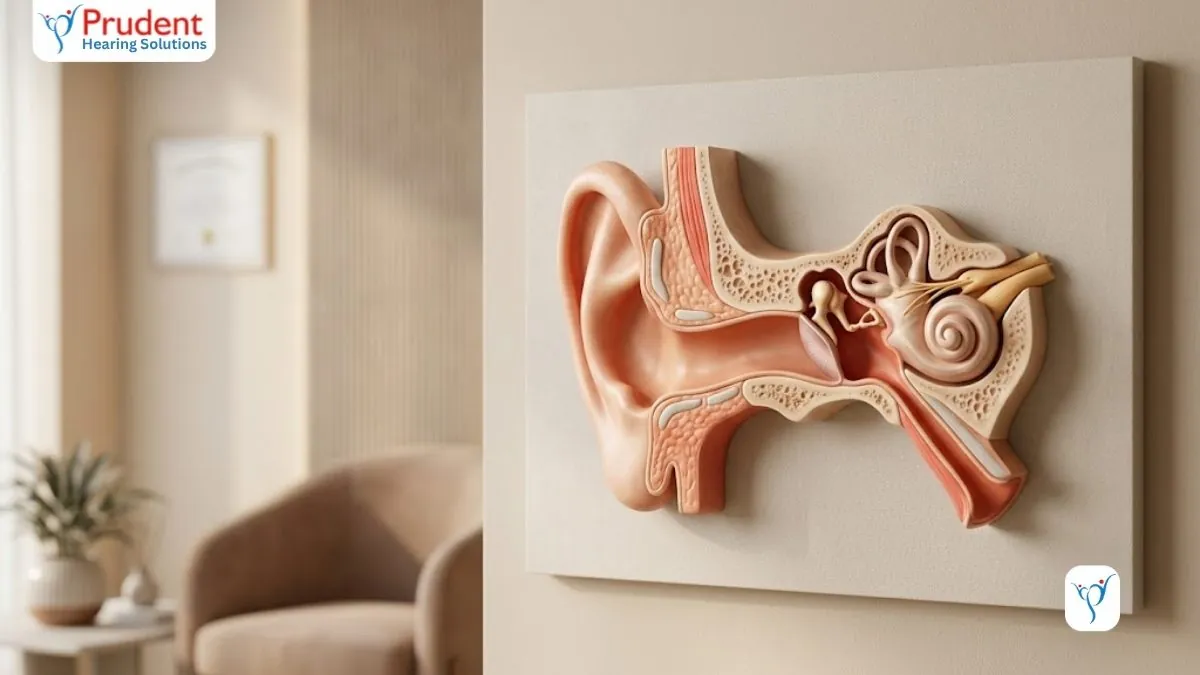
Educational information, not medical advice. This article is written to help you understand common ear and hearing issues. It is not a substitute for professional diagnosis or treatment. If your symptoms are severe, sudden, or persistent, please consult a qualified doctor or audiologist. For urgent symptoms (sudden hearing loss, bleeding from the ear, severe pain with dizziness, or a head injury), seek medical care the same day.
The ACHIEVE trial did not show hearing aids prevent dementia for everyone, but slowed cognitive decline in higher-risk older adults. Here is what that means.
Quick answer
No. Current evidence does not show hearing aids prevent dementia for everyone. In the ACHIEVE trial, hearing aids did not slow cognitive decline across the whole group. But in a higher-risk older subgroup, cognitive decline was slower. Treating hearing loss is a low-risk, supportable step, not a guaranteed shield.
Key takeaways
- ACHIEVE was a large randomised trial testing whether treating hearing loss slows cognitive change; the overall result was neutral.
- A pre-specified higher-risk subgroup (older adults with more health risk factors) showed meaningfully slower decline with hearing aids.
- "Slower cognitive decline" is not the same as "prevents dementia": no device is proven to do that.
- Hearing loss is one of the modifiable dementia risk factors identified by the 2024 Lancet Commission.
- A professional hearing test should come before you buy any device.
No. Current evidence does not show hearing aids prevent dementia for everyone. In the ACHIEVE trial, hearing aids did not slow cognitive decline across the whole group. But in a higher-risk older subgroup, cognitive decline was slower. Treating hearing loss is a low-risk, supportable step, not a guaranteed shield.
What did the ACHIEVE trial actually find?
ACHIEVE randomised older adults with untreated hearing loss to either a hearing intervention (hearing aids plus audiologist support) or a health-education control, then followed them over time. Across the full study population, the hearing intervention did not reduce cognitive decline.
That headline matters. It means the honest answer to "can hearing aids prevent dementia?" is that we cannot claim they do.
The nuance sits inside the trial. ACHIEVE included both older adults who already carried more health risk factors and healthier community volunteers. In the higher-risk group, hearing aids were associated with a slower rate of cognitive decline. In the healthier group, there was little measurable difference.
Why did results differ between the two groups?
People with more risk factors simply had more cognitive change to slow down over the follow-up. In the healthier group, decline was so gradual that any effect was hard to detect in a shorter window.
This is a signal worth taking seriously, but it is a subgroup finding, not proof for the population as a whole. Subgroup results generate strong hypotheses; they do not settle them. The researchers were clear that the effect might apply to higher-risk older adults and needs confirmation.
So is treating hearing loss still worth it for the brain?
Yes, as part of a bigger picture. The 2024 Lancet Commission on dementia lists hearing loss among 14 modifiable risk factors that together account for a large share of potentially preventable dementia cases. Alzheimer Europe's summary of that report groups hearing loss with factors that could, in theory, reduce dementia risk if addressed across a population (Alzheimer Europe, 2024).
"Modifiable risk factor" means association plus biological plausibility: untreated hearing loss increases listening effort and social withdrawal, both linked to brain health. It does not prove that fixing hearing removes the risk. Association is not causation.
There are also plain, day-one reasons to treat hearing loss: clearer conversations, less fatigue, and staying socially connected. Age-related hearing loss is common and typically gradual (NIDCD). In the United States, about one in eight people aged 12 and older have hearing loss in both ears (NIDCD statistics), and the World Health Organization estimates that around 430 million people worldwide live with disabling hearing loss (WHO). Those benefits are real regardless of the dementia question.
Should I get hearing aids specifically to protect my memory?
Buy hearing aids to hear better first. Treat any cognitive benefit as a possible bonus, not the reason.
If you or a family member has noticed difficulty following conversations, turning the TV up, or missing speech in noise, the right next step is a diagnostic hearing test, not an online purchase. Many people underestimate their loss, and undiagnosed medical causes (such as wax, fluid, or one-sided loss) need ruling out first.
You can book a full assessment through our hearing test service, and we offer a home visit if travelling to the clinic is difficult. If a device is appropriate, our audiologists fit and fine-tune it during follow-up: the same audiologist-supported model used in ACHIEVE, which is quite different from buying an unadjusted amplifier.
For the wider evidence on hearing, the brain, and what you can actually do, read our pillar guide: Hearing Loss and Dementia: What the 2024 Lancet Commission Really Says (and What You Can Do).
When to seek urgent care: sudden hearing loss in one or both ears should be treated as urgent. Do not wait for a routine appointment: seek prompt medical or ENT assessment.
Continue reading
Frequently asked questions
Do hearing aids reverse or cure dementia?
No. There is no evidence that hearing aids reverse, cure, or definitively prevent dementia. The strongest signal so far is slower cognitive decline in a higher-risk subgroup: a possible benefit, not a cure.
Does everyone with hearing loss benefit cognitively from hearing aids?
Not clearly. In ACHIEVE, the cognitive signal was concentrated in older adults with more risk factors. Healthier participants showed little measurable difference, though they still gained everyday hearing benefits.
Is the ACHIEVE cognitive benefit proven?
Not yet. The slower decline appeared in a pre-specified higher-risk subgroup rather than across the whole trial, so it is a strong hypothesis that needs confirmation in future research before being treated as settled.
Is it too late if I already have hearing loss?
It is worth getting assessed at any age. Treating hearing loss improves communication and social connection immediately, and it remains one of the modifiable factors highlighted by the Lancet Commission. Start with a professional hearing test.
What should I do first?
Book a diagnostic hearing test before buying anything. Speak to our team via contact or explore fitted options on our hearing aids page after your results are reviewed.
Sources & further reading
We cross-checked this article against the following authoritative sources. Guidance and figures reflect the most recent public guidance available at the time of last review (September 2026). Clinical review by the Prudent Hearing clinical team.
- Dementia prevention, intervention and care: 2024 Lancet standing Commission (thelancet.com)
- Alzheimer Europe (2024 Lancet Commission: 14 modifiable dementia risk factors)
- NIDCD (Age-Related Hearing Loss)
- NIDCD (Quick Statistics About Hearing)
- World Health Organization (Deafness and hearing loss)
Free consultation
Ready to hear the difference?
Book a free 45-minute hearing test at any Prudent Hearing clinic: no obligation, honest advice, expert audiologists.