Educational information, not medical advice. This article is written to help you understand common ear and hearing issues. It is not a substitute for professional diagnosis or treatment. If your symptoms are severe, sudden, or persistent, please consult a qualified doctor or audiologist. For urgent symptoms (sudden hearing loss, bleeding from the ear, severe pain with dizziness, or a head injury), seek medical care the same day.
What causes tinnitus, when ringing in the ears is an emergency, and the treatments audiologists actually use. Book a free hearing test in India.
Quick answer
Tinnitus is the perception of ringing, buzzing, hissing or humming with no outside sound source. It is a symptom, not a disease, and most cases occur alongside some degree of hearing loss ([NIDCD](https://www.nidcd.nih.gov/health/tinnitus)). There is no proven cure, but sound therapy, hearing aids and counselling genuinely reduce how intrusive it feels. A hearing test is the first step.
Key takeaways
- Tinnitus is a symptom of the auditory system, not a diagnosis in itself — most often it travels with hearing loss from ageing or noise ([NIDCD](https://www.nidcd.nih.gov/health/tinnitus)).
- There is no pill or supplement proven to cure tinnitus. Established management focuses on making it less noticeable and less distressing ([AHRQ](https://effectivehealthcare.ahrq.gov/health-topics/tinnitus)).
- Hearing aids, wearable sound generators and combination devices plus sound therapy are the first-line options audiologists use ([NIDCD](https://www.nidcd.nih.gov/health/tinnitus)).
- Sudden ringing in one ear with hearing loss is a medical emergency — it can signal sudden sensorineural hearing loss (SSNHL), where prompt, same-day treatment offers the best chance of recovery.
- A hearing test tells you what is driving the noise and whether a device will help — book a [free hearing test](/hearing-test).
Tinnitus is the perception of ringing, buzzing, hissing or humming with no outside sound source. It is a symptom, not a disease, and most cases occur alongside some degree of hearing loss (NIDCD). There is no proven cure, but sound therapy, hearing aids and counselling genuinely reduce how intrusive it feels. A hearing test is the first step.
What is tinnitus?
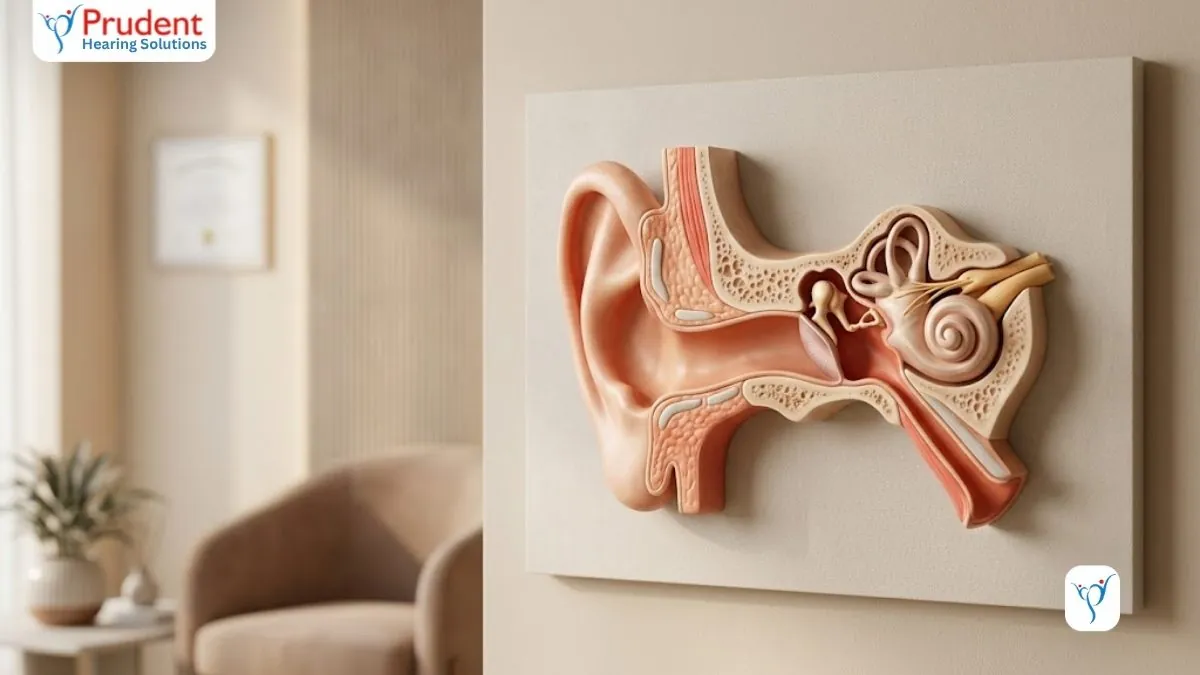
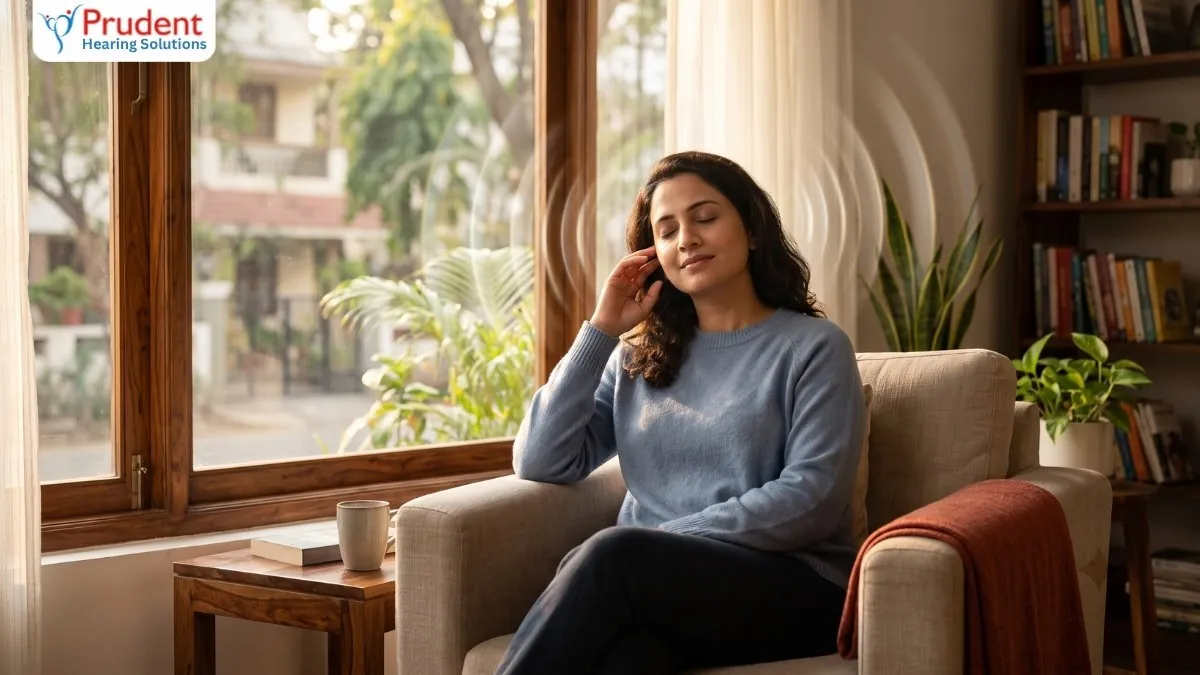
Tinnitus is hearing a sound — ringing, buzzing, hissing, roaring or clicking — that has no external source. Almost everyone hears it briefly at some point; it becomes a clinical concern when it is persistent or bothersome (MedlinePlus). Most tinnitus is subjective, meaning only you can hear it. It is generated within the auditory pathway rather than by your surroundings. In our clinics we often meet people who fear the noise is "in their head" and are relieved to learn it is a recognised, well-studied ear symptom with real management options.
What causes ringing in the ears?
The most common driver is damage to the tiny sensory hair cells of the inner ear, which is why tinnitus so often accompanies hearing loss — most people who have tinnitus also have some degree of hearing loss. Common contributors include age-related hearing loss, long-term or sudden loud-noise exposure, earwax blockage, middle-ear problems, certain medicines (ototoxic drugs) and conditions such as Ménière's disease (NIDCD). Because so many paths lead to the same symptom, tinnitus is best understood as a signal that something in the hearing system deserves a proper assessment (MedlinePlus).
Is tinnitus linked to hearing loss?
Yes — strongly. Tinnitus and hearing loss share the same inner-ear machinery, and the two usually appear together. When hair cells are damaged, the brain receives less input at certain frequencies and can respond by generating its own phantom signal, which you perceive as ringing. This link is why an audiogram is the starting point: it shows whether hearing loss is present, at which pitches, and how severe. That matters because the presence of hearing loss changes which treatments will actually help (NIDCD). Noise is a major, preventable cause — CDC/NIOSH surveillance puts tinnitus at roughly 8% of US workers, and notes that more than half of noise-exposed workers skip hearing protection (CDC/NIOSH).
How do I stop ringing in my ears?
There is no switch that turns tinnitus off, and no supplement has been proven to cure it — so be cautious about products promising instant silence (AHRQ). What works is reducing how loud and how intrusive the sound feels. Evidence-supported steps include sound therapy or masking (low-level background sound so the ringing stands out less), hearing aids when hearing loss is present, and structured counselling to break the stress–tinnitus cycle. Good sleep habits and stress management help too, because fatigue and anxiety make tinnitus louder (NIDCD). The practical first move is a hearing evaluation, so treatment is matched to your actual ears rather than guessed at. You can start with a free hearing test.
Do hearing aids help tinnitus?
For people who have hearing loss, hearing aids are one of the most effective tinnitus tools. They amplify the external sounds you have been missing, which enriches the input reaching your brain and makes the internal ringing less noticeable by comparison (NIDCD). Many modern devices are combination devices: they provide amplification plus a built-in sound generator that plays a soft, customisable masking sound. Candidacy depends on your audiogram — hearing aids help most when a measurable hearing loss is present, which is another reason the hearing test comes first (MedlinePlus). Explore options on our hearing aids page.
What are the tinnitus management options?
- Hearing aids — How it helps: Amplify external sound; ringing becomes less noticeable; Best suited to: People with tinnitus and hearing loss; Evidence status: Established (NIDCD)
- Wearable sound generators — How it helps: Play low-level sound to reduce the contrast of the ringing; Best suited to: Tinnitus with near-normal hearing; Evidence status: Established (NIDCD)
- Combination devices — How it helps: Amplification plus a built-in sound generator; Best suited to: Hearing loss with bothersome tinnitus; Evidence status: Established (NIDCD)
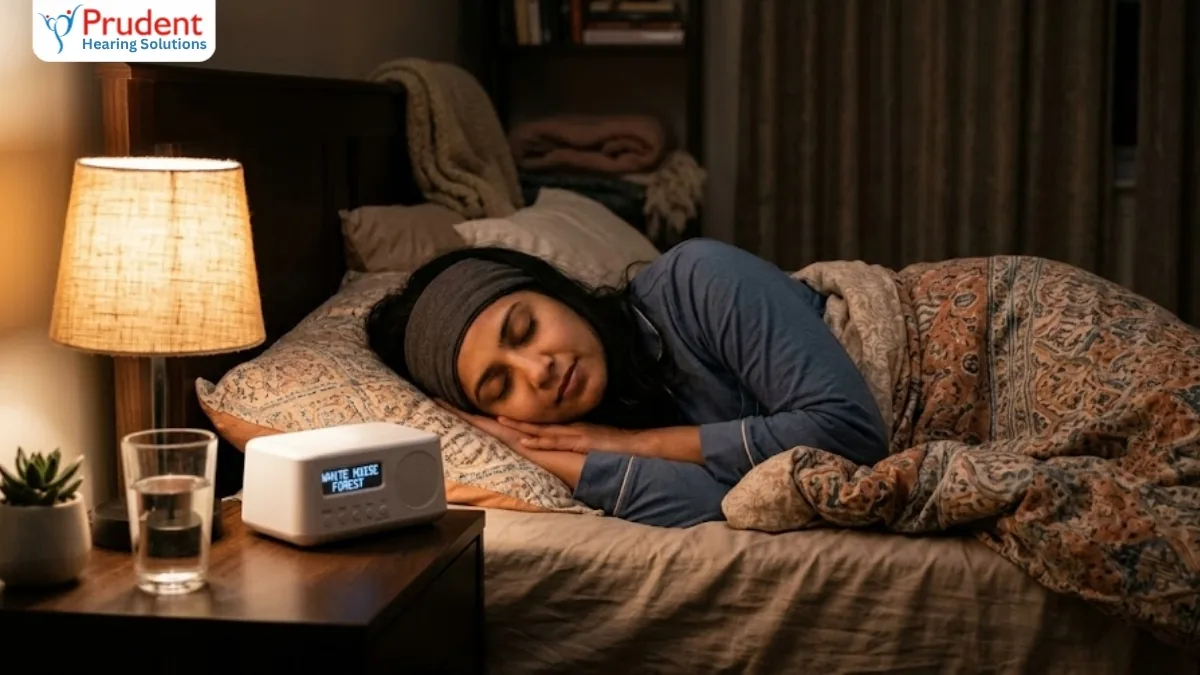
- Sound therapy / masking — How it helps: Background sound lowers how much the brain fixes on tinnitus; Best suited to: Most people, including at night; Evidence status: Established (NIDCD)
- Counselling / CBT — How it helps: Reduces distress and the anxiety that amplifies tinnitus; Best suited to: Tinnitus that affects sleep, mood or focus; Evidence status: Supported (AHRQ)
- Supplements / "cure" gadgets — How it helps: No proven benefit; may waste money and delay real help; Best suited to: No one as a primary treatment; Evidence status: Not proven (AHRQ)
Management is usually combined and personalised. In our clinics we often start with a hearing test, then layer a device and sound strategy around your daily routine and sleep — because the plan that fits your life is the one you keep using.
When should tinnitus be treated as an emergency?
Most tinnitus is not dangerous, but some patterns need same-day attention. Seek prompt care if ringing starts suddenly in one ear, if it comes with new hearing loss or muffling in that ear, or if it is joined by vertigo, spinning dizziness or ear fullness. Sudden, one-sided tinnitus with hearing loss can be sudden sensorineural hearing loss (SSNHL), where early treatment improves the chance of recovery — so treat it as an emergency and see a doctor the same day. Recurrent episodes of one-sided tinnitus, fullness and vertigo can also point to Ménière's disease, which deserves a proper diagnosis (NIDCD). If in doubt, do not wait it out.
What to do next
If ringing in your ears is persistent or bothering your sleep, focus or mood, the most useful first step is a hearing test to find out what is behind it. Our RCI-registered audiologists (MASLP/BASLP) across Pune, Delhi and Bengaluru can assess your hearing, explain your results plainly and — if a device or sound strategy fits — set one up around your routine. Book a free hearing test, learn about our tinnitus help and management service, or if travel is hard, ask about a home-visit hearing test. Call +91 9429690093 or contact us — no pressure, just clear guidance.
Internal-link ideas:
- Free hearing test — anchor: "book a free hearing test" / "hearing evaluation"
- Tinnitus help & management — anchor: "tinnitus help and management"
- Hearing aids — anchor: "hearing aids" / "combination devices"
- Home-visit hearing test — anchor: "home-visit hearing test"
- Contact / book appointment — anchor: "contact us"
Continue reading
Frequently asked questions
Is tinnitus permanent?
It can be temporary or long-lasting. Ringing after a loud concert often settles within a day or two, while tinnitus tied to lasting hearing loss usually persists. Even when it does not go away, management can make it far less intrusive ([NIDCD](https://www.nidcd.nih.gov/health/tinnitus)).
Can loud noise cause permanent tinnitus?
Yes. Repeated or intense noise damages inner-ear hair cells and is a leading, preventable cause. This is why hearing protection matters — over half of noise-exposed workers still skip it ([CDC/NIOSH](https://www.cdc.gov/niosh/noise/surveillance/overall.html)).
Do supplements or "tinnitus cures" work?
No supplement or device has been proven to cure tinnitus. Reviews of tinnitus treatments have not found convincing evidence for these products, so treat bold cure claims with scepticism ([AHRQ](https://effectivehealthcare.ahrq.gov/health-topics/tinnitus)).
Why is my tinnitus louder at night?
In a quiet bedroom there is little external sound to compete with, so the ringing stands out more. Low-level background sound (a fan or a sound generator) can help ([MedlinePlus](https://medlineplus.gov/tinnitus.html)).
Should I get a hearing test if I have tinnitus?
Yes. Because tinnitus and hearing loss are closely linked, a hearing test identifies what is driving the sound and whether a hearing aid or sound device will help ([NIDCD](https://www.nidcd.nih.gov/health/tinnitus)). Book a [free hearing test](/hearing-test).
Can earwax cause ringing in the ears?
Yes, a wax blockage can trigger or worsen tinnitus, and it is one of the more easily reversible causes — worth checking early ([MedlinePlus](https://medlineplus.gov/tinnitus.html)).
Sources & further reading
We cross-checked this article against the following authoritative sources. Guidance and figures reflect the most recent public guidance available at the time of last review (September 2026). Clinical review by the Prudent Hearing clinical team.
- Tinnitus (National Institute on Deafness and Other Communication Disorders) (NIDCD)
- Tinnitus (US National Library of Medicine) (MedlinePlus)
- Occupational Hearing Loss Surveillance (CDC/NIOSH)
- Tinnitus (AHRQ Effective Health Care)
- Ménière's Disease (NIDCD)
Free consultation
Ready to hear the difference?
Book a free 45-minute hearing test at any Prudent Hearing clinic: no obligation, honest advice, expert audiologists.