Educational information, not medical advice. This article is written to help you understand common ear and hearing issues. It is not a substitute for professional diagnosis or treatment. If your symptoms are severe, sudden, or persistent, please consult a qualified doctor or audiologist. For urgent symptoms (sudden hearing loss, bleeding from the ear, severe pain with dizziness, or a head injury), seek medical care the same day.
Vertigo often starts in the inner ear. Learn how BPPV and Meniere's affect hearing, when it's urgent, and how balance testing finds the cause.
Quick answer
Most true vertigo begins in the inner ear. The balance organs and the hearing organ (cochlea) sit inside the same fluid-filled labyrinth, so ear problems often cause spinning, tilting or dizziness. Two of the most familiar inner-ear causes are BPPV (the most common — loose crystals in the balance canals) and Meniere's disease (a fluid disorder that also affects hearing). Combined hearing and balance testing pinpoints the cause.
Key takeaways
- Vertigo is a false sense of movement — usually spinning — not the light-headed feeling of near-fainting. Its most common causes sit in the inner ear ([NIDCD](https://www.nidcd.nih.gov/health/balance-disorders)).
- BPPV happens when tiny calcium crystals (otoconia) come loose and drift into the semicircular canals; it is diagnosed with the Dix-Hallpike test and treated with a repositioning manoeuvre ([Johns Hopkins Medicine](https://www.hopkinsmedicine.org/health/conditions-and-diseases/benign-paroxysmal-positional-vertigo-bppv)).
- Meniere's disease brings a cluster of symptoms — vertigo attacks, tinnitus, fluctuating hearing loss and ear fullness — from excess inner-ear fluid ([NIDCD](https://www.nidcd.nih.gov/health/menieres-disease)).
- Sudden hearing loss with vertigo, or vertigo with double vision, slurred speech, weakness or a severe new headache, needs same-day medical care. These are red flags, not routine dizziness.
- Audiologists diagnose and co-manage inner-ear vertigo through combined hearing and balance (vestibular) testing before any manoeuvre is attempted.
Most true vertigo begins in the inner ear. The balance organs and the hearing organ (cochlea) sit inside the same fluid-filled labyrinth, so ear problems often cause spinning, tilting or dizziness. Two of the most familiar inner-ear causes are BPPV (the most common — loose crystals in the balance canals) and Meniere's disease (a fluid disorder that also affects hearing). Combined hearing and balance testing pinpoints the cause.
What is vertigo, and how is it different from dizziness?
Vertigo is a specific illusion of movement — the room spins, tilts or sways when you are still. "Dizziness" is a broader word people also use for light-headedness, unsteadiness or feeling faint. The distinction matters because true spinning vertigo points strongly to the inner ear or its nerve pathways, while light-headedness on standing more often relates to blood pressure or the heart (MedlinePlus). In our clinics we often start by asking patients to describe the sensation in their own words, because that description narrows the cause faster than any single test.
How do your ears cause vertigo?
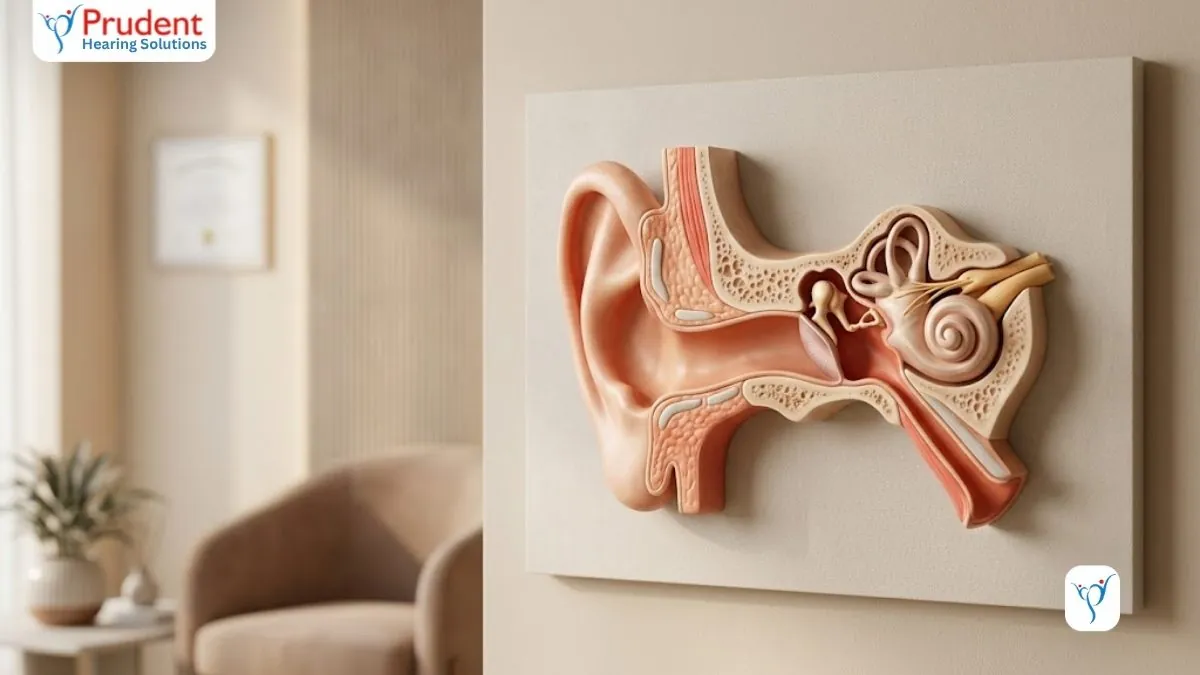
The inner ear (labyrinth) holds two connected systems: the cochlea for hearing and the vestibular organs for balance — three semicircular canals plus two sensing pouches. They share the same fluid and nerve supply, which is why an ear disorder can disturb balance and hearing at the same time (NIDCD). The main inner-ear (peripheral) causes of vertigo are:
- BPPV — displaced crystals in the balance canals.
- Meniere's disease — a disorder of inner-ear fluid.
- Vestibular neuritis / labyrinthitis — inflammation of the balance nerve, often after a viral illness; labyrinthitis can also affect hearing.
When vertigo has no hearing component and follows a clear head-position trigger, BPPV is likely. When vertigo comes with tinnitus and changing hearing, Meniere's moves up the list. This is where a hearing test earns its place in a dizziness work-up.
Inner-ear vertigo compared at a glance
- BPPV — Typical trigger & pattern: Brief spins (seconds) when rolling over in bed, lying down, or looking up; Ear / hearing symptoms: Usually none — hearing is normal; How it's diagnosed: Dix-Hallpike positioning test; Usual management: Canalith repositioning (e.g. Epley) by a trained clinician
- Meniere's disease — Typical trigger & pattern: Sudden attacks lasting 20 minutes to hours; can recur over years; Ear / hearing symptoms: Tinnitus, fluctuating hearing loss, ear fullness (often one ear); How it's diagnosed: Hearing test (audiogram) + balance testing + history; Usual management: Diet/lifestyle changes, medication, hearing support; guided by a specialist
- Vestibular neuritis / labyrinthitis — Typical trigger & pattern: Sudden, constant vertigo for days, often after a viral illness; Ear / hearing symptoms: Neuritis: hearing normal. Labyrinthitis: hearing may drop; How it's diagnosed: Clinical exam; balance testing; hearing test to separate the two; Usual management: Symptom relief and vestibular rehabilitation exercises
Sources: NIDCD balance disorders, NIDCD Meniere's disease, MedlinePlus.
What is benign paroxysmal positional vertigo (BPPV)?
BPPV is the most common cause of vertigo. Tiny calcium-carbonate crystals called otoconia normally sit in a sensing pouch of the inner ear. When some break loose and float into a semicircular canal, ordinary head movements make the canal fluid stir when it should be still — and your brain reads that as spinning (NIDCD). The spins are short, usually lasting under a minute, and are set off by position changes: rolling over in bed, lying down, sitting up, or tipping the head back (Cleveland Clinic). Hearing is typically unaffected, which is a useful clue.
How is BPPV diagnosed?
BPPV is confirmed with the Dix-Hallpike test, in which a clinician guides your head and body into set positions and watches for the characteristic eye movements (nystagmus) that appear as the crystals move (Johns Hopkins Medicine). Identifying which canal is affected is what makes treatment work — and it is the reason self-diagnosis is unreliable.
Should I try the Epley manoeuvre at home?
Get the diagnosis first. The Epley manoeuvre is a series of head and body positions that guides the loose crystals out of the semicircular canal and back to where they belong; it is an established, effective treatment for posterior-canal BPPV (Cleveland Clinic). The catch is that it is designed for one specific type of BPPV. Not all vertigo is BPPV, and not all BPPV involves the same canal — using the wrong manoeuvre can move crystals into the wrong place or delay the right treatment for a different condition (Johns Hopkins Medicine). We recommend a professional confirms the type before you attempt any manoeuvre, and that a first manoeuvre is done under supervision so the technique — and the diagnosis — are correct.
What is Meniere's disease?
Meniere's disease is a disorder of the inner ear linked to a buildup of fluid (endolymph) in the labyrinth. It produces a recognisable set of symptoms: episodes of vertigo lasting from about 20 minutes to several hours, tinnitus (ringing or roaring), a feeling of fullness or pressure in the ear, and hearing loss that fluctuates and, over time, can become permanent (NIDCD). It usually affects one ear, at least at first. Because Meniere's ties balance and hearing together, an audiogram that shows fluctuating or low-frequency hearing loss on the affected side is central to the diagnosis, alongside a careful symptom history and balance testing.
Meniere's has no cure, and honest information matters here. Management aims to reduce the frequency and severity of attacks through dietary changes (often lower salt), medication and lifestyle adjustments, with hearing support and tinnitus care as the condition evolves (NIDCD). A plan should be guided by an ENT specialist and audiologist together.
Vertigo and hearing loss together — what does it mean?
Vertigo plus hearing symptoms points to the labyrinth itself rather than to a purely balance-nerve or non-ear cause. The classic combination of vertigo, tinnitus and fluctuating hearing loss suggests Meniere's disease (NIDCD); labyrinthitis is another inner-ear cause that can affect hearing and balance at once. The important exception is urgency: sudden hearing loss in one ear together with vertigo is a medical emergency. It can indicate sudden sensorineural hearing loss, which is treated best when care starts within the first few days. Do not wait for it to settle — seek same-day care, and arrange hearing and balance testing to establish the cause (NIDCD).
Why do I feel dizzy when I lie down or roll over?
A spinning sensation triggered specifically by lying down, rolling over in bed, or tipping your head back is the hallmark of BPPV — the position change lets the loose otoconia stir the canal fluid (Cleveland Clinic). The spins are brief but can be intense and may bring nausea. Because the pattern is so specific, a clinician can usually reproduce it with the Dix-Hallpike test and confirm BPPV in a single visit (MedlinePlus). If your dizziness instead appears when you stand up, or comes with chest symptoms, that is a different picture and should be checked by a doctor. For positional spinning, balance diagnostics are the right next step.
How do audiologists find the cause?
Because hearing and balance share the same inner ear, an audiology work-up looks at both. A typical assessment combines a hearing test (audiogram) to check whether hearing is involved and in what pattern, with balance (vestibular) testing — which can include positioning tests and VEMP (vestibular evoked myogenic potentials) — to see how the balance organs and their nerve pathways are working. Together these separate BPPV from Meniere's from a nerve-related cause, and they guide whether a repositioning manoeuvre, vestibular rehabilitation, or referral to ENT is the right path. At Prudent Hearing Solutions our RCI-registered audiologists carry out combined hearing and balance testing so the treatment matches the actual diagnosis, not a guess.
Talk to us
If the room has started spinning — especially when you lie down, or alongside ringing, ear fullness or changing hearing — the fastest route to an answer is combined hearing and balance testing. Book a free hearing test at /hearing-test, arrange dedicated balance diagnostics at /contact, or call us on +91 9429690093. If dizziness makes travel difficult for an elderly parent, ask about our home-visit hearing test. And if your vertigo comes with any of the red-flag signs above, go to a hospital first — then let us help with the follow-up.
Internal-link ideas:
- /contact — VEMP and balance testing to find the cause of vertigo
- /hearing-test — baseline audiogram, central to diagnosing Meniere's and ruling out hearing involvement
- /hearing-test — for the tinnitus that overlaps with Meniere's disease
- /home-visit — home hearing and balance assessment for elderly or unsteady patients
- /contact — book an appointment or ask a question
Continue reading
Frequently asked questions
Is vertigo always caused by the ears?
No. Inner-ear causes such as BPPV and Meniere's are the most common, but vertigo can also come from the balance nerve, the brain, or, less often, from circulation or medication effects ([MedlinePlus](https://medlineplus.gov/dizzinessandvertigo.html)). Testing separates ear causes from the rest, which is why a professional assessment is worthwhile rather than assuming.
When should vertigo be treated as an emergency?
Seek same-day care if vertigo comes with sudden one-sided hearing loss, double vision, slurred speech, weakness or numbness, trouble walking, or a severe unfamiliar headache. These can indicate a stroke or a sudden inner-ear emergency ([NIDCD](https://www.nidcd.nih.gov/health/balance-disorders)).
Does BPPV affect my hearing?
Usually not. BPPV is a mechanical problem in the balance canals and typically leaves hearing normal ([Johns Hopkins Medicine](https://www.hopkinsmedicine.org/health/conditions-and-diseases/benign-paroxysmal-positional-vertigo-bppv)). If you have both vertigo and hearing changes, the cause is more likely Meniere's or another labyrinth condition, and a hearing test helps confirm which.
Can the Epley manoeuvre cure BPPV permanently?
Repositioning manoeuvres are effective for posterior-canal BPPV and often relieve symptoms quickly, but BPPV can recur, and the manoeuvre only helps if the diagnosis and the affected canal are correct ([Cleveland Clinic](https://my.clevelandclinic.org/health/diseases/11858-benign-paroxysmal-positional-vertigo-bppv)). Confirm the diagnosis with a clinician before self-treating.
Is there a cure for Meniere's disease?
There is no cure at present. Care focuses on reducing how often and how severely attacks occur — through diet, medication and lifestyle changes — along with hearing and tinnitus support as needed ([NIDCD](https://www.nidcd.nih.gov/health/menieres-disease)). A specialist should guide the plan.
Can an audiologist help with vertigo, or do I need an ENT?
Audiologists play a central role in diagnosing and co-managing inner-ear vertigo through combined hearing and balance testing, and they work alongside ENT specialists when medical or surgical treatment is needed ([NIDCD](https://www.nidcd.nih.gov/health/balance-disorders)). For positional or hearing-linked dizziness, an audiology assessment is a sensible starting point.
Sources & further reading
We cross-checked this article against the following authoritative sources. Guidance and figures reflect the most recent public guidance available at the time of last review (September 2026). Clinical review by the Prudent Hearing clinical team.
- Balance Disorders (NIDCD)
- Meniere's Disease (NIDCD)
- Dizziness and Vertigo (MedlinePlus)
- Benign Paroxysmal Positional Vertigo (BPPV) (Johns Hopkins Medicine)
- Benign Paroxysmal Positional Vertigo (BPPV) (Cleveland Clinic)
Free consultation
Ready to hear the difference?
Book a free 45-minute hearing test at any Prudent Hearing clinic: no obligation, honest advice, expert audiologists.