From missing his grandson's voice on video calls to streaming Marathi audiobooks straight into his ears: a family's honest six-month update.
Quick answer
Bluetooth hearing aids stream phone calls, TV audio and video calls straight into both ears at the right volume and clarity, which typically restores effortless conversation for elderly users in weeks. Phonak aids pair with any phone via universal Bluetooth Classic; Signia, Oticon, ReSound, Widex and Starkey use Made-for-iPhone and Bluetooth LE Audio, which is native on iPhone and newer Android.
Key takeaways
- Direct call streaming is the single biggest quality-of-life gain for elderly users.
- Bluetooth streaming uses very low-power signals, safe alongside pacemakers with normal spacing.
- Streaming reduces per-charge runtime by roughly 20–30%.
- Universal Bluetooth (Phonak) works with any phone; MFi/LE Audio needs iPhone or a newer Android.
- TV Connectors and remote-mic accessories help further in noisy family settings.
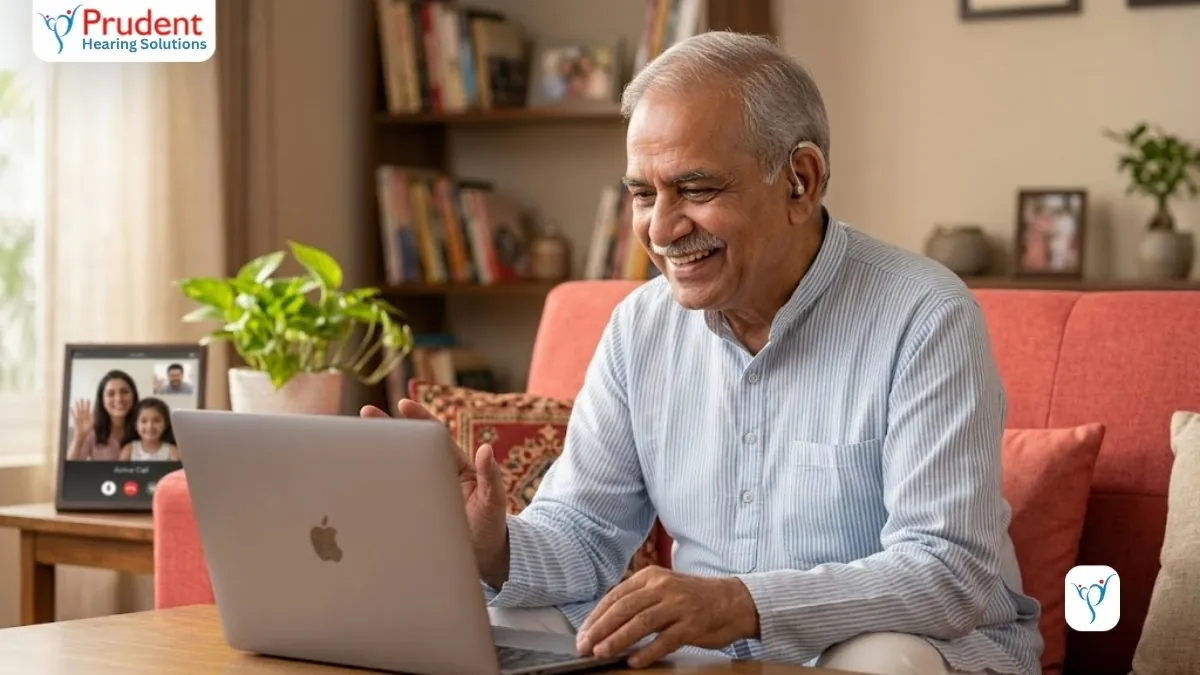
My father is 72. He worked in a textile mill for 40 years and quietly lost most of his high-frequency hearing along the way. For years he refused to try hearing aids until the pandemic, when he couldn’t hear his grandson on WhatsApp video calls.
The first fitting
We visited Prudent Hearing's Viman Nagar clinic on a Saturday morning. The test took 40 minutes, mostly because the audiologist explained every step. The recommendation: rechargeable RIC aids with direct Bluetooth to his phone.
Week one
The first three days were adjustment. He said everything sounded ‘sharp’. That’s normal, the brain re-learning frequencies it hasn’t heard in years. By day four, he was watching the TV at half the previous volume.
Where Bluetooth really matters
- Video calls stream directly into both ears, no fumbling with phone speakers
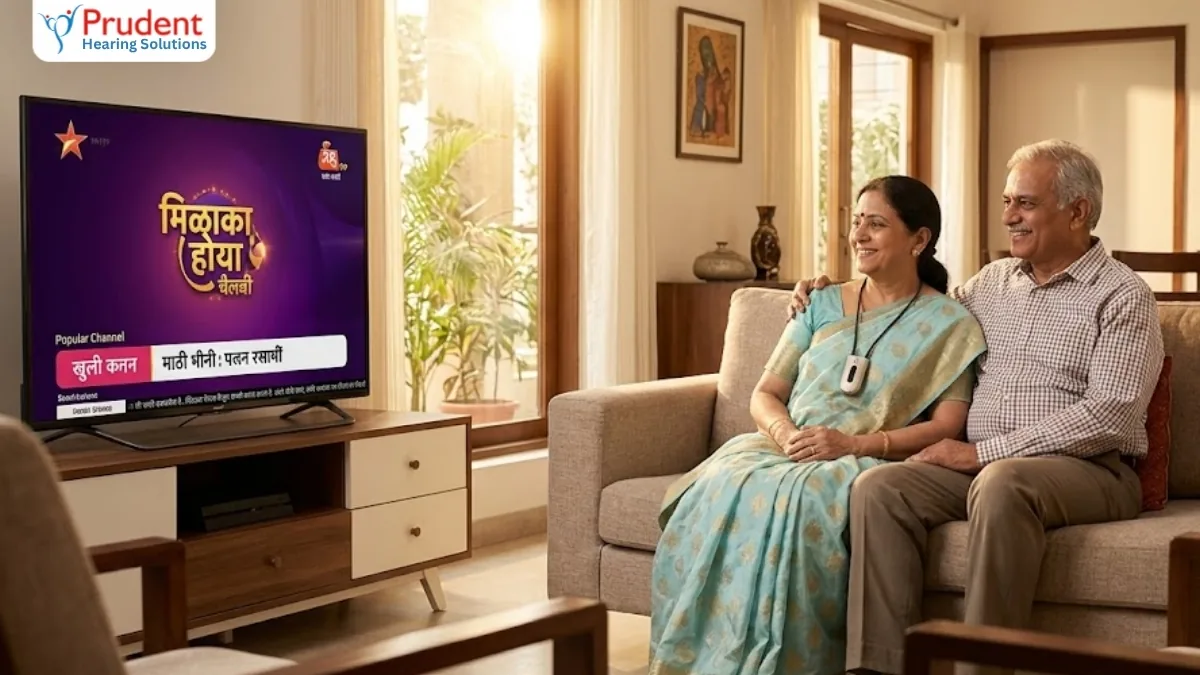
- The TV connector lets him watch cricket at his preferred volume while my mother reads in peace
- Marathi audiobooks and bhajans stream from Spotify straight into his aids
Six months in
He wears them 12+ hours a day. His confidence at family gatherings is back. Last week he called me, voluntarily, just to chat. Small thing. Huge thing.
"The hearing aids gave me back conversations I didn't realise I was missing."
Continue reading
Frequently asked questions
Do Bluetooth hearing aids really help older adults?
Yes. For many elderly users the biggest gains come from direct phone-call streaming, TV audio and voice-assistant control. Speech goes straight into the aids at the right volume and clarity, which cuts listening effort and helps people stay socially connected.
Which phones work with Bluetooth hearing aids?
Phonak Marvel/Paradise/Lumity aids use universal Bluetooth Classic and pair with almost any phone or tablet. Signia, Oticon, ReSound, Widex and Starkey use Made-for-iPhone and Bluetooth LE Audio, which is native on iPhone and newer Android, with a small clip-on streamer needed for older Android phones.
Do Bluetooth hearing aids drain the battery quickly?
Bluetooth streaming reduces per-charge runtime by roughly 20–30%. A rechargeable aid that delivers 24 hours of normal use will typically give 16–18 hours if you stream music or calls for several hours. Standby Bluetooth uses almost no power.
Are Bluetooth hearing aids safe for the elderly?
Yes. Bluetooth in hearing aids uses very low-power signals (well below phone or Wi-Fi levels), is switchable, and has no long-term health risks in current evidence. It is safe for elderly users with pacemakers too, though very close proximity to the pacemaker should be avoided as with any wireless device.
Sources & further reading
We cross-checked this article against the following authoritative sources. Guidance and figures reflect the most recent public guidance available at the time of last review (July 2026). Clinical review by the Prudent Hearing clinical team.
- Hearing Aids (National Institute on Deafness and Other Communication Disorders (NIDCD, NIH))
Free consultation
Ready to hear the difference?
Book a free 45-minute hearing test at any Prudent Hearing clinic: no obligation, honest advice, expert audiologists.