Educational information, not medical advice. This article is written to help you understand common ear and hearing issues. It is not a substitute for professional diagnosis or treatment. If your symptoms are severe, sudden, or persistent, please consult a qualified doctor or audiologist. For urgent symptoms (sudden hearing loss, bleeding from the ear, severe pain with dizziness, or a head injury), seek medical care the same day.
Sore ears from earphones are usually about fit, pressure or volume, not something serious. Why it happens, how to relieve it, and the signs that mean see a doctor.
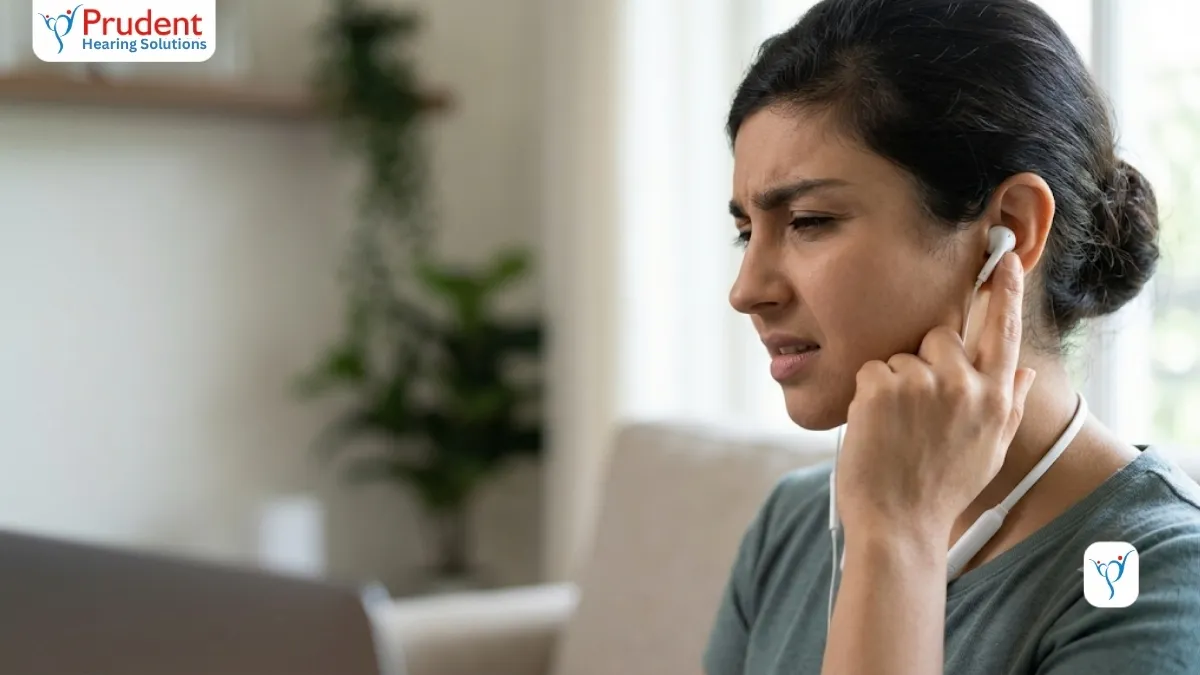
If your ears ache after a long call or a day of music, earphones are usually the cause, and the reason is nearly always mechanical rather than medical. Hard tips press on the delicate skin of the ear canal, an ill-fitting bud rubs or sits too deep, and hours of wear give the canal no chance to breathe. Most earphone ear pain settles quickly once you change how you use them. A few signs, though, mean it is worth seeing a doctor.
Why earphones make your ears hurt
- Poor fit: a tip that is too big stretches the canal; one too small is pushed in too far to stay put.
- Pressure and friction: hard plastic or silicone pressing on canal skin for hours causes a dull ache or soreness.
- Too loud, too long: high volume fatigues the ear and can cause pain, ringing or a blocked feeling afterwards.
- Trapped moisture and wax: sealed buds keep sweat and wax against the skin, which can irritate it or lead to infection.
How to stop the pain
- Try different tip sizes; many earphones come with several, and the right one should feel snug, not forced.
- Take a break roughly every hour to let the canal recover.
- Follow the 60/60 rule: no more than 60% volume for no more than 60 minutes at a stretch (see our 60/60 rule guide).
- Clean your earbuds regularly, and never share them.
- If one style always hurts, switch to over-ear headphones, which sit outside the canal.
Loud, prolonged listening does more than cause short-term soreness; it can damage hearing over time. Our guide to whether earbuds and headphones are damaging your hearing explains the longer-term risk.
When to see a doctor
Earphone soreness that eases when you stop wearing them is not a worry. See a doctor or an ENT, though, if you have pain that lasts more than a day or two, pain with fever, discharge or bleeding from the ear, a spreading or severe ache, or if your hearing feels reduced or blocked.
These can point to an ear-canal infection (otitis externa) or other problems that need proper treatment, which an audiology clinic does not provide. If you suspect wax is part of it, read about safe ear wax removal rather than digging with a cotton bud.
Worried about your hearing, not just the pain?
If the ache comes with ringing, muffled sound, or a sense that your hearing has dipped after heavy earphone use, it is worth measuring properly rather than assuming it will pass. Try our free 2-minute online hearing screening, and if it flags anything, book a free hearing test at a Prudent clinic. For the ear pain itself, though, a doctor comes first. Prudent Hearing Solutions.
Continue reading
Frequently asked questions
Why do my ears hurt after wearing earphones?
Usually a mechanical cause: a tip that fits poorly, hard plastic pressing on the canal for hours, high volume fatiguing the ear, or trapped sweat and wax irritating the skin. Most of it settles quickly once you change how you use them.
How do I stop ear pain from earbuds?
Try different tip sizes for a snug (not forced) fit, take a break roughly every hour, follow the 60/60 rule (max 60% volume for 60 minutes), clean your earbuds, and switch to over-ear headphones if one style always hurts.
When should I see a doctor about earphone ear pain?
If pain lasts more than a day or two, comes with fever, discharge or bleeding, is severe or spreading, or your hearing feels reduced or blocked. These can signal an ear-canal infection that needs medical treatment, which an audiology clinic doesn't provide.
Can earphones cause hearing loss?
Loud, prolonged listening can damage hearing over time, not just cause short-term soreness. If the ache comes with ringing or muffled sound, get your hearing measured. Follow the 60/60 rule to reduce the risk.
Free consultation
Ready to hear the difference?
Book a free 45-minute hearing test at any Prudent Hearing clinic: no obligation, honest advice, expert audiologists.